
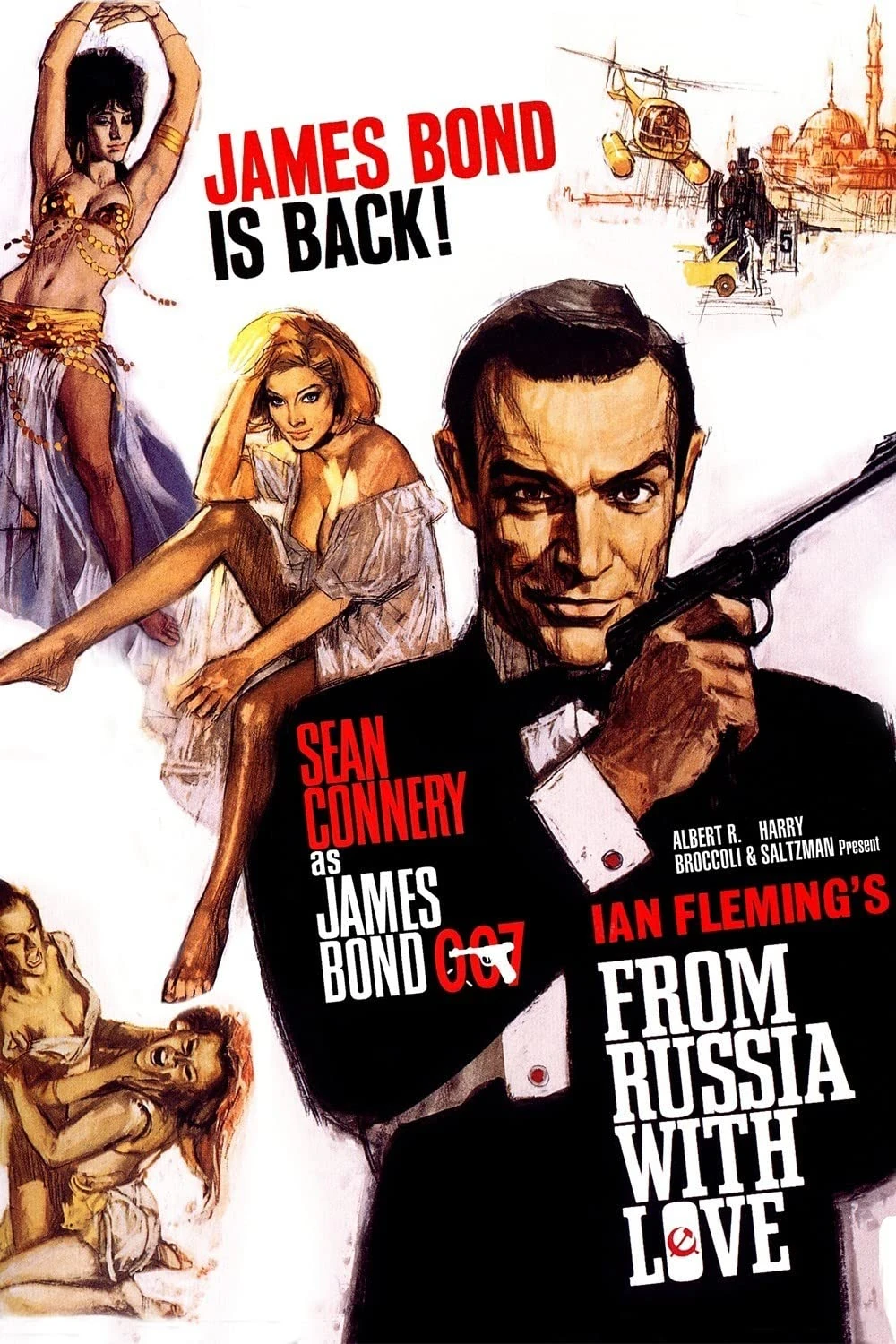
 From Russia with Love is a curious beast. It does not “work” according to the distinct rhymes and reasons of what would become the “Bond film” archetype. It does not establish its own vision of what cinema ought to be, as so many other Bond films went on to do, starting with the very next film in the series, Goldfinger. It lacks the pop art, it lacks the pizzaz, it lacks the chutzpah of those other glammy, punchy Bond films that established a certain modern cool-chic lifestyle porn take on watching movies simply because they could give you visions of things that life in its mundane reality never could. On most of the basic “rules” by which Bond films are generally judged, it doesn’t even attempt to pass muster. In fact, it is, excepting its predecessor Dr. No, a work that could charitably be described as “mundane”.
But Terrence Young’s film may very well be the best film in the entire series, and it may be the best specifically for how it does not meaningfully have anything to do with “being a Bond film”. What the lack of a formula bestows upon it is the freedom to simply focus on being itself, on being the best individual film freed from the expectations and rules of a specific form and a style. It is freed to the point where it can utilize its editing, its framing, its acting, and its writing, to simply be the best film it can be, freed from any expectations in the world of fitting a well-defined formula. Continue reading
 America did pop proud in the 1960s, but pop didn’t always imply a bulging budget or grandiose popular success. The lingering vestiges of that most ’50s of all genres, the atomic underground horror, still clung to the beginning of the decade like a wandering specter. Admittedly, the low-brow, even-lower-budget works suffered a little about how to re-invent themselves; Hammer Horror in the UK certainly hit a few home runs, but flooding the markets ran them red with bloody boredom sooner than not. In the US, where “underground fare” similarly served as a safe, parental euphemism for horror, things were likewise stuck in a liminal space between the pre-Bay of Pigs interest in fooling around with atomic supermen and nuclear fall-out monsters, and the genuine “exploitation” of exploitation cinema came to fruition in the very late 1960s. In between, in the early 1960s, what was underground horror to do?
 It is a go-to pocket complaint of modern Disney that, at some point, they lost interest in the mythic and left the magical by the wayside. From the dark days of the 1960s until darn near the embryonic stages of the 1990s, their films were marked by increasingly poor animation quality and a loss of exploration and heart to match. One Hundred and One Dalmatians holds the unfortunate distinction of being definitively the locus of this three decade dalliance with ground-level storytelling, the period where Disney turned its back on the skies. All of this circles around one point: One Hundred and One Dalmatians is a crying shame, and one of the most disappointing Disney features every released.
  Another relatively short new feature to round out the month, this one about so-called “entertainment” films for the masses in the 1960s. Even when they weren’t doing much of anything else, films from this decade, the golden-age of gee-shucks entertainment, sure knew how to pop!
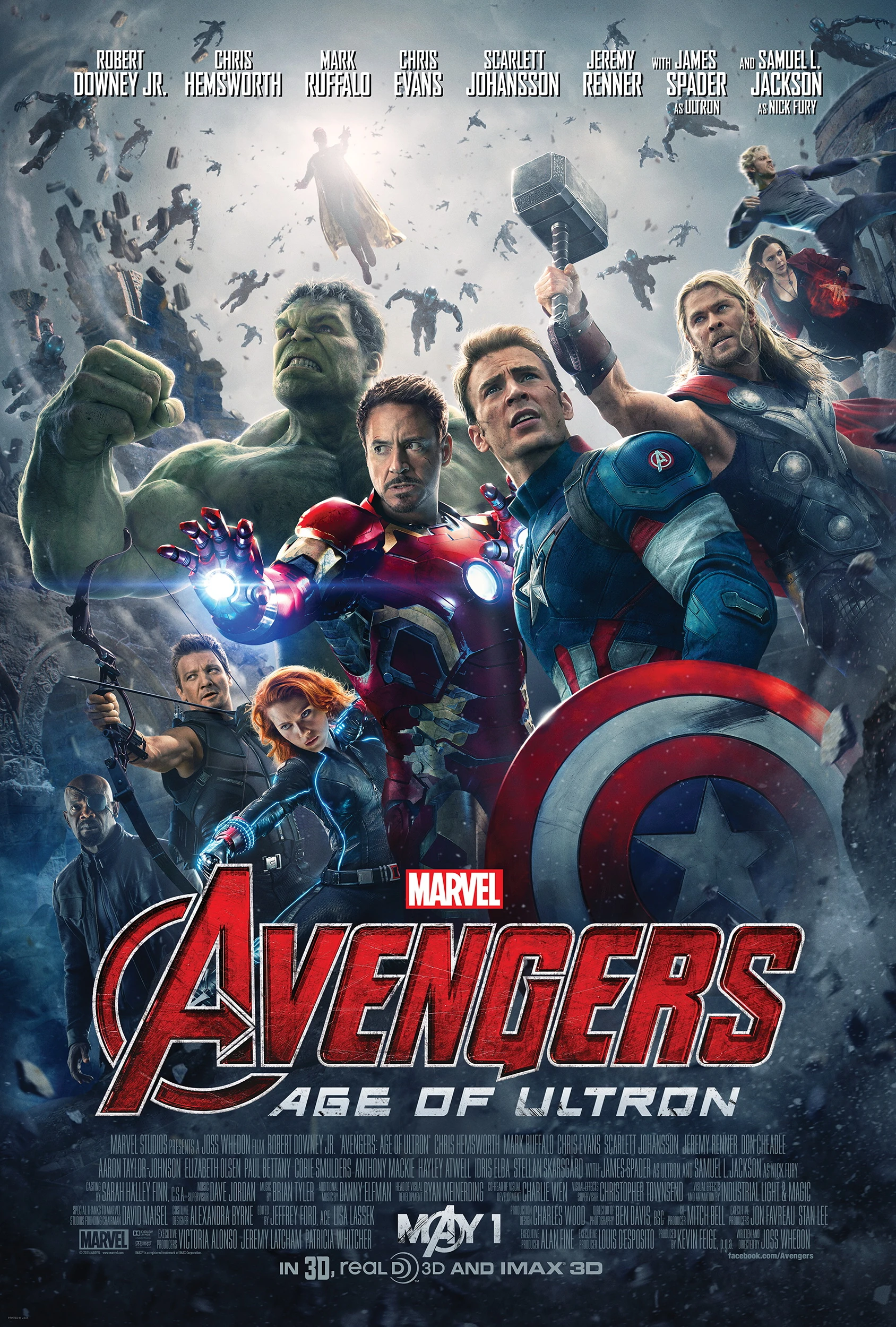 The most enticing moment in Avengers: Age of Ultron is successful because it is so elusive, and it may very well be the worst moment as well. When it begins, we are informed that the titular superhero smack-down squadron and consummate bickerers are off to Africa. We know we are going to Africa because the characters essentially say “we are going to Africa”. Smash-cut to a helicopter shot of a derelict shipyard. We know this is a shipyard because there are ships. It is also, one would assume, on a coast line, for that is where ships tend to reside. At this point, everyone’s favorite quasi-military font appears in lower screen with text that informs us, in as many words, “Shipyard, Off the Coast of Africa”, in case we were wondering if the ships were, in fact, airplanes, or whether they were docked in Nebraska.
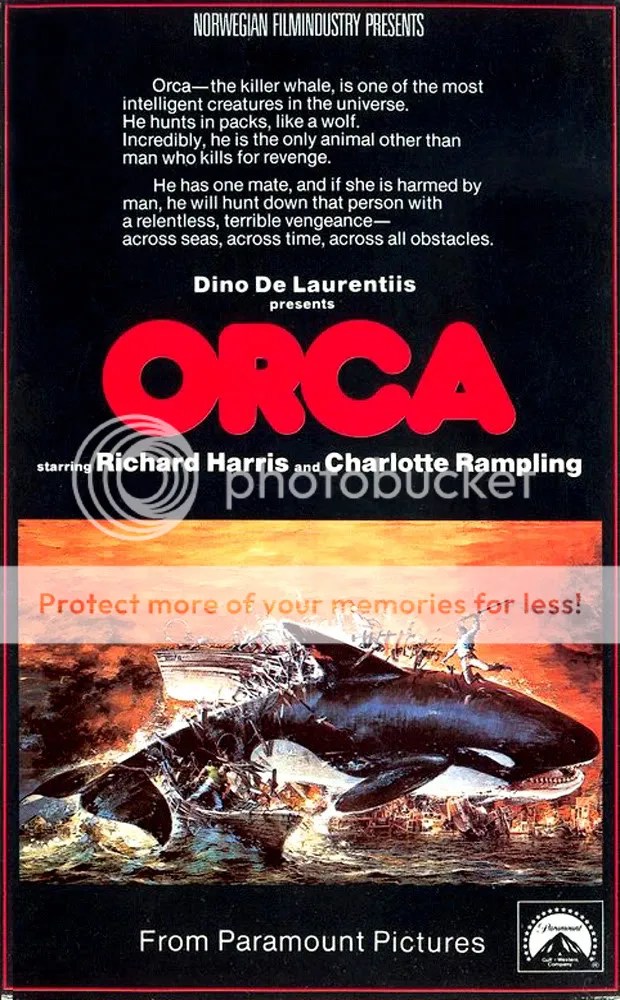 Nature gone amok was not a new fixation in film by 1977; it was merely, and suddenly, a now respectable one after the release of Jaws. From the heyday of the early 1970s, with infamous concoctions such as Frogs and the dumbfounding, absolutely beguiling Night of the Lepus, environmentalism and scientific experimentation on animals were on the mind, and like any good red blooded progressive concerned about their country without forgetting its make-a-buck capitalist origins as a nation, every huckster in the business wanted in on the trend.
 Calling a film one of the“worst films’ ever is a loaded statement, usually because it comes from the mouth of someone who most assuredly has not seen the large majority of the library in the gods’ hall of bad cinema. In some cases though, or perhaps only this one case, the descriptor of “worst film” is a misnomer for a very different reason. When you have a puzzle piece like Hercules in New York, you cannot merely append descriptors to the word “film” to describe its unholiness, for that itself relies on the false given that the descriptor of “film” applies to everything that is released under the moniker. Case in point, Arnold Schwarzenegger running around New York, flexing muscles and fighting bears, and a work that almost exists outside of descriptors entirely. Certainly, we should be cautious to use the word “film” to articulate its unaccountable, freakish milieu, and we should be even more cautious of implying that anyone “worked” toward it at all.
  The withered, age-old “worst movie ever” question is a tale of perpetual unfinished business. It is far too intimately linked to personal fixation and context, far more so than any question of “best” or “greatest” film. Still, although we know the question really doesn’t get us anywhere, it is an enticing one. Especially because, in all frankness, movies seem to flock to it, and a handful put up a great argument for their claim to the holy grail of “worst film ever”. It becomes difficult to compare the “worst” movies between genres and sub-genres, but within close company, the differentials are more apparent. Take, for example, “zombie films”, a genre with more than a few wishful contenders for the title of “worst”. It is probably true that none are categorically the worst film ever made, but something about crawling flesh and rotting brains galvanizes the ineptitude of a film in an especially forthright, plain-spoken coating of badness. I’ve reviewed bad movies, but few feel as phantasmagorical in their patented ineptness as Zombie Lake. It doesn’t glance at badness, nor does it hint. It bellows at it head on, with charisma and a grubby, bilious doggedness. Ultimately, Zombie Lake’s flaws are as legion as they are incurable.
  To recap: the Universal Horror individual monster franchises varied wildly and inconstantly, and often in directions and to magnitudes any sane person would never imagine. Sometimes, however, Universal Horror just created something that can not compare to anything on this earth, in their canon or otherwise. Sometimes they made Murders in the Rue Morgue, just about the perfect encapsulation of messy early sound cinema trying to cope with the increased narrative bent of sound and having no idea what to do with narrative at all. The end result is Universal Horror at their most indebted to quilt-work, patching together the expressionist dread and crawling, impulsive weirdness of silent cinema – itself having very little to do with narrative or realism – and trying desperately to mold all of this prismatic and arcane visual strangeness into something that can approximate “narrative”. It fails as a narrative proper, but what hypnotic failure it is.
  The early days of sound cinema are some of the most consistently inconsistent years in all of the medium. Universal Horror was one of the few companies to attempt a personal stamp during that era, along with one of the few to shine through into the public consciousness in the modern era. The company’s dynasty, especially throughout the 1930s, was marked by exactly that particular breed of scattered and scaffolded formal invention that marked all of early sound cinema. The medium was still trying to figure out what it meant to be “sound cinema”, and the process of the collective unconsciousness of film-land figuring out all that “sound cinema” could entail is one of the most exciting treasure troves for any modern cinephile to discover and witness with the benefit of hind-sight. It wasn’t quite as off-balance and delectably weird as silent cinema – always cinema at its most frontierist and vexing – but the wild years had not yet given way to the increased symmetry and corporate similitude of the 1940s and what would become classical Hollywood filmmaking.
