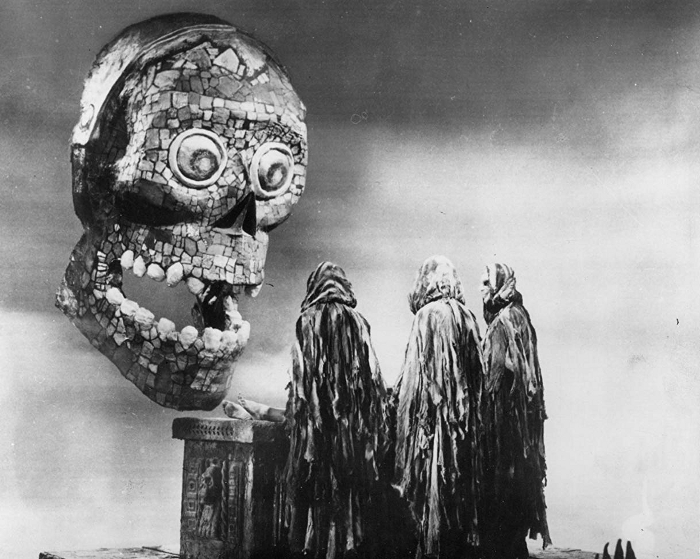
The Mask begins with a quintessential maneuver of the mid-century, an opening address from a man in a suit whose minor-key smirk and mix of self-importance and ease puts him somewhere between expert and huckster. The film conjures a phalanx of mid-century signifiers. A simulacrum of William Castle introduces us to the film’s world, laundering exploitation through the language of psychoanalysis and unsettling that very modern science by exposing its occult pre-history. He speaks of, and the film moves in, the primitivist and modernist language of masks as a metaphor for the subcutaneous, explosive violence and metabolic intuition lingering beneath the even temper of modern science. Is this man a scientist, practical man of affairs, a trickster, or a channeler of something more demonic? What, the film ponders, separates any of these from the others?
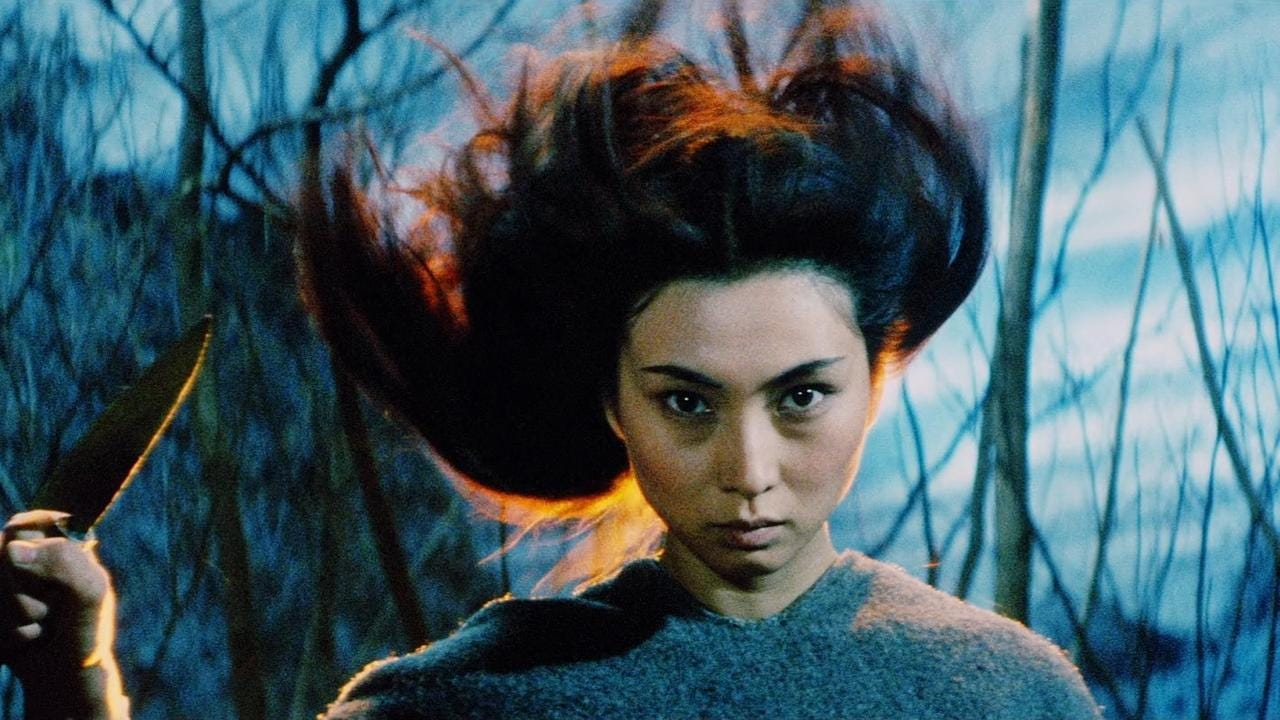
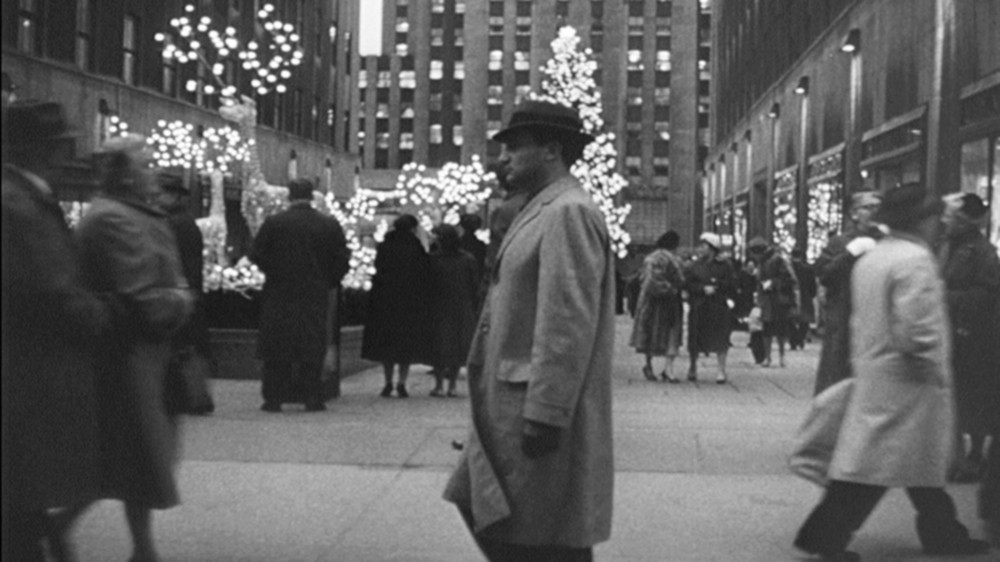
Masks abound in the film to which they bequeath a title, suffusing us in the intellectual miasma of mid-century thought. While the speaker professionalizes the film, The Mask poeticizes his language almost immediately with a cut to a woman’s screaming visage, then to a violent man’s assaulting face, two very different sorts of masks, expressive images exposing two consciousnesses locked in impossible conflict. What masks do they wear, and are they doomed to repeat themselves in an eternal cycle of fear and desire? The Mask offers another sonic bridge to a telephone, tethering the irrational to the technological, and suddenly we’re away from primitive ritual and into a sterile modernity already beginning to decay. Within a few shots, the film has already blurred science and mysticism and then linked swamp and skyscraper, plunging into the masks that modernity wears and then exposing the difficulty of defining a true face.
Continue reading