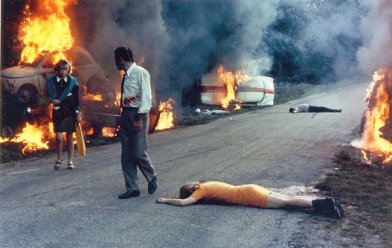
Update late 2019: After realizing just how omnipresent modernization rhetoric was in France in the ’60s, how severe the hypertrophy of automation, how extensive the rhetorical quickening of the society, and how emphatically connected the unending road and the conquering car were to those symbolic projects, Godard’s sudden, inexorable brick wall seems all the more brutal, and all the more perceptive. Weekend is a centrifuge that spins what many were calling “modernism in the streets” into a perhaps-unrecoverable tailspin, a remorseless, unbending monstrosity propagating an unshakable doubt about the future of the world and the growth projections of Western modernity,
Original Review:
Reviewing Goodbye to Language made me realize how criminal it was that I had never, in almost two years of blogging, reviewed a film from perhaps the most important director of the past sixty years. What was I doing with my life?
If Pierrot was the cataclysm, Godard’s Weekend is the fallout. An offhand joke midway through Pierrot – one of the many murders either committed or not committed by the central couple is presented as an impossible Dadaist implosion of automobile parts turned on their slantwise dimension – is curdled into a drunken stupor in Weekend. In Pierrot, the moment was baleful in its satire but flippant and recklessly fleet in its unceremonious, abstract, sudden-gust-of-wind presentation. In Weekend, an automobile pile-up rendered avant-garde art piece stops the film dead in its tracks, intentionally so, as the main characters errantly slobber between cars as subversive minimovies play out between the other passengers. It’s an elegant, wrathful expression of Weekend’s position as the comeuppance for Godard’s race-car cinema, a self-imposed crackerjack crash of non-narrative film now stopped dead in its tracks by its own ambition. Cinema breathing in its own fumes too long has turned into the cinema of the fumigated. Continue reading
 Reviewing Goodbye to Language made me realize how criminal it was that I had never, in almost two years of blogging, reviewed a film from perhaps the most important director of the past sixty years. What was I doing with my life?
 Reviewing Goodbye to Language made me realize how criminal it was that I had never, in almost two years of blogging, reviewed a film from perhaps the most important director of the past sixty years. What was I doing with my life?
 Reviewing Goodbye to Language made me realize how criminal it was that I had never, in almost two years of blogging, reviewed a film from perhaps the most important director of the past sixty years. What was I doing with my life?
 Watership Down begins with an iridescent slab of primal, irradiated cartoon psychosis, a deceptively primitive work of mythological animation as welcome in the Disney canon as it would be adorning Ancient Greek pottery. Regaling us with the oil-and-syrup concoction that is the mythological fable of rabbit-kind, we’re informed how the fecund species was blessed with fleet feet and cursed with a menagerie of predators. The simultaneously timid and trepidatious imagery of crayon-infused characters backed by an illuminated white hell evokes a cautionary tale most bold. Animation in 1978 was at something of a nadir as up-and-comers were rabidly chasing down the cadaverous corpse of Disney and looking to impose new styles all their own, and in this light the intro of Watership Down feels particularly prescient. Watching the introduction of Watership Down, it’s as if the film chose to begin with a despairing version of the classical American cartoon style – all curvaceous, simple lines and expressively elegant crayon-scrawl – to pay homage to the old before casting about with the new.
 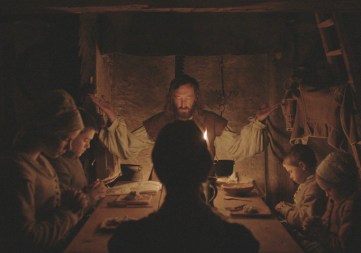 Although they dip into a different well of primal emotion and reflexive response, the best horror films are of a kind with the greatest masterpieces in any genre. At the risk of lacking caginess, all are defined by a duality: first, content is sublimated into the higher level of form and style, and secondly, expression and meaning is only tentatively tied to the nominal diegesis of the narrative. So the greatest horror film of the 1930s, The Bride of Frankenstein, relies on theatrical gesticulations of tone to express notions of disarmingly innocent outsider desire struggling to come to terms with a world suddenly impressing itself onto the mind (in doing so, moving far beyond the more obvious questions of homosexual impulse as one facet of desire and outsider status).
  Flesh for Frankenstein
 Bob Rafelson’s television career came to a head with 1968 Head, a wonderfully parentless concoction of off-kilter artifice and cinema verite absurdity from the halcyon days of the New Hollywood and the waning post-mortem of the psychedelic ’60s. Pitched at the intersection of the two decades, Head is a blissful concoction of hyperactive mania belying serious, doleful interrogation, a film that uses avant-garde channel-surfing as a way to embody the existential homelessness of life at the end of the 1960s. Like the apocalyptic fallout from a decade-long acid trip, its anti-continuity editing mechanics pushed the decade’s assertion of living for the moment to consternated heights where any human ability to consider the future was laughed at by the bedlam of a world where simple notions of time and place were rapidly unwinding in front of America’s eyes. Bob Rafelson’s introduction to the film world, still his secret weapon and best film, suggests the death spasm of hippie culture keel-hauled into psychotropic madness.
 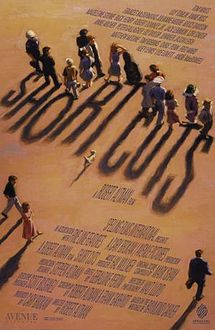 The 1980s were like forced, unpaid indefinite leave for the more challenging American directors to emerge out of the 1970s New Hollywood Cinema. Martin Scorsese mostly survived the war on adult-minded cinema. Terrence Malick just up and left, emerging at the tail end of the more independent ’90s in a nominally less hostile climate to his kind. One of the most productive casualties of the ’80s was Robert Altman, a director who pumped out smaller-scale projects like a worker-ant throughout the decade, even if few of them were buttressed by critical or commercial support. 1992’s The Player, a surprising and ceremonious return to commercial and critical success for Altman, was a ribald, scabrous affair but hardly a darling work of formalism to match any number of films Altman directed during the ’70s. Notable though that film may be, its most lasting and important achievement is more utilitarian: it brought Altman back from the nebulous ether, and afforded him the clout to make the far more intellectually provocative, cinematically daring Short Cuts.
  A review apropos of nothing in particular…
