edited
Hello everyone,
So things are going well here at The Long Take, in that I am, shockingly, keeping (mostly) to the plan I set out to several months ago (excepting that pesky About page I will get to eventually). I’ve been silently patting my back to this effect for a while now, and as a reward for myself, I’m going to flip the script a little and re-arrange things for my sanity’s sake. The National Cinemas feature will continue as planned (as soon as I manage to publish a little special something to conclude the German Cinema month – there’s a reason there haven’t been that many films covered, and rest assured, the total length of the posts will equal those for the British Cinema month) with Japan in October. Midnight Screenings should continue. And the American New Wave should hurtle into its closing six weeks. All the fun, huh?
At the same time, I feel like I’ve done some of my duty toward reviewing old favorites and esteemed classics, and I’d like to let my hair down a bit. Firstly, I have a surfeit of reviews of more modern films I can’t even begin to link thematically (although trying would be fun) and I’d very much like to get them up sans any linking series. My not-so-arbitrary cut-off for random reviews of new films isn’t really that recent at all – 2005, the reason being that 2005 has a special place in my heart when it comes to film. It was the first year I considered myself a “film” person, insofar as being a person who actively cared about film as more than a diversion and pursued it as a hobby or interest proper. Also fittingly, we’re closing in on the ten year anniversary of this year, and it seems fitting to get reviews out in the coming few months to mark the occasion and to allow me to move on to fully covering more literally new films and films I feel more comfortable calling classics.
In addition, when the American New Wave feature comes to a close mid-November, I’ll be using the opportunity to explore some of my other passions, namely music (I’ll probably dabble in writings about video games and television as well, of which I admittedly have much less to say). The bread-and-butter of the site will continue to be film, but I’d also like to widen my gaze somewhat away from only basic reviews and toward more thematic essays or conceptual pieces about film, for instance, as it relates to social justice or critical theory. We’ll see how that goes, of course.
In addition, I couldn’t resist a return to my first love: horror. While I had suspected my weekly Midnight Screenings column would be enough to tackle my horror needs, that feature has become much more chaotic and all-over-the-place than I had suspected. I’m not sure what the plan is yet, but I’d definitely like to return to horror in more full force in the coming month – it is the season after all.
Finally, I’m also planning out some sort of series with the primary goal of reminding people I’m not some old curmudgeon who only likes high-commitment thought-pieces and actually does enjoy plain ol’ fun-time-at-the-movies moving pictures. I’d like to start with an off-the-cuff series about Superhero movies (the current pop culture genre du jour) that will not in any way reflect a substantive series of severe thought but will instead be much lighter and more low-key – perhaps every week I will write one piece containing short capsule reviews on a particular series, that way everyone can know how I feel about that particular cultural trend that has somewhat overstated it’s welcome. But, alas, this is less of a full series than a short time-pass (maybe a month?) until I can gear up for something more serious (making sure to take our pop fluff very seriously indeed)
Perhaps a follow-up to the American New Wave looking at the 1980s is in order? If the 1970s was America’s big coming out party for it’s quickly renewed burst of primal energy, the 1980s were it’s grandstanding stealing and running away with populist entertainment and pushing it as far as it could go commercially (sometimes it seems like we’re still in that particular decade doesn’t it?) So there’s somewhere to start, but I’d definitely like to pursue a series in the upcoming months on bigger-budget, blockbuster films as well as smaller, more escapist fare to counterbalance all of the self-serious depressive-ness that can be found on this blog.
So all manners of treasure small and large are approaching. I hope you are all as excited as I!
And here is where I could reveal my name, I suspect, for the first time. I’m considering being saucy about it and leaving blank as though I’m some mysterious internet figure you’ll never get to know. But I also dislike impersonal blogs very much. So I’ll split the difference for now.
Best,
Jake
Edit: I shall be continuing the month on “music” related films as planned for this October anyway, albeit starting a bit late, as I discovered reviewing a bunch of superhero series (as I originally planned to take over the music movies month in October) would require a large amount of film watching in a rather short span of time to complement the already rather large amount of film watching in short time periods I do, and I had to say “when” at some point. I shall continue the superhero films series at a later date closer to the end of the year, after I’ve had time to re-watch certain films.

 As we keep on barreling forward toward Marvel’s Phase Three films and pretending it will be meaningfully different from Phase Two or Phase One, Marvel continues to pass the time along the way by merrily trucking along with more of the same. Well, I should be generous – each film is ever-so-slightly different while still managing to lie easily within the series’ collective less-than-notable ambitions. For this 2014 sequel to the competent 2011 cheer-fest, things get a little bit darker and more socially confused as the filmmakers choose to mash-up their consummate action-stravaganza with a political thriller that aims to reshape the Marvel Cinematic Universe (that the filmmakers are under the impression the Marvel Cinematic Universe is well-defined enough to be meaningfully “reshaped” speaks more to the egos at play than anything else, as well as the film’s self-conscious bid for serious-film status). Unfortunately, and as is becoming a common problem for this series, the film’s ambitions are somewhat undone by the all-encompassing fact that it just had to go and be a Marvel film. That it is one of the better ones while still being essentially an also-ran should tell you all you need to know about how you’ll come down in the end. But either way, solid filmmaking in the name of a somewhat tepid goal continues to be the name of the game, for better or for worse.
 It’s a thing of wonder that filmmaker JC Chandor made the mostly silent All is Lost, his second film, directly after the dialogue-stricken Margin Call, a corporate thriller (perhaps the most dialogue-heavy genre in existence), his feature debut. Of course, the difference between the two is more one of taste, but this second film, which knows not the realism of dialogue and must rely on the more affectingly filmic lens of pure imagery, is more satisfying as an elemental wonder and a parable of human loneliness. The narrative is archly straightforward, uninterested in fussy complication or false villains. We have an old man (Robert Redford) and we have a sea (well, the Indian Ocean), and these old friends find themselves for once on the opposite sides of an argument. We follow them as they resolve it.
  Edited
 Where-as most film series tend to decline in quality with age, time has been kind to Tom Cruise and his chosen cash-cow, the Mission Impossible films. While this 2011 entry lacks Phillip Seymour Hoffman’s deliciously bored villain, no small part of why III was the best entry in the series up to that point, it’s an improvement in just about every other way. Above all, and most surprisingly, it has a sense of humility. In its treatment of its characters less as too-kewl-for-school icons and more as confused, kinda-wacky cartoon personalities defined less by their self-serious gloom than much smaller, much more affecting and endearing character moments, it finally approaches a sense of identity for a series that often seemed happy-go-lucky to ape other franchises. This is a “big” film, but it doesn’t feel “big” in the way other blockbusters do – it has a lived-in quality, less about one man doing stunts than a team struggling to get along and admit they’re enjoying themselves while doing it (although it certainly has plenty of the former as well). At times, it even mocks the self-seriousness of other blockbuster franchises, and implicitly, itself in the process. It would appear what they say about looking back on your misfortune with a smirk is true. At the least, MIIV believes it is true, and it wants us to know it too.
 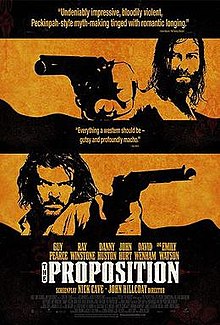 The significant resurgence of the Western genre since about 2005 (for reasons I’m not entirely sure of) is one of the few truly surprisingly revelations from the cinematic world to be found this past decade. It’s all the more notable particularly because the Westerns themselves have taken so many different forms, from pure, effervescent myth-making, to black-hearted heaving gasps of grimy moral decay, to slowly gliding, almost Impressionist location tapestries where characters serve merely as extensions of the environment, to plain ol’ rootin-tootin shoot em’ up character studies.
 Star Trek is so light on its feet and cheerfully reckless it is almost impossible to dislike. Except that it does a whole lot worthy of disliking. This is a film wholly dedicated to lean, mean, efficient summer-blockbuster filmmaking. And if it is a decent entertainment for this reason, it sure isn’t interested in doing away with many of the flaws found in modern mainstream blockbusters. Yes, when it came out in 2009 it was the perfect fix for weary summer movie goers tired of sequels and superhero films, and, as the icing on the cake, it filled a void for Star Wars fanboys who couldn’t get over George Lucas’ recent efforts. Except…apparently what they wanted was a rather competent blockbuster so concerned with action it fails to concern itself with anything else. This achieves the rather depressing goal of creating a fairly solid and sturdy action extravaganza, while also somewhat sapping the film of most of its heart and soul.
  The Long Take