
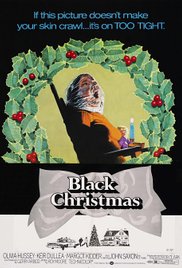
 Bob Clark’s maniacal 1974 classic is perhaps less remembered today for its own caliber as cinema than for the hell it wrought on the American film industry. Here, I refer not to the necessary, provocative, disobedient, slash-and-burn kind of hell the film wrecks with its wonderfully imprompriotous filmmaking, but the vile, corporate, franchise-baiting kind which turned horror filmmaking in the ’80s into the most cringe-inducing attempt to market the genre to the lowest common denominator. But that’s less a slight to the film’s quality than a marker of the sheer deluge of sequel-itis this proto-slasher unleashed (Tobe Hooper’s masterfully malevolent The Texas Chainsaw Massacre was the other obvious culprit on that front). It’s a tough reputation to live up to. No film short of John Carpenter’s ur-slasher Halloween could stand up and stare at the massacre of common decency the slasher represented in the ‘80s and remain un-mortified at the devastation its inferior slasher-children had caused to the intelligence of the horror landscape. Still, nu-metal will never halt me from claiming that Faith No More is the most defiantly demented rock band of the past 25 years And Nickelback only occasionally makes me feel guilty for liking Soundgarden and Nirvana. I’m not about to slander a film for the sins of its descendants. Besides, those antic, anxious perspective shots strangling Black Christmas like garrote wire sure made John Carpenter happy when he weaponized them for Halloween four years later. And if we have Black Christmas to thank for John Carpenter, then who really cares how good this film is? It has already done its due diligence to the cinematic landscape. Continue reading
Midnight Screaming: Black Christmas (1974)
Leave a reply
 Not really progenitors to any new film specifically so much as to the spirit of every Christmas movie. Again, I recognize I’m a couple weeks late here. Enjoy nonetheless.
 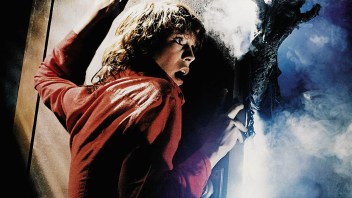 In late ’70s and early ’80s, an era of rapid-onset gigantism from both young blockbuster wannabes (see Lucas, Spielberg) and the then-old New Hollywood dogs who hadn’t learned new tricks but sure dug learning how to spend more money on the old ones (see Coppola, Cimino, both of whom I adore), John Carpenter was a breath of shedding, frigid air. His run from Assault on Precinct 13 through Halloween, Escape from New York, and The Thing is simultaneously a breathless rush and malarial lurch (that contrast being Carpenter’s hometown) through old-school B-picture primitivism updated with hungry young carnivorousness. Smack dab in the middle was the ugly duckling of the bunch, his somewhat forgotten ghost story The Fog, another obvious ode to Carpenter’s youth in the form of a relatively classical, compositionally sound ghost story. Although its reputation hardly precedes it, The Fog is an always humble director at his most humble, maybe his most straight-faced, and, well, not his best per-se, but nearly his moodiest.
  I know the post is a little late, but at least I managed to watch these films on Halloween.
  I know the post is a little late, but at least I managed to watch these films on Halloween.
  A barn-burning blockbuster mixed with a post-psychedelic phase-out, The Fury was released (or unleashed) at a point in time when freakishness was something to contain and compartmentalize rather than flamboyantly unhinge. Yet director Brian De Palma, his corporate cred already in good hand after kick-starting the wave of Stephen King adaptations with Carrie, lets the crazy all hang out. An evolution and perversion of Carrie, The Fury won’t be to everyone’s tastes, although it certainly was to critic Pauline Kael’s. In one of her most infamous typeset orgasms, the famous moralist critic let loose, felt the film’s pulse, and ran with it.
 With Tommy, certified mad scientist Ken Russell retools that Old English warhorse of an album from the Who into a whirling dervish of flamboyant disco-fever proto-prog nonsense. Initially kindling the memory of Richard Lester’s A Hard Day’s Night, Russell’s film derails whatever facsimile of sense or grubby intimacy remained in the semi-verite aesthetic found in that exultant spasm of a 1964 masterpiece. Which is fitting; the Who’s Tommy, the 1969 album, was essentially the turning point where British rock music mutated (sometimes to its detriment) from a cabal of psychedelically-charged, lacerating nuggets (more like aural secrets than full-throated arias) into bombastic, headlong plunges into super-textured, baroque madness, the bastard child of which became progressive rock. With the film A Hard Day’s Night, rock ‘n’ roll cinema was cheeky, provocative, untroubled, gallantly foolhardy, a burst of energy. By the film Tommy , rock ‘n’ roll cinema could be sinister and campy but was always distinctly troubled, a dialectic of cynicism and silliness coiled up in confusion, the once-burst now a full-on fever for good and ill. The decade in between the films speaks not only to shifts in musical impulses but a decade-long cultural-temperature slide from a birth wail to a death rattle. And when the coloration is this clamorous, it’s got shake and roll covered as well.
  Released after a decade of directorial experiments toward wider, more all-encompassing expanses, Michael Mann’s Collateral is a satisfyingly blunt reduction: a spry, athletic, all-muscle take on stringy two-character cinema that feels like an indie move coiled up in constricting digital fiber optics. It’s a freezer burn of a film. Glancing the punctured historical adventure The Last of the Mohicans, the punctured crime thriller Heat, the punctured social treatise The Insider, and the (well you get it) sports biopic Ali, Collateral might be called a punctured action film. But bequeathing it with a genre (even a slantwise one) feels like sacrilege, a way to explain, and thus uncoil the mystique of, such a venomously wound-up, unique beast of a picture. Collateral is etched out of a B-movie spirit that does something more important than defy expectations or wrinkle the narrative (although it does both of those things): it throbs. Real good.
 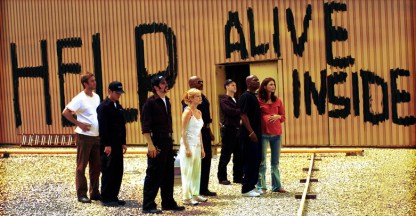 Zack Snyder has been spending way too long in the sun with the wrong king of edibles. Over a decade later, his brand of fast food cinema has woefully miscalculated its essential inessential-ness, replacing gleeful cinematic pit-stops of full-bore energy with lugubrious dogged trudges, buckets of lard pretending to be hearty, social-expose steaks. All these years later, he retains but one meaningfully good film to his name, and one that was more or less written off as trivial in its time period. But 2004’s Dawn of the Dead is only guilty by association to a superior film bearing its name, a stone-cold masterpiece that Snyder nonetheless fricassees in his hot-fire skillet of improbably sure-handed, slithering filmmaking.
  Two horror masterclasses from 1963 on Midnight Screenings.
