
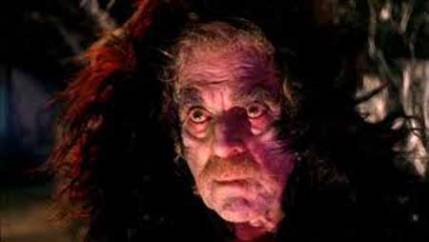
 After a long way away, I’ll start posting pretty furiously for a while again. First up is a trio of Mario Bava films to celebrate the return of Midnight Screenings!
Mario Bava’s 1963 omnibus film – the fitting inspiration for the band of the same name – isn’t among Bava’s many lesser-masterpieces of cinema. But it does showcase – with tripartite allure – how pliable his aesthetic predilections really were. A murderer’s row of guiding hands from Roberto Rossellini to Jacques Tourneur to Raoul Walsh all helped Bava in his younger days as a cinematographer – or, more accurately, he helped them – and his turn to directing later in life (already in his ‘40s when he completed his first film) cast further light on how preternaturally he knew how to enlighten the screen with a purity of visual/aural technique that even many more thematically literate directors had no clue for. He famously considered himself a hack of sorts, but his films reveal both a strikingly lucid command of the screen and a particularly lurid and consistent moral worldview that suggest he was much more than a mere mercenary for hire. Continue reading
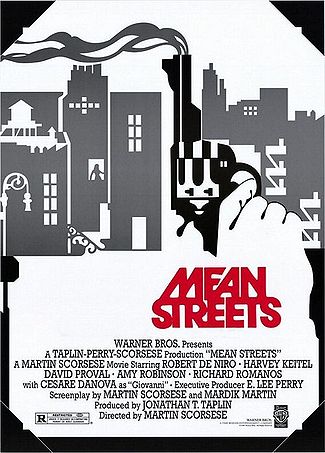 A dive-bar livid with unvarnished restlessness, Martin Scorsese’s first “big picture” breakthrough is no mere chopping block for his later, more famous regurgitations of his pet themes: Catholic guilt, boys being boys, male angst, un-placeable inner-city maladies. Instead, Mean Streets is all the more probing for its out-of-focus, improvisational gusto. It lacks the “perfect” formalist backbone of The Brow’s later Taxi Driver, Scorsese’s perverted poison-pen letter to classical Hollywood noirs as well as a codified conduit for writer Paul Schrader’s meditations of transcendence and Robert Bresson. But while more noncommittal and less precise on the surface, Mean Streets’ libertine energy and scruffy, scrappy, unfocused workaday energy actually bests its more confident younger sibling for sheer restlessness.
 I meant to get to this a bit ago, obviously, but this review is in memorium to the dearly departed demon of cinema Seijun Suzuki.
 Exsanguinating Hammer Horror at their own game, Thirst’s stupendous opening teases arguably the greatest classical Gothic pastiche of the ‘70s. Set in a faded castle, the film immediately injects fresh blood (OK, I’ll stop) into the corpse of the once-young hooligans in Britain. Hammer, of course, was not immortal, unlike its money-maker Dracula (and seemingly their star Christopher Lee, who acted until the ripe old age of 95). By the out-of-control coaster that was the 1970s, the company had ironically aged into the very old fogey, Universal Horror, that Hammer had once upstaged. By the mid-70s, the heads of the company were desperately clawing at the ground around them to keep up pace with young upstarts like the American slashers, the Italian giallos, and a slew of murderous little Aussie numbers from down under. Horror’s claws (see, I didn’t say fangs) had sharpened in the intervening years, and it would require new blood (drum, drum, cymbal) like Thirst to re-ignite the fire.
  Adam Wingard and Simon Barrett’s sweaty cold splash of a film, The Guest, is a remarkable improvement on their previous collaboration, You’re Next, which was more of a conceited, self-hating concept in disguise as a sincere slasher. In comparison, The Guest is one or two fewer “explain the fear away” scenes away from a genuinely great, greasy slow-burn thriller that ignites for a climactic convulsion that is all rascally convulsive energy and Joy-Division-concert gloom. Whereas You’re Next was mostly just ugly and nihilistically neutral in its critical perspective (anti-everything), the pair of filmmakers has also ginned up an honest-to-god sense of tonal specificity this time around. In this case, The Guest is not only awash in reverie for that wonderful anxious-laconic tone of John Carpenter’s films (call it “strenuously relaxed”). But The Guest also secretes a variant of sensual sadness and even downcast sexuality straight out of Near Dark.
  We Are Still Here
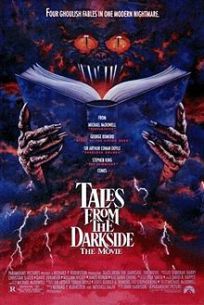 With anthology horror prowling all through the house throughout the ‘80s and into the early ‘90s (a byproduct of the decade’s conservative turn and ensuing ‘50s/early ‘60s fetish), 1990 was the watershed moment for when the monster mash got nasty. The A-list-courting Amazing Stories show from nostalgia-babies Steven Spielberg and friends meant to tingle your spine while it was patting your head to sleep. But when HBO latched its greasy, sleazy claws around the trend, it soured into the venomous, loud-and-proud midnight haunting hour likes of Tales from the Crypt by the decade’s end. (Robert Zemeckis, one of Spielberg’s cronies, was involved in the transition and directed three of the best, although not always the bloodiest, Tales when he decided to let his hair down and unscrew his A-list credentials for something grubbier and more robustly exploitative).
  With House by the River, Fritz Lang’s forked acid-tongue was curled up into his iron-bolted mouth by Hollywood execs none too interested in some of his more provocative stylistic or thematic ideas (of really doubling-down on baroque imagery-of-the-mind or exposing oppressive gendered, racialized, and classed power dynamics in America). But, even though he was forced to neuter his mission and his mind with films like House by the River, Lang’s eyes were as sharp as ever, possibly even hungrier due to his sometimes-livid attitude toward Hollywood and the poverty-row quality of this production in particular. The once gilded director of four hour German epics, monolithic slabs of pure cinema in their day, was now a mercenary for hire. But, hey, Val Lewton and Jacques Tourneur produced the two best horror films of the 1940s with next to no budget, so why couldn’t Lang knock out a corker of a film noir?
  Skulking down from its natural habitat of the backwoods of the frigid North down to our prudish American confines, David Cronenberg’s early Neanderthal of a body horror film delivers a scatterbrained, deviously crude twinge right to the spinal fluid and sends the mammalian brain running wild. A premonition of icky in-your-pants terror to come, this unruly, mutilated motion picture about a sex slug that invades the inhabitants of an apartment complex somewhere in Canada doesn’t hit the deliriously otherworldly heights of Cronenberg’s latter-day triumphs. But the director already displays an almost Machiavellian skill for bodily manipulation even on a shoe-string budget (a budget he marshals for a film that is more than the sum of its parts). And his peculiar aura of marrying undisciplined/unmitigated with judicious/precise flavors ultimately colors in his hypothetically barren production with formal rigor and subtextual meat a mild wide, creating a horror that runs both fiery hot and cold like a reptile.
  In his canonical masterpiece Pan’s Labyrinth, the faint pulse of brilliance throbs in Guillermo del Toro’s luxuriant, sumptuous, affectively-charged imagery. But rather than carving out room for the kind of insouciant, mordant humor and interpersonal drama permeating through his Hellboy II, Pan’s Labyrinth is mostly content to calcify itself in a morass of symbolically-charged cues devoid of any precious room for del Toro to feel out the moment rather than smack us over the head. There’s room for such overt emotion in any filmmaker’s canon. Hell, the romantics del Toro loves (Almodovar, Douglas Sirk) practically made a career out of spinning melodramatic straw into gold that punctures the mask of subtlety and rationalism. But the sense of robust emotion as an escape from reason is too often trampelled by del Toro’s emphasis on characters as stand-ins for ideas or metaphors. The relationship between the symbols and the emotions isn’t mutualistic. Rather, the symbols parasitically enervate the characters of defiant streaks or the ability to even consider peering elsewhere beyond what the narrative has preordained for them.
