Edit early 2019: Bob Dylan’s Time Out of Mind really should be on this list. More overtly confessional than the oblique tricksterisms of his ’60s albums or the deliciously irresponsible emotionality of his best ’70s works, the ’90s Dylan is a kind of resurgent corpse, an atonal squall of a voice and a truly cadaverous guitar creak conjuring an aura of weary, beaten-down oblivion. Dylan’s early-life persona was that of a genre-hopping hellion, of a man who carefully cultivated, and reveled in, his own strategically, devilishly enigmatic nature, resisting any sedimentation with post-modern impishness. Here, though, any pretense of playful persona-hopping or teasing, libertine seditiousness has faded away, leaving little beyond the husk of a wounded enigma of a man having lost a center entirely, his ghosts returning to haunt a figure in search of a final resting place, in the form of a real “true” identity, to die with.
Which means that it’s the foreboding, death-stalked “Love Sick” – on which Dylan’s phantasmal voice drowns, barely subsisting above the perceptual thresh-hold barrier, and the scraped stupor of “Not Dark Yet” that form, and haunt, the heart of the album, capitalizing on over thirty years of hell-raising, and channeling them into a mournful moan that questions what’s been accomplished after all. It’s not a purely fatalistic perspective, though, and in songs like “Cold Irons Bound,” Dylan stages an encounter between murderous enmity and the unforgiving unknown, staving off oblivion with an insurgent violence that turns this amnesiac wake of an album into a shredded-larynx wake of death.
Edit early 2019: In fact, an edited-down Use Your Illusion would make this list, with songs like the “Right Next Door to Hell,” an opening molotov that sounds like “Welcome to the Jungle” dredged up from the bottom of the murkiest oceans of Axl Rose’s mind, the positively dazed “You Ain’t the First” on which the band give us their loneliest tumbleweed ever, “Dust N’ Bones,” the band exorcizing all their Stonsey-est demons, the truly amazing, paranoiac “Locomotive,” where the band’s jittery, irregular rhythms attempt to outflank Axl entirely and he bounces back with gusts of sheer manic frustration, the dustbowl rattlesnake “The Garden” on which a lurking Alice Cooper is positively venomous, “Coma,” which slowly metastasizes over 10 minutes like a cancerous malignancy, and the truly menacing “You Could Be Mine,” which burrows right down into the bowels of Rose’s violent possessiveness with a near-terrifying sense of clarity, the whole (hypothetical) album concluding with a violent, vulnerable howl that climaxes its pinball ricochet between toxic malevolence and disarming sweetness.
Edit late 2017: Totally forgot Mobb Deep’s 1995 album The Infamous, another truly grotty series of New York City stories that simultaneously diagnose the fallout of neoliberalism and neoconservatism, drop us into a netherworld of existential uncertainty, and acknowledge their own tenuous, uneasily-grounded attempts to fight back. Mournful and malevolent, sad and sinister, the duo of Havoc and Prodigy, rapping over almost gnarled, almost ravaged beats, play both doomed sears, daring to imagine a future they assume won’t ever actualize, and casualties of that vision, lamenting the tragic, numbing circularity of a ghetto life they are near-helpless to change.
The lyrics exorcize many demons, but it’s Havoc’s startlingly impressionistic soundscape which reigns supreme. Acknowledging how NYC rap had taken lo-fi samples to the precipice by 1995, The Infamous then dives right over the cliff into an oblivion of ghostly, half-present sounds, possibly stifled voices enveloped in darkness or objects resonating insidiously from unknown origins. (Thus, the long debates about the roots of some of their samples). Every song seems to have been given a hard, demonic sear, but all remain diffuse, like they could immediately collapse. Or like they’ve been wounded, brutalized, carrying an immeasurable amount of exhaustion as they take us, unfathomably and Charon-like, into the next verse.
It’s incredible stuff, a total about-face from a should-have-been also-ran duo who had already released a pop-rap album that failed on the charts, soundly savaged by the grimmer, more baleful likes of the Wu-Tang Clan and Nas meditating on their everyday traumas, dashed expectations, and demented dreams in the five boroughs while Havoc and Prodigy were busy worshipping women’s bodies like ’80s leftovers. They returned with this incredibly doomy portent of failure and resistance, a full-on assault of an album but one that isn’t hostile. It’s merely distraught, an abyssal portrait of sheer abjection from two prophets of social destruction peering into a netherworld they know they didn’t make, but which they have no choice but to participate in.
Edit mid-2017: So, GZA’s vehemently volatile, hypnotically frigid hip-hop horror show Liquid Swords should be in the top five on this list. Don’t know how I forgot it. Best rap album ever.
Edit late-2015: And finally, do give it up for Dinosaur Jr., who are instrumental in the development of many of the albums I hold dear from the past quarter-century. Their best stuff was released just outside of the time period this list covers, but their recent return to making albums has yielded at least two stellar rock records, 2007’s Beyond and 2009’s The Farm, and they probably should have been on this list.
Edit mid-2015: Personal need dictates that I inform you this list probably should have been just Ty Segall albums, but I’ll get back to him at some other point. Maybe a retrospective? Seriously, his stuff is uniformly terrific, concrete-primal howling sludge gutter-punk death-marked psychedelic proto-punk, and all that good stuff. He’s also ridiculously prolific. Do check him out. Also I probably could have included almost every Sleater-Kinney album, but you should just check them out, and especially their new release No Cities to Love. It is the best rock (not metal) album I’ve heard in a very long time.
Original List:
But first, the honorable mentions: Some albums were seriously considered, but were tainted with an air of homework. Alt temper-tantrums like Arcade Fire’s Funeral, REM’s Automatic for the People, Wilco’s Yankee Hotel Foxtrot, and My Morning Jacket’s sterling Z just fell prey to my proclivity for abrasive, dangerous sounding music in the end, skirting a little too close to the fluffier qualities of indie music to cut it on the list (they’d all be shoo-ins for a top fifty though). Lauryn Hill’s The Miseducation of Lauryn Hill would have been the greatest pure pop album of the past twenty five years (and it still sort of is), but it needed a slight trim around the edges (extended length being the great bane of all modern albums). The Arctic Monkeys’ AM is a brilliant album in concept but falls slightly apart in execution after the first half (it’s still a real corker of midnight-in-the-club crooning vampire rock though). And while hard rock/ metal bonafides pop up every which way through the ensuing list, 1990 boasted a pair of pummeling thrashers in Megadeth’s Rust in Peace and Judas Priest’s Painkiller that just missed. 1991’s unwieldy monstrosity Use Your Illusion (Guns n Roses, but you already knew that from “unwieldy monstrosity”), if paired down to one album, would be just about the most fascinatingly confused rock album of the past quarter decade.
Continue reading →
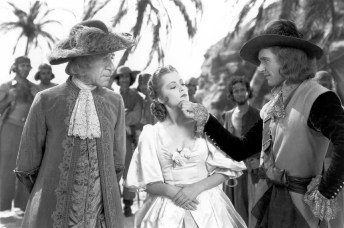 Analyzing the work of an Old Hollywood stalwart is no easy task. All the prime candidates have been written about to death; who, in all my majesty and knowledge, can I actually tackle without self-repetition? So much I wanted to take on Nicholas Ray, one of the reigning “brash young men” skirting around Hollywood royalty in the 1950s, but having reviewed In a Lonely Place and Johnny Guitar (and thinking his most famous film, Rebel Without a Cause, is the least fun film of his to write about) crossed him off the list (Bigger Than Life desperately needs a review though). Jacques Tourneur certainly popped up, but I’ve already covered his two most famous films, Cat People and I Walked With a Zombie, and Out of the Past and Night of the Demon can hop their way on over to Midnight Screenings anyway.
 In light of recent events leading to a supposed continuation of The X-Files next year (in truncated, six episode form however), everyone can’t get enough dissecting the strangest cult-show turned multimedia cultural extravaganza ever to grace the small screen. In honor of this news, and to throw my take into the mix, here are my top nine episodes of The X-Files.
 That Universal Soldier: Day of Reckoning exists indicates something is wrong with the world. That it is, against its better judgment, a near masterpiece, at least in terms of filmmaking principles and matching those principles to its narrative concerns, implies something is far worse with the world than anyone could have imagined. But yes, the fourth or eighth or ninety-sixth film in the bro-fest science fiction routine slaughterhouse that is the Universal Soldier series, tangled up in its Roland Emmerich-directed roots and choking on them for decades now, is good. In fact, in its own way, it’s fairly great. And how shocking that this way approximates ’70s art-house horror/crime/thriller/ sci-fi that only passingly gestures toward any idea of “action” and even then does wonders to detach “action” from anything resembling Roland Emmerich. What a strange, strange film. Plus, if it means anything to you, it is probably, by several orders of magnitude, superior to anything Dolph Lundgren or Jean-Claude Van Damme have starred in (although the post-structuralist JCVD, a sly little nightstalker of a film, comes pretty close for the latter star). Pleasures abound in this weird, weird world of ours, folks.
  So much has been written about American Sniper over the past few months, about its unkempt, pro-war patriotism and its torn apart anti-war expose of human trauma, that it is somewhat shocking how little has been said about the one thing that really reveals its essence: Clint Eastwood. Whichever stance Sniper takes, it is unquestionably the work of its director, the old individualist who loves to raise the American male up on a pedestal of his own making and tear him down again, and the only filmmaker working today who understands the old-school spirit of mid-century genre pics by the likes of Sam Fuller, Sam Peckinpah, and John Sturges. American Sniper is at its best, and its worst, when it is most similar to its subject Chris Kyle, knowing his clean, blunt efficiency to a fault, and sharing not a little of his single-minded apprehension for anything out of its sights.
  Stop Making Sense is, and this is not nearly as common and ubiquitous a statement as you might imagine, a truly singular film experience. Sure, there are great concert films; Martin Scorsese’s The Last Waltz is very likely a superior concert film with more to say about the nature of music as it exists in the ether. But Stop Making Sense isn’t a concert film, at least in the traditional sense. It is a film about cinema, and about what cinema can do to transform the ethos of a concert beyond what a concert is in person. If this extends it beyond the realm of a concert, it also does more to make us think about what a concert entails as a realm for voyeurism and socio-spatial art. Stop Making Sense does not merely hit the mark for a concert film; it transforms it.
  “Gimmick” is a word that critics and viewers throw out with wanton abandon for films like Unfriended, and this film invites the usage. It is a lazy, amorphous critique thrown out whenever a film tries something new. It was a gimmick when Stanley Kubrick brought in cinematographer John Alcott to film Barry Lyndon as if it was an 18th century painting so that he could dissect the falsity and artifice in the lifestyles of the film’s characters, explore the ways in which film is always fictional, discover the limits of cinematic attempts at “realism”, and champion cinema all the same for the ways it can use fiction to explore the cosmic regions that lie in the murky waters beyond realism. What matters is not that it was a gimmick, but whether it was an effective gimmick, and, in that particular case, it was a masterful one, perfectly suited to its film and alive as passionate cinema.
 I don’t know, man. Death Proof isn’t really a movie. It’s an idea, and as an idea, it can’t be separated from the way it was released. Its release was very much the whole point of its existence, even separate from the actual film that was produced to facilitate that release. On its own, there isn’t a whole lot going on in Death Proof, although small pleasures, including an awe-inspiring final reel, abound. So…
 Rare is a film of such purity as Kill Bill, and rarer still is a film of such purity that is never less than fully confused and unsure of itself. From beginning to end, Kill Bill is entirely the artwork of an unabashed enthusiast and filmmaker, but it is a deeply perplexed film, perhaps intentionally so, and perhaps to its unmitigated benefit. Purring like a kitten on the surface but deceptively self-critical underneath, Tarantino’s most violent film also has more to say about violence than any of his films. It is a work that is simultaneously enraptured in love with itself and tearing itself apart in disharmonious hate, and thus certainly his most fascinating, conflicted piece yet. This doesn’t make it necessarily better or worse, but it may make it his most worthwhile film, especially because it never once allows us the confidence of our views in it. We can’t even really be sure if Tarantino “gets” it, and auteur theory isn’t going to help us one lick, unless of course it’s there in the background reminding us that Tarantino just can’t make an uninteresting film– even when doesn’t have a clue himself. Kill Bill can’t make an argument that Tarantino understands his own particular brand of proudly filmic anti-film commentary on the nature of cinema and violence. It may be him missing the forest of his own genius for the crimson-red trees of flailing arms and heads. But what a forest. And what trees.
 Quentin Tarantino “does” blaxploitation conjures a certain post-modernist genre-kitsch image in the mind. Clearly, it conjures the same image for Tarantino too, as his latest film, Django Unchained, exists wholly in a postmodern blaxploitation-by-way-of-Western stew. Yet Jackie Brown, despite its would-be blaxploitation credentials, couldn’t be further from the playful violence and comic grit we might expect from both the genre and Tarantino. Maybe it’s just the not inconsiderable fact that this is the director’s only film to date that bears another source, in this case Elmore Leonard’s novel Rum Punch. The fact is, Tarantino very much proves primarily invested in honoring his source material without transforming it in any notable way. It is Tarantino’s most humble film, and anyone who knows him would never dream of that descriptor anywhere near him. Either way, it just doesn’t feel like any other Quentin Tarantino movie, and for a guy who is easily stereotyped and put in a corner, it’s a pleasure to see him exploring, especially in 1997, perhaps the height of his critical darling days when he could seemingly do no wrong.
