d The newest in a long trickle of good-to-great DC Animated Universe films, Batman: The Killing Joke, is to be released this week, and in theaters no less (the realms of kiddie animation really have grown up). Since the film is based on the most famous Batman vs. Joker comic, one that partially inspired the gothic milieu of one of the most important blockbusters of all time, and because the DCAU itself was so heavily influenced by that blockbuster’s noir-baroque vision, it seems appropriate to take a trip back to the past with a review of the progenitor of this whole 25 year Batman love-affair-cum-epidemic that nerd culture has been afflicted with.
Watching Tim Burton’s 1989 Batman and its disfigured, plastered-on darkness today is largely a quaint experience. What was once a disquietingly serious blockbuster in its day now struggles to escape from underneath its giddy elan. But in 2016, an era of mangled, over-indulged, force-fed blockbusters with a realist, solemn streak a mile wide, it is Batman’s very cartoon zeal that becomes the well from which it draws life. Famously gruesome and gloomy in its day, Burton’s vision of gothic decay is decidedly less rapt with the reality principle than most blockbusters. Without heeding the realm of logic, Burton’s film is able to indulge its less timid, less mediated personal fetishes and massage something decidedly more expressive and visually crazed out of the fibers of the Batman comic than most blockbusters in the ‘10s, so concerned with narrative pretensions, would even know what to do with. Tim Burton’s brand of serious is silly, to say the least, but the mixture has an alchemic chemical allure in 2016 with most blockbusters so stone-faced in their sobriety and most Tim Burton films so manic and spasmodic they lose any sense of their center. Maybe it wasn’t in 1989, but in 2016, Batman feels like the sweet spot. Continue reading →

 An elephantiasis-afflicted, dismal anti-epic of undying malfeasance, Kevin Costner’s The Postman is positively drunk on its own grotesque patriotism and egotistical self-interest. From the man who directed Dances with Wolves and starred in (and may have directed) Waterworld, The Postman is just plain engorged, a foolishly endearing attempt to flare-up every operatic cue and hyperbolic shot in those films, fling well past the point of common logic, and invade the realm of Rococo drama. Fittingly, it is a missed target of a distinctly and unambiguously Costner-esque caliber. While Dances was a questionable but undeniably poetic epic that suggested something of America’s own mythic grandeur, The Postman finds the bottom falling out as Western pastiche becomes accidental Western parody. Continue reading
  The early ’90s was a phoenix-like ascent for animation, a time to rise from the grave of the ‘70s and ‘80s and flaunt the medium’s wares anew. Taking little time to clear its throat, a renewed Disney Animation huffed and puffed The Little Mermaid, Beauty and the Beast, Aladdin, and the epochal The Lion King out into the world in a manner of years. In doing so, they blew down the house of their reputation as a failed, past-its-prime studio of has-beens. Meanwhile, Don Bluth, the rising star of the studio and its potential savior throughout the ‘70s, had jumped ship – firmly believing his clout was wasted on the irrelevant Disney old fogeys of the ‘70s – and by the late ‘80s, his own star was shining with works like An American Tale and The Land Before Time. Although both pillars of animation would struggle before the decade was out (Bluth faltering almost immediately upon the turn of the ‘90s), the landscape was hot for the moment, so hot that even animation’s famous bad boy (long dormant and lost in the fray) couldn’t miss out.
  Monkeybone represents director Henry Selick’s well-meaning attempt to disrupt the live-action realm with the furious might of his expressive, cocaine-addled stop-motion cinema. While his previous efforts behind the camera were all compromised in one way or another (often to their benefit), this deeply uncentered film is the most immediately adept at cracking into his singular mind. While The Nightmare Before Christmas was an acolyte of Tim Burton and James and the Giant Peach indebted primarily to the Roald Dahl tradition, Monkeybone feels like Selick in his purest form, Selick unhinged. And also, perhaps necessarily, Selick on a reckless rampage that leaves him both struggling to handle the reins and at times completely distracted from the havoc his feral beast has wrought.
  I meant to review this a while ago, but the year of its twentieth anniversary seems as good a time as any. Noah Hawley’s television show is every bit the film’s equal, but there’s nothing wrong with the primordial ooze of the original.
 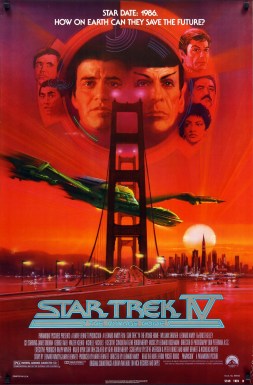 Two of the even ones. You know what that means.
  You know Star Trek. This isn’t it.
 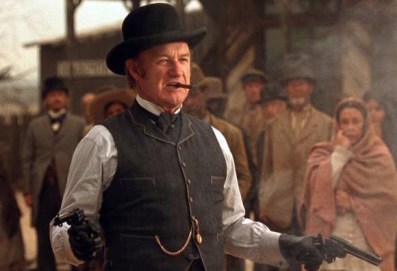 With Cutthroat Island as the never-off-the-ground bottom leg and Waterworld as the high-flying upright obelisk standing up on 175 million, the right triangle of box office halitosis spewing out from weird genre adventures in 1995 was completed with the dismal performance of Sam Raimi’s Sharon Stone-vehicle The Quick and the Dead. Which, in this metaphor, is the gnarly hypotenuse, the connective leg between Waterworld’s hyper-production-designed, outré weirdness and Cutthroat’s illogical idiocy.
 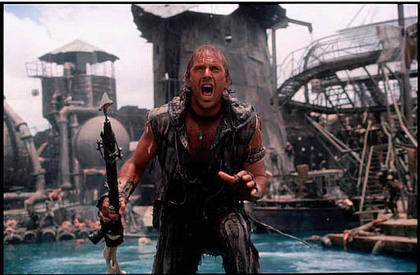 Waterworld
 Between roughly 1993 and 1998, the post-Tarantino brio that was at one point the most scorching lightning-bolt in cinema shifted to a self-immolating fire, a pox on the cinematic landscape, almost overnight. The beacon of the Weinstein-fronted American independent success story, Tarantino was a shining light on the cinematic landscape until a deluge of golden-child followers (see Boondock Saints) cast their mettle in Tarantino’s gilded name and overindulged in his post-coital cool and sometimes smug pearly whites without actually backing their versions of the tale up with the wit, elan, or the cinematic rattle and hum of Tarantino’s style. Posing had suddenly become an art form.
