 Update 2018: How I do love this movie. If Altman’s oneiric fluctuations and clouded, evasive truths are as wonderfully resistant to crystallization as always at the beginning of 3 Women, they eventually sour into full-on psychotropic nightmare by the conclusion. By the film’s end, Altman holds life in a Janus-faced state of simultaneous free-fall and resting haunt. It won’t be for everyone, but catching this film’s wave-length is uniquely rewarding precisely because it is so slippery, its mind so hauntingly unquiet, ever-still but always subtly shifting with a frightening lack of clarification.
What’s so fascinating about 3 Women is that it retains so much of Altman’s typical sensibility, from his evocative sense of place to his shaggy, non-committal attitude toward the forward push of narrative, but it twists those features into an entirely different, slantwise milieu. To wit, 3 Women elastically mobilizes Altman’s typically wide, expansive canvas, for instance, not to conjure a community-spanning horizontal weave, as in Nashville, but to probe the psychological lonelines of two women locked into a particularly demented pas de deux of self and other.
Compared to Altman’s typically wistful realism, then, 3 Women is a more mannered vision, a West that doesn’t shuttle us into the chaotic instability of the social world so much as stage a difficult, near-unfathomable tableau for us to parse, one where the fractured, contorted intimacy of two women is more than enough to disorient our conception of selfhood. Like several of Altman’s earlier films, this is still a vision of a dilapidated West. And this “West” is no less a canvas for the self, no less a place where people go to find themselves, even more than 75 years after the “death” of the “real” Wild West. But in Altman’s wonderfully misshapen variation, the West, and Western fiction, is also where identities blur and bleed, where spectral figures wander across the land and seem to diffuse into space itself, where one’s sense of self is tested not against the might of an unforgiving landscape but against the soul of another. Call it McCabe & Ms. Ullmann (and Andersson).
Original Review:
Robert Altman is not about to be forgotten. The man directed a proper handful of esteemed classics in the early ’70s and surged back into the limelight in the early ’90s with a pair of brusquely bitter late-period highlights. For good or ill, however, the greater film community tends to look sideways whenever a good portion of his lengthy, dense filmography is on trial. Say, for instance, anything between 1976 and 1991, a period in which the director made almost a baker’s dozen of fresh films for dissection, many of them rightfully moved past but quite a number truly audacious, brash, deeply personal, and worthy of analysis in their own way. It’s strange to call Robert Altman “underrated”, but the man made a lot of films, and sometimes it seems as if those who love him think time got lost between the early ’70s and its twenty-year later counterpart, the early ’90s.
Continue reading →

 There are precious few films about childhood. Many aim for an audience of children, but most look down upon them in their assumption that they will eat up any and all immature entertainment simply because it is handed to them. It is the rare film that tries to peel back the layers behind childhood and to give us a look at what growing up entails. Because it is difficult to focus on children in film without rendering them types, either immature simpletons who do not understand the world or wise-beyond-their-years precocious types who “know” better than the adults around them, it is rarer that a film succeeds at presenting childhood with a quiet sigh, knowing a certain maturity without ever losing itself in the adult desire to judge and moralize to children. There have been a number of great films about childhood, but none stand taller than Francois Truffaut’s debut film, the work that kicked off perhaps the most important movement in film history, the French New Wave: The 400 Blows. Continue reading
  Andrew Dosunmu’s Sundance hit presents a tale as old as time, yet lively, immediate, downright kinetic visual craftsmanship ensures it remains as trenchant and pointed today as at any time in history. Adenika (Danai Gurira), a Nigerian immigrant to America, marries Ayodele (Isaach de Bankole) and spends a good many months struggling with him to produce a baby. They are not sure what precisely is wrong, yet whatever initiatives they try fail. Ayodele’s mother Ma Ayo (Bukky Ajayi) desperately wants the baby, perhaps more than either of its hypothetical parents, and she has an alternative, somewhat unsavory suggestion about how to resolve it. It’s a tale of simple, distraught, confident, torn emotions, but as with most movies, it is the story-telling, and not the story, that comes through in the end.
 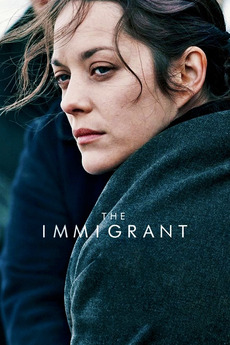 James Gray’s 2013 melodrama The Immigrant is not much of a story, but then, the same can be said of so many of the very best films ever made. How many of the classically-ornamented melodramas The Immigrant so obviously recalls boil down to one or two now-cliches (and tropes that were, rest assured, cliches in the 1940s as well) hammered home with worldly, elegant filmmaking? Many, quite a bit more than we may think, but here, as it is true there, the factor so often missing from plot summary reviews is that a plot summary is not a film, and that magisterial filmmaking makes a film, not its plot outline. We do not need another story about a prostitute with a heart, one of the most well-worn tropes in film history (and a sexist one, for it implies that a normal prostitute does not have a heart). But we have one, and if it isn’t a magisterial work of storytelling, its solid, and that, in the end, is all that matters.
 JC Chandor’s third film in four years, and possibly his best, firmly establishes him as a leading voice for a new generation of gifted filmmakers taking up the history of classic cinema and creating the future out of the past. His three films, a dialogue-heavy corporate thriller, a dialogue-free survival parable knowing desperation as well as quiet agony, and now a tone poem to a city in the guise of a ’70s-styled crime thriller, all owe an equal amount to the nervy, alert grit of ’70s cinema and add on a modernist, even impressionist edge to focus more on space and abstract mood to go with the concrete grime of his films’ physicality.
 Kevin Macdonald more often dons the cap of documentarian than fiction filmmaker, and his Black Sea shows it. He brings a grimy, festering, “you are there” realism to this lean, efficient work. This story of a deep, dark sea revealing mankind’s darker heart puts Jude Law in the position of a beleaguered, disgruntled, Scottish workaday ship captain unceremoniously fired from his day job. He takes it upon himself to seek a personal form of revenge and get rich quick in a damp, deep excursion into the crumpled, blistered quarters of a worn out submarine, surrounding himself with a crew of unsavory, functional types and the hopes and dreams of a treasure of gold deep within the hard-lost depths of the Black Sea. Troubles abound, from tension within the men, to physical difficulties in actually procuring the gold, to corporate lies and deceit, but all of them filter through and debate with the darkest secret of all: man’s worst enemy in his own unquiet self. If it sounds like a story out of the rough-and-tumble mid-’60s, a Sam (Fuller or Peckinpah, take your pick) or John Sturges dude-picaresque “picture” (as opposed to a film or a movie), you’d be right. It’s an ode to a style of film lost today, a sort of rivetingly adult, high-concept entertainment as scruffy and chiseled as a machine after a hard day’s work, and, for what its worth, it earns the comparison.
  I am not supposed to like Blackhat, or so I am told. I am told it has a poorly focused narrative, that it is messy, and that it is reckless. I am told that it is emotionally inert. If this is so, then my conception of emotion is very different from the majority of the modern viewing public. It seems as though people have forgotten that most Michael Mann films boast questionable screenplays and know not emotion in their narrative. It seems viewers have misplaced their understanding of who Michael Mann is, for Blackhat boasts the same strengths and weaknesses of any Mann film, and in some ways its successes are even greater than anything he has made since the turn of the century. Blackhat is, at the level of narrative, poorly focused, messy, reckless, and perhaps emotionally inert, but it is not artistically anything of these, and the same can arguably be said of any of Mann’s films.
  It is not a new or interesting argument to rain down laurels upon silent cinema for its vigorous, transformative sense of cinematic self-exploration. No time in cinema history matches the medium’s earliest years for pure ecstatic inventiveness and unbridled, unhinged storytelling experimentation. No time has seen directors and cinematographers and editors, and even producers for that matter, ever so consistently transfixed by the potential of exposing the cinematic mind by pushing it to its breaking point and moving beyond the grip of narrative storytelling to look for new and exciting ways to freshly portray the limits of fiction on screen. No time has ever been as hungry, or as invested in film for the sake of film itself.
 In honor of their seventy-fifth anniversary in 2015, I present a pair of reviews for my two favorite Disney animated releases, both released in the same year, 1940, and both far more challenging and transformative than any feature film the company has yet released since. The two introductory paragraphs of the reviews are identical or nearly identical, but the meat of the reviews are film-specific.
 In honor of their seventy-fifth anniversary in 2015, I present a pair of reviews for my two favorite Disney animated releases, both released in the same year, 1940, and both far more challenging and transformative than any feature film the company has yet released since. The two introductory paragraphs of the reviews are identical or nearly identical, but the meat of the reviews are film-specific.
