
 Edited for Clarity
Edward Yang, who passed away nearly a decade ago after only releasing a handful of films, remains one of the great missed opportunities of the cinematic world. The marathon-cinema of Yang, lugubrious yet furiously enlivened with the sheer kinetic lifeblood of color and mise-en-scene, flutters of visual incandescence and roiling textual energy, is among the most challenging philosophical canons of the modern era, as well as among the most rewarding and intoxicatingly cinematic. Curated but spasmodic, fleet but hearty, the deceptive perfection of Yang’s deliberate style only belies how nerve-frying his passion is; much like a modern-day Tarkovsky, he directs like the weight of existence is upon him, as if making a film is the only way he can inscribe meaning to the chaos of the world by transfiguring it into a medley of pure, experiential cinematic shape, geometry, and movement. It’s cinema as resilience against the fading of the light, and maybe, just maybe, cinema as a new light altogether. Continue reading
 The cabal of proponents for Martin Scorsese’s most recent Goodfellas retread, The Wolf of Wall Street, dance around the central garrulousness of the film with superficially enticing claims that its engorged, laborious pomposity is tantamount to a claim against head honcho Jordan Belfort and his trying brand of indulgent charisma and hedonistic living. The claim doesn’t hold much water, although Scorsese’s intention may have been to pummel us with the initial sweat glands of living for the moment until our body’s capacity for perspiring freezes over in the thickets of hedonism. It may have been Scorsese’s vision, I might add, because that is exactly what he accomplished many years before with his tempest-as-torpor Goodfellas, a film where every kaleidoscopic camera track and exotic edit attunes us to the characters’ struggles to methamphetamine their lives straight into the hollow caves of an early grave. Over three hours, continual fluxion begets a grave chill as expending energy gives way to perpetual enervation.
  Carl Dreyer’s unerring spiritualism hangs over Ordet like a ghostly pallor, but it does not – as many critics fail to realize – define the film’s essence, at least insofar as the ascetic way many scholars interpret the word “spiritual”. Much like Tarkovsky, who arguably took over the reigns for Dreyer as he was exiting the world himself, Dreyer’s spiritualism was not a nebulous, free-floating nexus of dogma and soul-searching but a physical, tangible expression of living, being, and breathing. Thus, while so many scholars reduce Dreyer to his otherworldly austerity, they fail to glimpse the glimmers and flickers of confrontational, even primal human emotion and active experience radiating within, out of, and beyond the cramped walls of his human locals.
  Andrei Tarkovsky’s final film is not his greatest work, but with the weight of his passing hanging over the piece, it emerges as something even more notable, even more trenchant. The Sacrifice remains a foremost reminder that the cinema’s most pressing, most exploratory wanderer left the world the way he would want to: without an answer, still wandering and exploring. For, unlike most of Tarkovsky’s contemporaries (excepting maybe Terrence Malick in America), the Russian poet’s films defy answers, riddles, destinations, or arrivals. They laugh in the face of finalitude, they eschew completeness, they stage a coup against the idea of conclusion because their very caliber as cinema is inextricably tied not to the arrival at knowledge, as every other film stresses, but to mechanisms of knowing and to the experience of feeling. For Tarkovsky, how we sense the world is the divining rod to what we sense.
 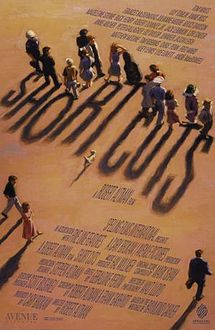 The 1980s were like forced, unpaid indefinite leave for the more challenging American directors to emerge out of the 1970s New Hollywood Cinema. Martin Scorsese mostly survived the war on adult-minded cinema. Terrence Malick just up and left, emerging at the tail end of the more independent ’90s in a nominally less hostile climate to his kind. One of the most productive casualties of the ’80s was Robert Altman, a director who pumped out smaller-scale projects like a worker-ant throughout the decade, even if few of them were buttressed by critical or commercial support. 1992’s The Player, a surprising and ceremonious return to commercial and critical success for Altman, was a ribald, scabrous affair but hardly a darling work of formalism to match any number of films Altman directed during the ’70s. Notable though that film may be, its most lasting and important achievement is more utilitarian: it brought Altman back from the nebulous ether, and afforded him the clout to make the far more intellectually provocative, cinematically daring Short Cuts.
 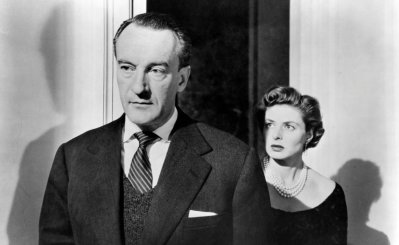 The neorealist corpuses of Vittorio De Sica and Roberto Rossellini – comrades in arms, yes, but figures whose similitude belies discrepancies in their works – have been cordoned off into the same space for so long you half forget they were actually different filmmakers at all. Yet De Sica’s world of omnipresent off-screen space maundering around the edges of open frames only shares partial similarities with Rossellini’s works. What both filmmakers did unite under was a continual, restive thrust not to rest on singular definitions of neorealism, an insatiable desire to experiment with, and critique, the style that made them household names among connoisseurs of world cinema.
  It would not be incorrect to treat Yasujiro Ozu’s works as a mere question of how geography intersects with modernity, but it would be incomplete. Surely, his mid-century, middle-class films about Japanese men and women both enlivened by and enveloped within the social structures around them do unearth great truths about the specific nature of life in post-war Japan and, particularly, about generational divides. His Late Spring, a story about a woman, Noriko (played by Setsuko Hara) in the late spring of her life and her father, Shukichi (played by Chisu Ryu), no doubt treats on the same issues. With the daughter aging beyond the father’s interest, he, a widower himself, feigns a fake marriage plan to convince his daughter that there will be no room for her in his house. Naturally, the hope is that she will find a marriage partner herself, and questions of gender oppression and the iron grip of social expectancy marinate throughout Late Spring, coursing through the veins of the diorama-like closed-spaces that Ozu relies on to ensnare his characters in the vise of social geometry.
  Robert Altman’s great mode as a director was the comedy of desperation, or in some cases the more elemental buddy film of loneliness, both genres served well by his democratic, crowded, fragmented spaces defining loneliness not as a form of isolation opposed to collectivism but as an isolation within community. For the Altman welterweights who think of the director’s ’70s as MASH, Nashville, and a murderer’s row of films of lesser import withering on the vine in between those two powerhouse works of communal chaos, California Split’s nominally more centered, two-character pas de deux seems more straightforward and less robust. In comparison to the wide swaths of partial Americana glimpsed in the roving camera of those, his more famous films, one might obfuscate and avoid California Split by nominating it as “lesser Altman”.
 The perennial punching bag of the French New Wave, Alain Resnais’ very willful 1961 Last Year at Marienbad, a descent into psychotropic memory and defiantly deviant notions of storytelling and fiction, hasn’t had it easy. Resnais’ most debated film has spent over a half century as alternately much-beloved expressionist think-piece, bamboozling artifact of a more radical cinema long past, and benighted object of a time when movies were nothing but arrogant, oblivious ego-stroking carnival clowns in search of an audience of zero. One of the true “love it or hate it” artifacts of cinema, let no one say Resnais’ work calls for mere shrugging off. Either delusional or concerned with, but not victim to, delusion, it remains about as unknowable and provisional a film as the species has produced, and thus as fascinating. Totally undermining classical presumptions about narrative, Resnais’ film is riddled with conditional tenses and scrambled cadences, culminating in a truly heinous detonation of foundational or categorically true knowledge. Although suffused in the pallor of death, for a certain kind of audience, it’s a modernist jolt, one of the few truly idiomatic films.
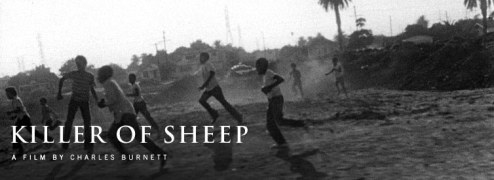 A truly great film may be informed by the background of its construction, but it rejects the complacency of time and space and proposes a view of life both timely and ultimately timeless, if not all-encompassing. For Charles Burnett, life is filtered through the Watts ghetto of LA where rituals of play, self-sacrifice, and destitution conspire to reveal a life both fully lived-in and never truly understood. But the ghetto is a prism for Burnett, not a prison. Although his film was denied a deserved canonical status for decades, his view of life is as textured as a De Sica, a Renoir, a Bresson, or a Cassavetes. Like all of those filmmakers, it defies its existence in the material world for a vision of humankind that transcends boundaries even when it confronts them.
