
 I am told there is a Scream TV show out now. What better opportunity to review a film I pointedly and adamantly do not like, and also to finally fill the weirdly pesky “review a film from 1996” gap in my blog that has somehow tempted me longer than any other single year.
I am, by nature, a fan of cinematic post-modernism and deconstruction. It was just yesterday that I found myself praising the somewhat messy Pat Garrett and Billy the Kid, a film where Sam Peckinpah confronted the entire Western ideology and the revisionist “realist” Western and evoked a sense that no Western could truly coexist with a state of reality. It excavates deeper ideas, though. That Westerns are by nature so tied into the American lexicon for hope and identity, and that they are necessarily malleable and adaptable to modern American needs and desires and, on the other hand, always tangled up in the oppressive and masculine rhetoric of the past that still very much exists in the present. As a film, it addresses its own fictionality, encasing itself in a cadre of ’60s and ’70s actors and musicians who can not be disconnected from their identities as ’60s and ’70s personalities. It is a film that, by its very construction, asks us to question what a Western film is, and it does all this without ever once tipping its hand into lazy fourth-wall breaking. Continue reading
 After Pat Garrett and Billy the Kid, Sam Peckinpah would move away from the 1800s, although that doesn’t mean he left the Western behind. Bring Me the Head of Alfredo Garcia is without a doubt a Western; it is as cracked and craggy as any of Peckinpah’s prior films, and its thematic content is almost identical, although it takes place in the 1970s. This is fitting, and perhaps the only way Peckinpah could have progressed as a director. His prior two Westerns saw the end of the era, with Peckinpah tackling the transition from the individualist, outlaw lifestyle to a more socially sanctioned form of violence bred by corrupt and violent men being buttoned up on the outside without actually curbing their violent tendencies on the inside. The Wild Bunch and Pat Garrett and Billy the Kid were about the end of the West, but also about its continuity, its persistence in the modern era. The deserts and the ten-gallon hats had been replaced with institutions and machinery, with the industrial revolution and government. But the raspy habit of men fighting the only way they’d been taught how, and the curdled fact that these men were being destroyed by these ways, remained.
  It is easy to view Pat Garrett and Billy the Kid, Sam Peckinpah’s first Western post-The Wild Bunch, and examine it as a follow-up to that seminally shrieking exercise in wolf-like nihilism. It would be easy to do so, and probably correct, but also incomplete. Pat Garrett, which follows ex-outlaw turned lawman Pat Garrett (James Coburn) as he vengefully hunts down his ex-partner Billy the Kid (Kris Kristofferson), bears an outline that is almost identical to The Wild Bunch. In both films, an ex-outsider who becomes a man of respectable society is strangled by his dogmatic commitment to hiding the memories of his lawless days by killing the last reminder he has of those days. In both films, the violence of wild society gives way to the violence of so-called “civilized” society, and in both cases, the social outlaws must die so that the corporate, conglomerate violence of civil people can live.
  If you are a cinephile, it is a fair guess that you have seen your share of war-time romances, one of the stodgiest of all film sub-genres. But that does not mean you have a Soviet war-time romance, nor have you seen a Mikhail Kalatozov war-time romance. Kalatozov is one of the masters of world cinema (his later Yo Soy Cuba is both a passionate ode to a lifestyle and a perplexing, dumbfoundingly beautiful exercise in pushing the heights of camerawork to impossible achievements). He is not nearly as well known today as he ought to be (but the same can be said of all post-Eisenstein Soviet cinema, excepting Tarkovsky), largely because political lines in the sand were well entrenched by the time Cranes was made. He was bound to the lingering death of existing in a world with more interest in denouncing art than expressing it. At least Cannes got it right, putting political qualms aside and awarding The Cranes are Flying the Palme d’Or for its luminous artistic achievement, transcendent performances and craft, and its stunning ode to love and loss in a world that no longer knew the meaning of the former term.
  Federico Fellini, the grand master of Italian cinema, began his life behind a camera as a young lad among the neo-realists, a protege of sorts to De Sica and Rossellini and their own habits of redefining cinema forever. Fellini, like those masters of the form, sought to reject Hollywood convention and lay down a thick layer of everyday humanity with non-actors and grungier camera techniques less galvanized in Hollywood glamour and melodrama. This shift itself was a towering upheaval to the cinematic tradition, a tangible stimulant to directors everywhere to shake the foundations of film land and brace for impact.
 It is hard to imagine a better version of Jacques Cousteau’s The Silent World, and that is a troubling fact. Lit with a fluorescent technicolor expressiveness, this non-narrative documentary of undersea images is like a peek through the looking glass of another world, exactly the magical, alien world of whimsy and majesty that Cousteau dedicated his life to and dared to see in his dreams. With the soon-to-be seminal Louis Malle (who would direct through the French New Wave and then hop on over to Hollywood) by his side, The Silent World is a visuals-first extravaganza of lush, hysterical colors and evocative silences. All these years later, it is also, perhaps unintentionally, a showpiece for the arrogance of mankind, and the terror of humanity at its egotistical worst.
 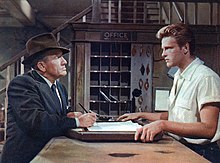 John Sturges, mostly famous for his two later rugged process-driven films, The Great Escape and The Magnificent Seven, drew out a mostly forgotten niche of manly not-quite-action films. They weren’t really violent, but they had the soul of action entertainment in their braggadocio and mechanics-first brand of raspy storytelling. His two most famous films are given at least the repute of minor-classics, but he is not particularly associated with them. He was a man who worked with groups of talented actors, and they often dwarfed him in the final analysis, not because he was appreciably under-skilled, but because he always subsumed his skill to the mechanics of the narrative, and we as a society tend to focus on actors and narrative at the expense of directors. He didn’t have a truly unique style, so to speak, but he was an ultra-competent director, and arguably the ultra-competent director. And his competence never tipped over into out-right genius quite like it did in Bad Day at Black Rock.
  You can not find a more breathlessly adventurous and rewarding a period of Japanese cinema than the golden years of 1950-1955. The number of era-defining international monsters of world cinema produced by Japan in this period is arguably unmatched in any national cinema over any five year period: Kurosawa’s The Seven Samurai, Ikiru, and Rashomon, Yaujir
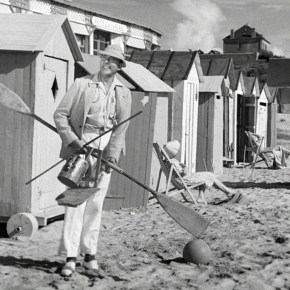 Has the cinema ever known the pleasures of a greater humanist than Jacques Tati? Charlie Chaplin, who Tati is generally compared to, comes to mind, but Chaplin at his best could draw fangs. His post-silent productions are nasty-minded masterpieces, works of barely-hidden discontent more than whimsical discovery. Tati could poke fun with the best of them, but never ruefully, and anger may not have been a word he knew. Certainly, it wasn’t a word he wanted to room with, or even walk in the same neighborhood as. Chaplin could love his audience or laugh at them, and he sold both as well as any filmmaker ever did. Tati was never not laughing, but always with us, never at us, and his laughs were laughs of love.
 Othello should not exist. Not William Shakespeare’s venerable play, one of the great tone poems to dueling egos and wanton desire filtered not through hero and villain but split personalities tearing each other apart until neither can have what they want. But Orson Welles’ Othello, a work of ramshackle, stitched-together genius if ever humankind has produced one. It isn’t Welles’ greatest film, but it is likely the surest explanation of his unmatched gall, of his unending sweat, and of the limits, or lack thereof, of his genius.
 The Long Take