 I had these written from a prior engagement, so I might as well post them, since I’m in a music mood.
Like Clockwork, Queens of the Stone Age
It’s likely that Josh Homme’s motley crew of hard-partying vampire rockers will never top their 2002 monster mash Songs for the Dead, but the (not alternately but simultaneously) vulnerable, sardonic, and hard-charging Like Clockwork is a stiff enough cocktail to make you forget for a minute or two. There are weak-links: the scorched-earth intro “Keep Your Eyes Peeled” never rouses its jagged riff into anything more than a dogged march, and “I Sat by the Ocean” is catchy but neither as venomous nor as lascivious as it should be. (It feels like it washed up on the beach when it should be skulking out of the gutter). But after a negligible intro, the band begins firing on all cylinders. The adenoidal, whiskey-soaked “My God is the Sun” marries the parched throat of ZZ Top to the merciless churn of Black Sabbath, the phallic “Smooth Sailing” boasts a sweaty strut and a libidinal charge, and the nasty underworld of “If I Had a Tail” is pure pelvic gyration that locks into a searing groove like one throbbing aural erogenous zone.
Even better is the heaven-and-hell platter “Kalopsia” which creeps through minimalistic, neon-inflected glam menace before razing the low-level buzz of uncertainty with a merciless guitar ion storm that mows the song to the ground. And I don’t know what crawl-space the closer “I Appear Missing” emerged out of, but it might be Homme’s best song ever, a slurry of ruminative, cheeky, and bruised attitudes building ever-kindling tension for six unflappable minutes, a soul-searching twilight zone trip through the desert after the apocalypse. Individual songs aside though, it’s the overall mood, the vibe, that elevates Like Clockwork. Queens of the Stone Age remains just about the only superstar rock group with a sensibility all their own, synthesizing masculine and feminine principles, melodically creamy and ragged impulses, to create a sound that exists in a permanently liminal space between feelings and sensations. For such a helter-skelter schism of an album, the texture is remarkably balanced. As superficially muscular as they are on the surface, Queens of the Stone Age is mainstream rock’s only current suis generis.
A-
 The Hunter, Mastodon
From the graveyard-crunch of “Black Tongue” to the strutting, sassy “Curl of the Burl”, The Hunter is the molten aftershock of Mastodon’s ash-speckled supernova Crack the Skye. After four increasingly proggy albums bursting toward eruption and shooting for the sky, this 2011 work is sweatier, less fragmented, and thicker on the bottom, eschewing the antediluvian, twisted psychedelia of Skye – with its knotty song structures and gonzo concept – for something so down to earth it pummels into the core. The result is simpler, no doubt, but never simplistic; “All the Heavy Lifting” is as viciously antagonistic as anything they’ve ever done and “The Hunter” submerges a ballad in the brine of paranoia.
Obviously compared to Metallica’s mainstream bid The Black Album (a band dishing out crunchier, punchier songs after a decade of increasingly robust experimentation and prog inflections), The Hunter matches those metal gods for thunder but frankly surpasses them for caustic unpredictability and epileptic energy. Even the poppiest song, “Dry Bone Valley”, unleashes the kind of moonshine-fueled, Allman-Bros-set-to-overdrive gallop that could have only been concocted in a bathtub laboratory. And the high-camp Pink Floyd Swamp Thing morass? Cling to it like a brief moment of safety, wreckage in an album that amounts to a hell of a storm. Continue reading →

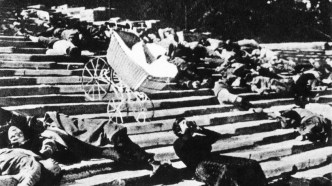 Ninety-two years on, it goes without saying that Battleship Potemkin is a sketch more than an aria, but Eisenstein stencils better than just about anyone. Disposing with the character-first politics of American cinema then expediently working overtime with enough charisma to turn film into the de facto bourgeois art form, Potemkin is politically flimsy. But that’s acceptable: it’s a polemic, a red-hot screed, the charred apex of a garbled wail of revolutionary fervor, and if it isn’t quite the feeding frenzy for inventive technique that Strike or some of Eisenstein’s future films were, it’s exciting enough to fulfill Pauline Kael’s declaration (on another film) of the proverbial “movie in heat”. Agitprop it is, which isn’t a problem. The issue, and it is exclusively relative (that of a lesser masterpiece vs. Strike, a greater masterpiece) is that this particular agitator isn’t as agitated as Eisenstein’s greatest films. Continue reading
 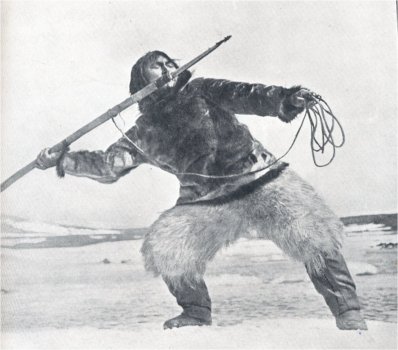 At once a howling abyss and a succulent morsel of semi-absurdist humanistic comedy, Robert Flaherty’s Nanook of the North is a film of wonderfully unresolved, immanent contradictions and multivalent constellations of primordial beauty. The most obvious dormant tension that requires surfacing is that it isn’t a documentary, at least insofar as the conventional scripture would bequeath it. No, this slice-of-life tale of “Nanook” (actually Allakariallak), an Inuit in the arctic regions of Canada, as filmed by filmmaker-explorer Robert Flaherty, was largely an ahistorical concoction fabricated to feign allegiance to the Western ideology of the Inuit as a backward Other whose life was governed by genial amusement and befuddlement at any and all Western artifacts. Many of these technologies objects were well-known to Allakariallak, a genuine Inuit who was “in” on the production of the film, as Inuit culture by 1922 had advanced well beyond the spear-wielding icon curated by Flaherty for white America’s racial memory.
  I meant to get to this a bit ago, obviously, but this review is in memorium to the dearly departed demon of cinema Seijun Suzuki.
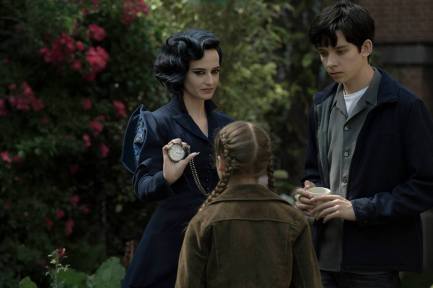 Decades in the cinema business have rotted Tim Burton’s teeth with candy and softened his fangs. Where his films’ runtimes were once pecked down by vultures eating away any festering fat or excess, the estate Burton now commands comes with an electric dome that keeps the birds at bay and lets his ego wax outwards well past its sell-by dates. Like all of his recent efforts, Miss Peregrine is sporting a muffin top, the luxury afforded by engorged budgets comforting Burton in his decision to spare the screenplay none of its expository calories. None of his films since Sleepy Hollow have sported enough genuine achtung to occupy that oh-so peculiar spot between a carousel and an asylum that his earliest films haunted. In this capacity, the name on the tin of his newest film – “peculiar” – is only rubbing salt on his failure to genuinely be peculiar for the past twenty years or so.
  So as to avoid the tension: this post is enormously indebted to Ray Carney and based on the original 1976 cut of the film.
  A classroom experiment, and I avoid any of the shows (The Venture Bros, Aqua Teen Hunger Force, Space Ghost) I included in my favorite animated television shows list for fear of double-dipping.
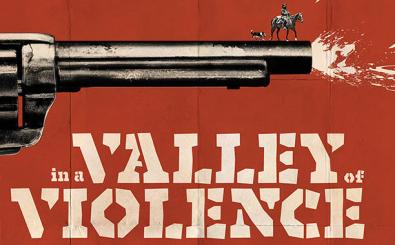 A handful of small impact tremors in the horror genre under his belt, Ti West, the only so-called mumble-gore director worth a damn, taints the Western with his particular brand of suggestible, dark energy in the gravidly-titled In a Valley of Violence. A nomadic firecracker of a film that recalls the existential-crisis minimalism of Ride in the Whirlwind and The Shooting, this slice of vintage pulp fiction eschews the grandiloquent game of Once Upon a Time in the West for a kind of taciturn swampy pop-art. With the intro credits slinking like a pink panther gone feral, the spirit of the ‘60s hang high here, looming over this parched throat of a film like a sun that just won’t set. Thankfully, reverence to the past never feels like a noose held around the film’s neck. There’s an analog spirit here, but West never loses himself in the wayward mire of classical pastiche or overly-hagiographic reference to Westerns past. This is West’s West, not a feeble attempt to ape Leone’s or Ford’s.
  Although mostly cottoning to Mark Twain’s insouciance and witticisms rather than his gothic, mortally wounded ruminations on society (so it’s more Tom Sawyer than the superior Huck Finn), Band of Robbers gets us partway toward what anointed the early Coen Brothers as the cinematic exhumers of Twain’s rascally, still-kicking corpse. Recasting Tom (Adam Nee) and Huck (Kyle Gallner) as modern day slackers (the latter recently released from jail and the former a lethargic police officer), the film’s decision to revise Twain’s prose as a rattle-snake of a heist film is not exactly inspired in an age where that genre is an easy target for indie success. But that doesn’t make it ineffective. Obviously, it reeks too of filmmakers-of-a-certain-age basking in the warm glow of Wes Anderson’s Bottle Rocket, but Band of Robbers is spunky enough and clearly enjoys the old-fangled spirit and the messy malarkey of childhood campfire tales, not to mention their more ruminative underbellies.
 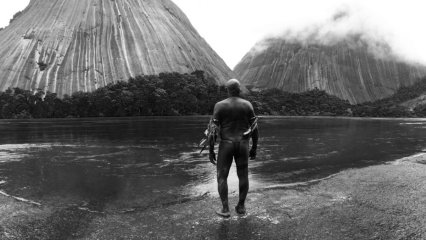 Ciro Guerra’s Embrace of the Serpent constricts itself with the sinister snake of history – venomous, elusive, alluring, and difficult to unravel – about as tightly as a film can. It’s not perfect; Guerra once or twice drowns in a swamp of historical allusions and metaphors that are never really allowed the free space to lash out as dangerously and free-associatively as they could. But his film at least allows history to vibrate rather than remain trapped in a film’s distanced reverence like a waxworks display. A provocative, even downright brash film, Embrace of the Serpent is wisely emboldened by its stylistic and political radicalism. Even when it sinks into symbols like quicksand, it is at worst “a nice try” or a near-miss rather than an outright failure, and, frankly, its missteps are only as hurtful as they are because of the potential lurking in the film’s head. This is not timid cinema, and it burrows un-hesitantly into the post-colonial mindset with more aesthetic vigor than most other morally-charged films would know what to do with. For all its flaws, there’s something essential about it, and not only because its political fangs are so often unsheathed. Like the mythical psychedelic flower that is a kind of MacGuffin for director Guerra’s robust scrutiny of cinematic depictions of the “Other”, Embrace boasts enough of a visual pull to send sparks every which way, even if the prospect of truly igniting is ultimately left off the table.
