

The directorial debut of Iron Man 3 co-writer Drew Pearce, Hotel Artemis displays all of the style of that earlier film’s director Shane Black, and none of his sometimes cloying cleverness. Hotel Artemis is a blessedly simple, brutally elegant creature, a cinematic bottle-episode in the life of The Nurse (Jodie Foster), an elderly woman who’s clearly seen far too much in her life to exhibit anything more than pragmatic indifference about anything that comes her way. A temperature which is true of the film’s titular location, and, by way of approximation, the film itself. Written and directed by Pearce with a sense of suggestion and screenwriting economy unheard of for a summer genre film in the era of 2 ½ blockbusters, this is an abnormally – dare I say heroically? – straightforward production.
And a defiantly un-visionary one, exclusively dedicated to workaday problems and everyday struggles in the lives of criminals in Los Angeles, only ever-so-slightly refracted by a “15 minutes into the future” aesthetic that is much more thoughtfully quotidian and less obnoxiously conceptual than Black Mirror. Hotel Artemis introduces us to two career criminals, brothers played by Sterling K. Brown and Brian Tyree Henry, the latter of whom is shot, prompting both to go to the titular Hotel, a kind of no-questions-asked medical bay for criminals who have memberships. Run by Foster’s Nurse and her towering assistant Everest, played by Dave Bautista as a tragic-comic fanatic who worships the hotel’s rules with a devotional fervor, the Hotel admits the brothers, but they are far from the only visitors that night Continue reading
 The protagonists of the 2018 version of the oft-adapted A Star is Born may be the rugged, ragged country singer Jackson Maine (Bradley Cooper) and the younger rising pop star Ally (Lady Gaga). But the film’s voice undeniably belongs to another character, Jackson’s older half-brother, played with a typically phenomenal mixture of world-weary cynicism and weathered wit by Sam Elliot. Essentially the film’s viewpoint, Elliot’s character rebukes criticisms about its remake status by explicitly and perhaps charitably thematizing the value of playing within formulas and dusting off older routines in an early line of dialogue. As if the film is commenting on itself, this traveling soul seems to know, more than his younger brother who still believes in a more singular notion of originality, that there are limits to self-fashioning, and that all selves are cobbled together piecemeal out of influences far and wide. Elliot’s itinerant would-be cowboy reiterates what prior American wanderers Whitman and Emerson understood as the tragic possibility of realizing that you live in a world where all you can truly do is quote creatively.
 Perhaps the most consistently banalized of all prestige genres, the “Oscarbait biopic” has recently emerged as an idiom for self-complicating narrative cinema. But the Oscarbait biopic can take many forms. For name-conscious auteurs seeking to problematize the individualist Oscarbait formula, with its focus on personal growth and salvation at the expense of wider social or material realities, this kind of film typically allows filmmakers to produce popularly legible dramas while paying attention (and often, frankly, lip service) to social issues. For other, often more artistically inspired filmmakers who frequently nonetheless run the risk of drowning in their personal myopic, biopics tend to center characters who are facsimiles for the creators of the films themselves. It was impossible to miss director Damien Chazelle in the main character of the decidedly agitated Whiplash or in either of the protagonists of La La Land. Neither film had any itch to explore a world outside the nearly hermetic glory of personal creation, each suggesting a kind of laudable final artistic transcendence that, in the first case, might mean the loss of a character’s soul, and in the second, the loss of a companion.
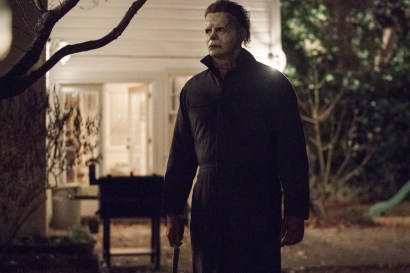 Far be it from me to dictate the direction of writer-director David Gordon Green’s artistic career, but if you had told me circa 2000 that the hot young thing in the American independent scene, brandishing an aesthetic equal parts Malickian-impressionism and Cassavetean-pragmatism, would, in less than two decades, be shepherding forth a 21st century model of the series that spawned the slasher sub-genre…well, I would have asked who David Gordon Green was. I would also have been 8, so I might not have been the ideal audience for any of David Gordon Green’s films, except maybe Pineapple Express (which itself capably mobilized Green’s leisurely, slow-drip, transcendental filmmaking sensibilities toward a very different kind of transcendental human experience).
  Colin Trevorrow and Derek Connolly’s screenplay for Jurassic Park: Fallen Kingdom veers between idiotic and knowingly idiotic. On balance, it doesn’t salvage the film, but they sure do give it a game try. Whereas The Lost World all the way back in 1997 was essentially unruffled by the astonishing mismanagement of its protagonists and their dubious morality, Fallen Kingdom is certainly at least literate in the criticisms which have been labelled upon that earlier film. Although not as subversively or as stridently as, say, Gareth Evans’ Godzilla, and with a much cheerier, more flippant attitude toward human incompetence, Fallen Kingdom is essentially content to mock its protagonists rather than celebrate them. As with Raiders of the Lost Ark, they accomplish very, very little by film’s end, just barely managing to survive their mistakes time and time again. While the film isn’t as willing to actually question the hero’s own complicity in the villain’s schemes, it is at least aware that, come film’s end, it cannot keep on defending its protagonists as ecological warriors.
 George Lucas’ Star Wars franchise was conjured out of the spirit of mid-century pulp and genre fiction, from Westerns to war films to noir, and it frankly remains as moored in these frameworks over 40 years later. There’s no shame in that. In spirit, pulp is as fine and potentially multiphonic a template for any modern filmmaker as any other, one with secrets left to uncover decades later. And Lucas has done as much as anyone over the ensuing forty years not only to expose the limits of his forebears but to invite their more self-conscious, inquisitive, and socially rambunctious textures, exploring their more contradictory valences and inviting us to consider what really makes ostensibly simplistic mythology tick. The fact that Solo: A Star Wars Story is so indebted to that swashbuckling mid-century spirit is merely a fact of nature, a canvas for good or ill.
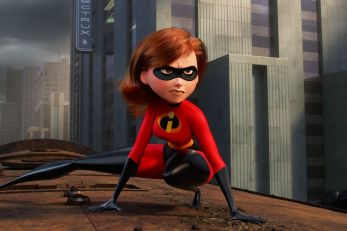 Now that we’re firmly in the decade of Pixar shoring up its status with sequels to best-in-show properties rather than adventurously casting off its lot in less-rehearsed, more invigorating directions, we can at least be pleased that this particular sequel is an excuse for Brad Bird to return to the world of Pixar. Which, apparently, is a generally commensurable company to house his relentlessly optimistic aesthetic indulgences in the widest-eyed corners of mid-century Americana and pulp sci-fi. And house it does! While Bird’s good-natured futurism felt awkward while navigating the confines and demands of live-action cinema in the sometimes-effervescent, sometimes-cloying, sometimes-unwieldy Tomorrowland, there’s a natural mutability to animation that fits Bird’s relatively (and gloriously) surface-bound style like a glove.
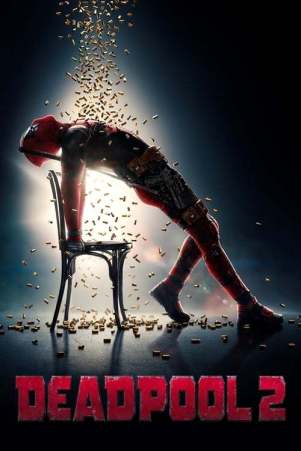
 I remain heartened months after its release that the internet spent a good few weeks desperately trying to shoot some adrenaline into cinema’s most deeply tiring franchise by convincing the world that Avengers: Infinity War was an experimental film of sorts, and how do I wish that little gambit provided more real food for thought than it does. It certainly does distract us from the actual film, which, as the claims of “avant-garde” suggest, only tenuously clings to that signifier “film,” or at least more tenuously than any blockbuster film is supposed to these days. But while, I don’t know, Speed Racer (all the way back from the inaugural year of the MCU) feels divinely inspired to dismiss the rules of blockbuster filmmaking as a moral and ethical statement, and an incendiary display of personal conviction, Infinity War isn’t a conventional “movie” out of some combination of laziness, failure, necessity, or simply because it can’t be bothered. That’s more or less interesting, and probably more fascinating to think through than an 18th entry into any franchise should be. But I can’t resist the sensation that I and the internet are playing head-games with ourselves to privately amuse ourselves, semi-ironically meditating on the norms of cinema with Infinity War as a catalyst just to pass the time searching for something, anything, to say about the most milquetoast cinematic franchise of the 2010s. The MCU has held modern blockbuster cinema prisoner for almost a decade, but, as if the delirium of no escape is kicking in, the voices of the internet refuse to give in. They resist.
