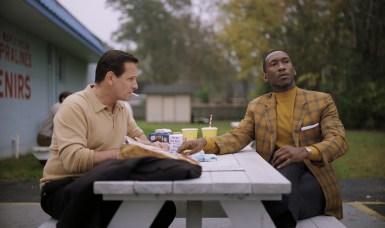
 Green Book is almost refreshingly tone-deaf in its mid-century liberalism. Which, apparently, is still late 2010s liberalism, if writers Peter Farrelly, Brian Hayes Currie, and Nick Vallelonga (son of the protagonist) have anything to say about it. And, if for no other reason than to remind us that this variant of faux-egalitarian genteel liberal cinema undetained by questions of power and politics still exists this deep into the 21st century, I suppose I have to thank Green Book for taking my breath away. With Moonlight, Sorry to Bother You, and Us, I’d hoped we’d moved on. But here I am about to claim anything especially positive about late ‘10s American cinema on the subject of race, and Green Book has kindly arrived to keep me on my guard. Would that the film had any interest in exploring what its African-American deuteragonist has to do to keep himself on guard.
Instead of what it does do, which is – to the surprise of no one – subsume Shirley’s personal and physical crises to the role of a reflective mirror for a white protagonist. The two characters I write of are classical pianist Dr. Donald Shirley (Mahershala Ali), about to depart for a two-month concert trip through the Jim Crow South in roughly November and December of 1962, and Italian-American (the film is very interested in us knowing that he is Italian-American) working-stiff Tony “Lip” Vallelonga (Viggo Mortensen), hired to serve as Dr. Shirley’s chauffer and all-purpose bodyguard. The conceit of the narrative, then, rests on our awareness that a black man in the South in the ‘60s will, as Tony informs us, cause “trouble”. But that trouble is more important for us, meaning white America, than for Shirley, at least in the film’s mind. The film’s perspective is almost exclusively hewn to Tony’s, the script exhibiting a clear favoritism for his moral awakening compared with Shirley’s plight, let alone the collective suffering of African-Americans in the South (or North), all of whom are meaningful in the film only as background.
As – to be honest – is Tony. While I’ve already made the obvious point – that Shirley only exists in this film to validate Tony’s crisis of conscience – the truth is that Green Book has an almost exclusively functionalist relationship to all of its characters (but especially Shirley). It treats them each as a collection of qualities and features that never come into play except in moments where the plot finds them instrumental or where they can be expressly thematized. Thus, Dr. Shirley’s homosexuality is “useful” for the film in one scene, and briefly in a second, and evaporated from the film’s conscious at all other times. And to any dubious claims that this serves some sort of “humanist” purpose – to ask us not to over-emphasize any identitarian features in order to treat Donald as a “person” first and foremost (rather than a black person, a gay person, etc) – the film submits not one ounce of stray human energy to suggest that it actually ever cares about these characters as people in the first place. No internal desires or personal uncertainties seep out of the tight confines of film narrative. There’s no room for any personal excess – for the characters to exhibit traits or features which the film doesn’t know what to do with, which it can’t immediately schematize and instrumentalize toward a kind of dialectic synthesis designed to harmonize the two main characters into a friendship. (The film does, admittedly, make the somewhat bold decision to give Tony a character trait that I don’t know what to do with, namely that he is the type of person who enjoys folding an entire pizza in half and eating it at once). Continue reading →

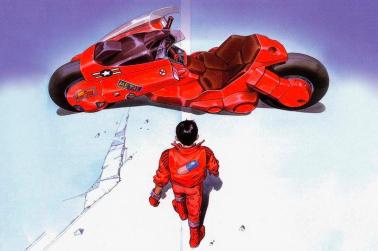
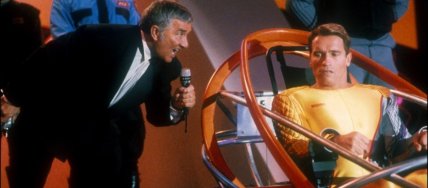 It’s been a while since I’ve done these Friday B and/or cult movie reviews, and I’ve decided to return with two dystopian films set in the year of our Lord 2019, offering visions of THE FUTURE that may or may not have come to pass.
  In honor of the half-century anniversary of the epochal years of 1968 and 1969, I meant to propose a little series of reviews commemorating the films of those years last summer, particularly with all the academic conferences and articles trying to rekindle the lost spirit of ’68 or otherwise to dissect it. I didn’t get around to it at the time, but with the era lulled to sleep last month by Quentin Tarantino’s phenomenal Once Upon a time in Hollywood, now seems as good a time as any to start! I apologize that I’m a year late to officially celebrate the 50th of some of these films, but a great film doesn’t need a deadline to be remembered.
  In honor of the half-century anniversary of the epochal years of 1968 and 1969, I meant to propose a little series of reviews commemorating the films of those years last summer, particularly with all the academic conferences and articles trying to rekindle the lost spirit of ’68 or otherwise to dissect it. I didn’t get around to it at the time, but with the era lulled to sleep last month by Quentin Tarantino’s phenomenal Once Upon a time in Hollywood, now seems as good a time as any to start! I apologize that I’m a year late to officially celebrate the 50th of some of these films, but a great film doesn’t need a deadline to be remembered.
  It goes without saying that Widows is more of a crackerjack offering than we’re used to from director Steve McQueen, who typically specializes in the soul-rotting malaise of a cold-blooded world and/or the existential disfigurement of an abandoned person barely surviving in it. But Widows still bears McQueen’s ruthlessly stark, almost psychotically perfect formalist streak. There’s a little more wiggle-room in the style – more drive, more chaos, more flippancy, more immediacy, maybe even more of a desire to please – but it’s still a Steve McQueen film. Which means, although its gears run faster and it’s more soul-shredding than soul-rotting, it’s still all cold muscle, coiled nerves, and ready-to-pounce fury.
 Forgive the fact that this anniversary was last fall; I wrote this then, but didn’t publish it here until now
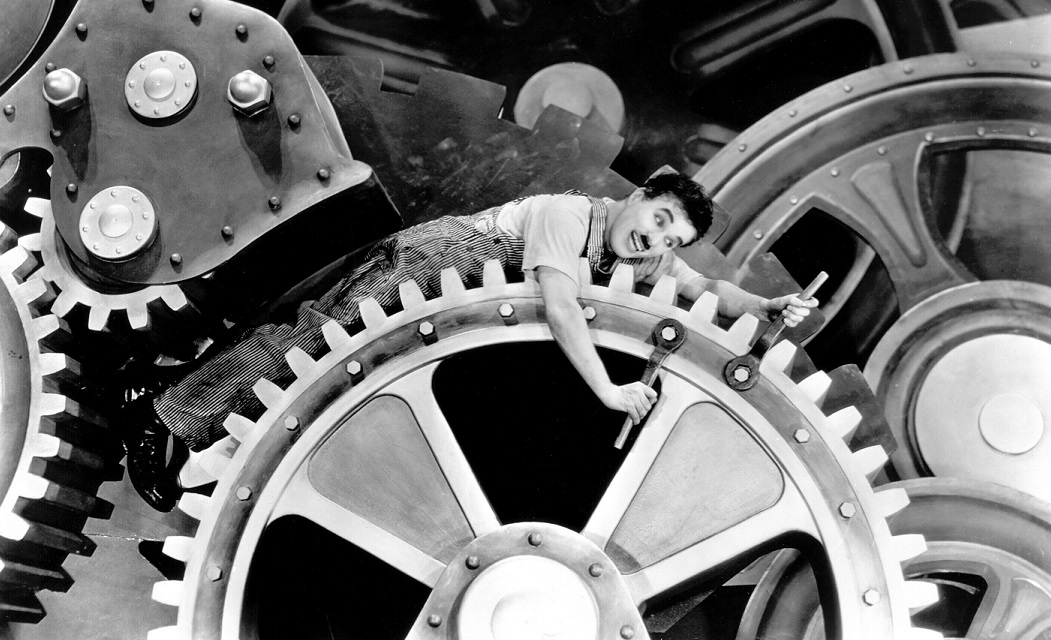 Charlie Chaplin was one of Hollywood’s earliest and largest stars, a filmmaking polymath who performed, directed, composed, produced, and wrote all of his films, a one-man brand who in Modern Times subjects himself to a possibly fatal question: whether he can escape being branded by the hot iron of capital. A British socialist who grew increasingly frustrated with American capitalism and Hollywood business practices throughout his career, he eventually left Hollywood and returned to his native England. Like many silent filmmakers, many of his earlier films explore questions of new technology and skeptically arouse the possibilities of modernization, thinking-through the relationship between new technological forms – both industrial and cinematic – and asking how one navigates modernity. Of course, many of his anxieties about industrial technology were also motivated by his own issues and frustrations with the rapidly growing Hollywood industry, exposing parallels between industry on-screen and industry in Hollywood that seem more prevalent in Modern Times than in any Chaplin film before or since. This is the film in which the personal will displayed in The Kid – where his Tramp character strategically manipulated capitalist products for new purposes with his mental ingenuity – seems to have been finally overpowered by capitalism’s singular ability to manipulate his body as the ultimate tool to its own ends.
 Although penned by a phalanx of writers and starring Liam Neeson, the cinematically-savvy corners of the internet have been very quick to label The Commuter the work of director Jaume Collet-Sera. Perhaps grasping at straws in the wake of the death of the “action director” of the ‘80s and ‘90s, the internet has also deemed fit that Collet-Sera really is the dormant action-auteur we’ve all been silently waiting for over the past twenty or so years. And, if that wasn’t enough, he’s apparently a wrong-man thriller director whose pairings with Neeson rekindle the spirit of, if not existing on the same plane as, the famous thrillers of Hitchcock and Cary Grant! You know, the one’s where Hitchcock was playfully manipulating his audience and characters, rather than teasing us about the moral implications of how he was playfully manipulating his audiences and characters. Those films called for Jimmy Stewart in the lead.
 After the sturdy filmmaking economy of Hotel Artemis, it’s rather depressing to witness the belabored post-modernism and needlessly hip temporal machinations of Bad Times at the El Royale, not the worst kind of cinematic “cunning,” but close to it. Finally returning after directing Cabin in the Woods – and his mostly indifferent, mildly pleasurable screenplay for The Martian – Drew Goddard’s Bad Times is a vital compendium of many of the worst tendencies of mainstream “intellectual” storytelling. Goddard’s screenplay traverses an astonishingly circuitous route toward a largely banal resolution, superficially name-checking a variety of late ‘60s thematic signifiers – racism, classism, post-hippie fallout, cultish masculinity, the miasma of the oncoming ‘70s, a zeitgeist-y inability to trust in leaders – tepidly and arbitrarily. It expends all of its energy quite overtly ticking boxes on the path toward a moral parable that, at best, has little to do with any of the above, and at worst, actively avoids them to get from point A to point B, pulling themes out of a hat and getting bitten by the rabbit when the carrot at the end of the stick turns out to be a phony.
