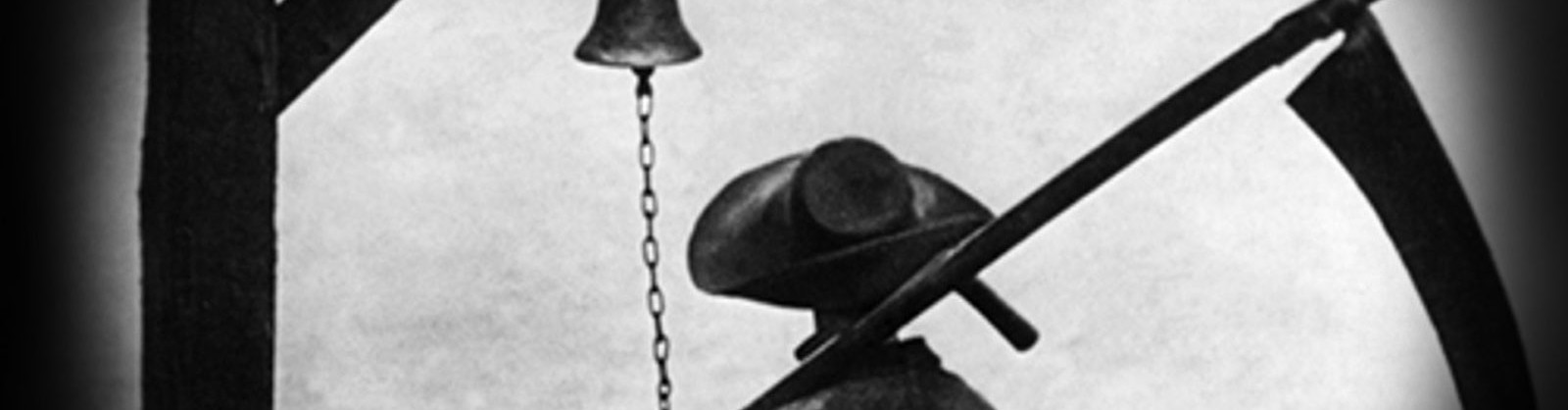
 Eyes Without a Face (French: Les Yeux Sans Visage) is technically a French-Italian co-production, but it was made by a predominantly French crew, by a French director, and is told in French. Plus, if we want to talk the style and feel of French vs. Italian horror, Eyes Without a Face is about as far on the French side as humanly possible. So, you know, deal with it.
In the annals of time, 1960 might just go down as the greatest year ever for horror filmmaking. We have the obvious game-changing genre classics like Psycho and Peeping Tom from the English speaking world (poetic that those two harrowing critiques of the directorial gaze came to fruition in the same year) and the Italian film industry bursting forth from the womb with Mario Bava’s Black Sunday. The ’60s were also the greatest decade for Japanese horror, and Nobuo Nakagawa’s1960 release Jigoku saw that trend kick off in ultra-fine style. In the midst of this, a film had to be something special to hold its own, and perhaps one of the most special horror releases of all is Georges Franju’s Eyes Without a Face, a work of horror wholly at odds with the norms of the genre.
Franju’s classically-trained but down-to-earth style is intoxicating, intentionally treating the material with the soft delicate hand of a piano player prone to liberating fits of more chaotic frenzy. He proves able to switch on a dime, creating a film at once modern for 1960 and elegantly timeless. Moments of carnage ring out, but its the thoughtful finishing-school haze that evokes Lewtonesque minimalism and Victorian era dreaminess that sweeps over the film and sticks in the memory the longest. Other than Lewton’s I Walked with a Zombie, Eyes Without a Face may just be the most impressionistic horror film ever released.
Continue reading
 Seriously having difficulty viewing and wrapping my head around one specific film for Midnight Screenings, but I think I have it down for next week. In the meantime, here are two 2005 Midnight-appropriate horrors (one of them never really popularly understood as such, but somehow its Godzilla-sized budget only makes it all the more spectacular that it still has the look and feel of a grainy horror movie). Sorry for the delay. All will be corrected next week.
  One of the Coen Brothers’ most popular works, and with good reason,
  It would appear that selling one’s soul to the devil of commercial filmmaking can in fact serve a purpose, assuming of course you do so with a ruthless pragmatist’s eye. For that is exactly what one of Mexico’s most adored modern auteurs, Alfonso Cuaron, did with his introduction to English-language cinema in his one mercenary venture, Harry Potter and the Prisoner of Azkaban (no slouch as a film on its own, incidentally). For the success he had with big-budget tentpole cinema not only made a boatload of money (and made a franchise legitimize itself in the process, after two unflaggingly hum-drum entries beforehand), but it paved the way for one of the finest films of its decade, 2006’s Children of Men. If the entirety of the Harry Potter franchise only existed to validate the existence of this one film, well, it would be a job well done, for Children of Men is exactly the variation of cold-brewed, home-spun, plaintive sci-fi we don’t much see anymore, and exactly what the world of cinema circa 2006 needed.
  Doom-and-gloom maestro David Fincher has taken the 2000s and 2010s as his time to find respect, and as we all know, that is one of the worst things for a filmmaker to do. Mainstream success is one of the surest trains to cinematic acquiescence, and there ain’t nothing like acquiescence to numb the lifeblood of cinematic passion. Sure, 2008’s The Curious Case of Benjamin Button was his only overtly Oscarbaity film, and he did follow it up with his second best work, 2010’s The Social Network. But recent years have seen him look back to his lurid earlier days with nostalgia and a drive to recreate his darker and more nihilistic earlier efforts, and his efforts have proven one thing: slick has replaced sick, and Fincher’s desire to find commercial success has smothered any breathing room for his pitch-black cinematic treats to truly submerse themselves in operatic melancholy and deranged lunacies.
 Edited and Updated 2016
 The Sacrament
 David Cronenberg is and probably always will be at his most passionate when flesh is falling off the bone and limbs are no longer limbs. That much is certain, and it is a shame that he’s spent the past decade wallowing away in prestige picture land, something never more true than in his 2011 would-be biopic A Dangerous Method. Good God, it is a turn of the century costume drama when all is said and done. And the absolute last thing we need is David Cronenberg making costume dramas.
 Two Midnight Screenings were originally intended for publishing this week, but they got a little long individually and separating them seemed more appropriate. Besides, more than any other film I can think of, this week’s entry stands on its own.
