
Hey everyone, here’s the first list I’ve done in quite a while. I’ve been wanting to do this for a very long time and finally found the time to get around to it. I hope you enjoy!
Honorable Mentions (shows that came close, or shows I am otherwise only semi-familiar with):
Daria – Identifying with Generation X on a molecular level, Daria is in many ways the antithesis of the other major class of 1997 animation, South Park. Studious, reticent, and weary, Daria is a life-questioning exercise in stasis as a fundamental principle of existence.
The Flintstones – Telling parody of mid-century Americana and how it both filtered through, and was informed by, the development of television and the middlebrow sitcom style that The Flintstones apes. Has lost some of its bite over time, and it wasn’t exactly Nicholas Ray to begin with, but still an amusingly barbed, early expedition into the development of what might be denoted a modern American culture.
Johnny Bravo – A meaningful expose of pompadour-strutting, greaser-fronting male chauvinism and inadequacy with hints of surprising sensitivity and periodic cartwheels into cherished absurdity and whimsical slantwise pop-culture parodies before it become the nom de plume of animation. Continue reading
 Both unhurried and nimble, Richard Linklater’s beguiling concoction of breathless immaturity and stunted, off-hand maturity worships an altar of “just one more midnight hang-sesh doing nothing in particular”, an event that is elevated in import within Everybody Wants Some!! precisely because of how acquainted with the passing nature of youth the film seems to be. The film’s aimless, untamed, rowdy structure of bedlam-before-linearity cheerfully replicates the constant blood rush of avoiding your future that embodies the daily lexicon of the Southeast Texas State University baseball squad of 1980. But they aren’t the event-instigating, virile, social-agent protagonists of the tale so much as the byproducts of social tumult and the circumstantial nature of chance. Accused of a sort of masculine bro-ish bravado in some circles, and not inaccurately I might add, Linklater’s film is also notable for how painfully it recognizes how deeply unspecial its main characters are.
 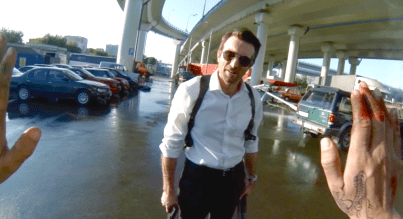 Ilya Naishuller’s celebration and extension of, as well as slight rebellion against, pinball-scripted action cinema storytelling charitably accentuates, and lambasts, the genre it calls home by curdling it down to its most primordial essences devoid of meaningful context or narrative: dude, gun, fire, pandemonium, nonsense, more gun. Smitten with its playfully trivial nature and keen on its own exclusively, even exclusionary, surface-level ambitions, Naishuller’s first-person camera is a little like a Looney Tunes version of cinematographer Emmanuel Lubezki’s recent achievements behind the camera, even if it isn’t nearly as full-throated or as perceptive in its utilization of the faux-long-take lexicon as anything Lubezki might have in the works. Hardcore Henry certainly deserves credit for perspiration, occasionally for exhilaration, and once or twice for genuine innovation.
 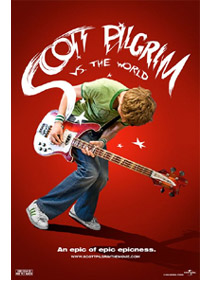 With four major-ish video game adaptations arriving in the cinema this year (something of a resurgence after the trend died off a half-decade ago), let us recollect our memories of two films from 2010, the inflection point of the video game adaptation as it was just entering its death throes the first time. We will eschew actual video game adaptations (they’re pretty worthless, relatively speaking) for two films that attempt to peruse the abstract idea of the video game as a jumping-off point instead.
 With the TMNT reboot-sequel releasing soon, reviews are out and – shock – not appealing in the slightest. Here’s a look back at, low standards for the franchise kept close to the chest in this statement, what remains the best filmic adaptation of the Teenage Mutant Ninja Turtles comic/cartoon/media empire.
 Death Becomes Her
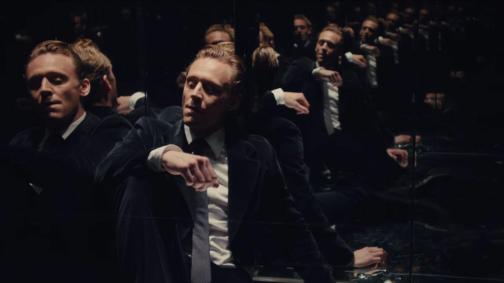 British indie darling Ben Wheatley has made a living for himself electro-shocking the ostensibly comatose world of cinematic death, parceling out and sowing the seeds of a strip of filmic land that is necrotic and cadaverous but never embalmed or lifeless. His films are death-marked but not deadened. Now on his fifth film, his masterpiece remains his 2011 effort Kill List, a modern reworking of the quintessential British horror film The Wicker Man. Until this point, that 1973 work has doubled as a sort of spiritual guiding light for Wheatley, who has by and large drawn himself to the lurking terrors in the pastoral rather than those which creep into the mental cogs and emotional rivets of automatized modern society.
 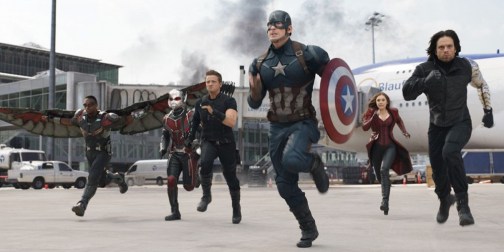 Relieving the film of the obvious comparison at the start, Captain America: Civil War is an unambiguous improvement over Zack Snyder’s lugubrious exercise in self-satisfaction Batman v Superman. But Civil War’s success on that front is almost exclusively a question of relatives rather than absolutes. It is not that Civil War meaningfully adopts a different track to success than Dawn of Justice (the amusingly wishful subtitle of Snyder’s film), so much as it is that Civil War simply repeats the failures of Dawn of Justice to a lesser extent. Both films valiantly extend the Nolanesque concern for ethical turmoil and vigilante justice, and they both ashamedly retreat into Nolan’s wheelhouse of erecting statuesque themes to double-down on their own self-importance only to explode those very questions in a hail of blockbuster-baiting bullets for the masses. Rather than barreling into the ethical crevices of their genres – ultimately expanding their potential – these two films ultimately reaffirm the essential limits of the genre they pine to knock down. A decade after Batman Begins, the superhero genre’s growing pains continue to do nothing but elide its essential immaturity. Rather than aging gracefully, the genre feels like a bunch of kids playing in their parents clothing.
 Shadow of a Doubt
