
 Among the five original Planet of the Apes pictures, 1972’s Conquest of the Planet of the Apes is undeniably the most obvious forebear to the modern trilogy. A review of this most unheralded picture in honor of the conclusion of the new trilogy.
Human characters run toward the screen with imprisoned apes in tow, and a quavering camera courtesy of cinematographer Bruce Surtees trembles in reverse, as if cowering in fear. This hand-held style already puts us on a different, more unstable footing than the more classically composed delights of the original 1968 Planet of the Apes, but we’re in a film that is almost as good. Conquest of the Planet of the Apes is also, in some sense, the closest analogue in the classic series to the beginning of the 2010’s series revamp, depicting the “conquest” that would become the “rise” in 2011. If anything, Conquest is even more explicit in its allegorical and essentially revolutionary nature than the modern films. Right in the thick of political disfiguration and social unrest, Conquest has Black Power on the mind and in the eyes, more overtly so than nearly any non-blaxploitation film of the ‘70s. Also suggesting America’s little venture into Vietnam, screenwriter Paul Dehn and director J. Lee Thompson hurtle right into the belly of the beast with guerilla aplomb. So many are wont to call Planet of the Apes “thinking person’s sci-fi” that they overlook how a red-hot screed like Conquest aims right for the gut. Continue reading
 I so wanted to write some nonsense about Andy Serkis in War of the Planet of the Apes and in The Lord of the Rings films to make this connection, but really I had these reviews on my computer, and I guess that’s as good a reason as any.
 Ever since the truly sublime Monty Python’s Flying Circus sketch “Salad Days”, Sam Peckinpah has been something of a punchline for critics who reduce him to the rampant Novocaine of violence opiating the masses. His only proper war film, Cross of Iron, is not a full-throated rejoinder to that criticism, but it certainly problematizes the animating cinematic thrill of, say, The Wild Bunch. It’s not an abandonment of violence, though, so much as a rough and rowdy revision, punchy in the typical Peckinpah milieu but more decrepit and alienated from its bloodletting.
 Ahh, the wonderful world of John Boorman, that perennial cinematic oscillator between the realm of exhausted greatness (Point Break, Deliverance) and spirited atrocity (Zardoz and Exorcist II). The man just eludes categorization, except that all of his films seem to share a pure and unabashed self-centeredness. Yet many of his best films paradoxically stamp themselves in the director’s personality not through baroque visual extravaganzas but through thriller minimalism. His greatest achievements are not screeds radiating shards of discontent or phantasmagorical whirlygusts of excitement. Deliverance and Point Break are white-knuckle, certainly, but they are also thoroughly dog-tired, whipped features, spent forces rather than self-propagating fires of combustion.
  With Dunkirk making the rounds and tearing up the critics, I’ve decided to review a few (better) alternative WWII films that are not part of the official war film canon, or experience delayed entry to the minds of the public. Saving Private Ryan need not apply.
  If nothing else, Sofia Coppola’s remake of Don Siegel’s tempestuous 1971 backwoods thriller of the same name is a valuable reflection of how the much-mocked “remake” status can be an opportunity to confront and a possibility to fulfill rather than merely a box to check if the film in question is not a sycophantic and slavish devotee to the original. Coppola’s new version of this story is no acolyte of Siegel’s, borrowing the plot and nothing of the mood, feel, style, or sensibility of the original. It’s still the story of a mostly-empty Civil War-era Southern girl’s school headed by Miss Martha Farnsworth (Nicole Kidman) and teacher Edwina Morrow (Kirsten Dunst) and the sexual emotions they stir when they take in wounded Union Corporal John McBurney (Colin Farrell) and help him back to health. (The other primary occupants of the school are a handful of youths, the most important in this version being Alicia (Elle Fanning), Jane (Angourie Rice), and Amy (Oona Laurence)). But if Siegel’s film was a moonshine-fueled folk tale, Coppola’s is a diorama fairy tale. While it doesn’t necessarily better the original, it does not copy it.
 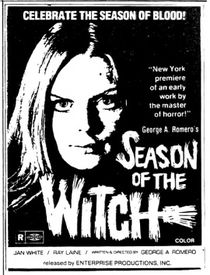 Season of the Witch
 I can think of hundreds of better films, but Face/Off is some kind of zenith, like a pure slab of movie-making distilled. Beyond being a gleefully trashy amped-up B-movie delight, as gloriously dysfunctional as it is intoxicatingly sure-handed, John Woo’s best (and only good) American film is a blockbuster treatise on the nature of identity, the only American picture he handled that remains truly permissive to his personal predilection for films about the dualistic nature of identity and the loss and retention of self. Hard Target (dementedly designed climax aside), Broken Arrow, Mission Impossible II, and certainly Windtalkers and the abominably luke-warm Paycheck all feel like imposters, but Face/Off has the special sauce, that auteurist alacrity and deliciously eccentric sense of self that only Woo could bring to a production like this. Nervously coiled interpersonal drama interpolated with orgasmic explosions of pressured-violence, this radioactive tangle of a film is exultant movie-making from beginning to end.
 I know I should stop beating the dead horse of The Untouchables (it just doesn’t kick enough to truly live), but, Raising Cain? Now we’re talking. Five years after The Untouchables, and De Palma is back where he belongs: up to no good. Vigorously so, at that. Taking a sabbatical from tent-pole films (to be resumed soon enough with Carlito’s Way and, of course, Mission Impossible), Cain is a full-throated, fully-equipped expressionistic cluster-bomb of De Palma’s stylistic slipperiness, throwing his outre configurations of canted, dubious-perspective angles at us like a self-propagating fire. Avoiding any pretense of a sympathetic protagonist or a moral opponent for main character Dr. Nix (John Lithgow), Raising Cain lives up to its riotous name and then some.
