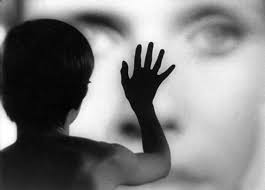
Not a document of but a discourse with reality, Ingmar Bergman’s Persona mirrors the fragility and disharmony of dual-protagonist Alma/Elisabet’s relationship in the film’s very struggle to represent itself, to marry images together into a smooth, harmonious, and stable whole. Like the characters in the quasi-narrative, the film’s images always retain their agency to disrupt, distort, and disturb the desire for holistic analysis, to produce a dominant meaning or theme argued to completion. Rather than an argument composed of images marshaled collectively toward one conclusive purpose, Persona instead explores how single images – and theoretically stable, singular characters – prismatically contain new meanings over time in polyvalent ways that cannot easily be lashed together into an overall thesis. While Persona treads on familiar ground in its reminders that film is, after all, a constructed and artificial art, the film transcends merely announcing this artifice; it does not merely produce “negative” meaning through renouncing the meaning of images. Rather, Bergman’s film finds purpose not merely in accepting that meaning is artificial but in using the film’s artificiality, its editing and framing dynamics, to suggest that images are capable of producing new, multiple, or alternate meanings precisely because they do not have any “innate” meaning. For Bergman, the fact that meaning is tentative, that the surface façade of an image can be fractured or stripped away, is not merely a nihilistic channel to self-destruction but a chance to open a door to reconsidering and recreating images in new contexts, reimagining the valence and purpose of images by introducing them into a temporal flow that reconfigures their purpose. Persona seems constantly on the verge of self-destruction and shuddering apart, but it is only for this reason that it infuses cinema with genuinely new life.
The film’s endlessly exploratory fluidity boasts critical implications for any psychological view of the main characters. In essence, the main characters are broadly treated in the film as collections of external perceptions/sensations/images that audiences (and the two characters themselves) may wish to understand by lashing together around a supposed internal psychology. Yet, the images of the women, like the more non-representational images in the film’s opening montage, ultimately defy “totalized” internal meaning. Many conventional films attempt to create the illusion of innate, fixed, internal meaning within the images and characters that are depicted externally; these films plaster over the temporal process of actually drawing, from images, meanings which don’t innately exist but rather come into existence when the viewer interacts with the images. Persona, however,not only calls attention to this meaning-making process explicitly (to disrupt an image’s fixed meaning) but uses its foregrounding of disruption and breakage to inflect its images with new meaning over time (to transcend fixed meaning). In a thoroughly modernistic sense, the film’s shredding of foundational, permanent meaning is not simply a catalyst for the endless nihilism of meaninglessness but a conduit for meaning excitably charged with impermanence and slippery intangibility.
In this light, Persona’s opening image is perhaps most telling: two abstract portals of light slowly reveal themselves, failing even to conform to a sense of symmetry as they occupy different regions of the screen and encompass disparate shapes (one a square, one an amorphous, oblong cone). The film thus begins with a non-representational gesture, a duo of images devoid of indexical relationship to the world, two shapes that do not even conform to each other and grow in brightness as the image unfolds. They exist in a state of constant becoming, only revealing themselves as representative of tangible shapes near the end of their fleeting existence. While films usually introduce themselves in a world-establishing gesture – a sequence to set the stage or establish ground rules or meanings for a mostly unchanging world – Persona’s opening images both devour any assumption of the “real” world and refuse to settle down. They are images to contemplate over time, not to compartmentalize and clarify.
Continue reading