 With Denis Villeneuve’s Sicario, a pummeling potboiler dressed to the nines in contradiction and complication, it is tempting to pull the same old same old, the routine, now a ritual, that has been carted out for every “drug war” motion picture since Steven Soderbergh’s genre-defining Traffic. It is tempting to layer criticism under a diaphanous ruse of beautifully skulking ambiguity, to throw down the time-tested gauntlet of “characters not in black-and-white, but in gray”. It is tempting to go the epistemological route and employ critique about how Sicario sees the crippling no man’s land that is the War on Drugs, that is spans the gamut from down-in-the-trenches to up-in-the-boardroom. To claim that it “sees all sides” and “plays no favorites”.
None of that is really true. Sicario doesn’t have any food for thought about the War on Drugs, and plainly, I am not sure it thinks it does, which is, depending on your point of view, its guiding light or its crutch. Villeneuve’s previous film, 2013’s Prisoners, was a similarly-minded exploitation film with art-house aspirations, a work that ought to have wielded the name of an Argento or a Carpenter but instead felt itself a Godard. It was, essentially, a Halloween trick, drawing audiences in with promises of slick thrills (which it offered) but pretending, at every step of the way, to turn its back on the cadaverous, waning graveyard filmmaking it knew in its heart. It was a work of schlock, of trash, masquerading as a “serious” film with something to say about revenge. It was a gaslighting effort, essentially, or a way to tell the audience over and over again that they were watching a hardened think piece, when in reality they were watching a dime-store novel on the screen. Continue reading →

 So it was with the raving success (by barely-budgeted, cave-dwelling B-movie standards) of Evil Dead II: Dead By Dawn that Michigan backwoods filmmaker was granted access to the secret gilded chamber of the Hollywood machine. His goal? Not to spit shine the cogs, nor to tear them to shreds, but to rearrange them, to warp them, into a slightly more feral, crazed mad scientist’s contraption. Well, maybe not quite that far, but he was at least about to switch out a few gears and spruce up the place with his own signature cartoon-ghoulish paint brush. Continue reading
  At the center of Eyes of Laura Mars lie a pair of vexing, pallid portals into terror and gender power dynamics. They are two objects staring on at the crossroads after selling their soul to the devil. They are the titular objects of the film – eyes – and they engage in the everyday dialectic of stunted privilege and latent oppression in their daily ritual of photographing women who are as likely to be clad in gilded chic as bloody crimson terror. The eyes adorn the face of Laura Mars (Faye Dunaway, fresh off her Oscar win for Network), a fashion photographer in the glitzy Disco era of the late ’70s, who has taken to coiling together sex and death in garish photographs of women stricken bloodless by murderous killers. Or women otherwise strewn about, dead, on the carpet. The women are not actually dead – they are models in staged photoshoots – but they might soon be. An unseen killer stalks them, and he or she seems to have it ought for the eyes of Laura Mars by transforming her art into reality, torturing her eyes and implicating her in the violence by turning her eyes into inadvertent weapons of sorts. If she continues to shoot, he will kill the object of her lens.
 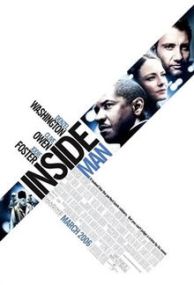 With Spike Lee’s temperamental Chi-Raq finally unleashed upon us, let us turn to Lee’s last unambiguously popular film, a work that has now largely been forgotten and lamented with cries of “selling out”.
  With his monumental silent monstrosities of expressionist-tinged paranoia and fervent chiaroscuro-afflicted studies of monomaniacal madmen driving the modern world insane, Fritz Lang practically invented the film noir. That he was somewhat disavowed by producers and abandoned by film audiences after his escape to America on the eve of the rise of Nazism is a quandary. Fellow expatriate FW Murnau was instantly embraced by Hollywood and could have risen to superstar status had the sinister hand of death – the very subject Murnau tinkered with time and time again behind the camera – not intervened. Ernst Lubitsch at least lasted a decade in the top ranks of Hollywood. Billy Wilder’s star would germinate for decades still. Hollywood was generally kind to German filmmakers prior to WWII, or at least, Hollywood was willing to play ball with the Weimar filmmakers who had soundly trounced Americas best efforts during the silent era. If you couldn’t beat em, buy em, or so the American mantra goes.
  Edited for Clarity
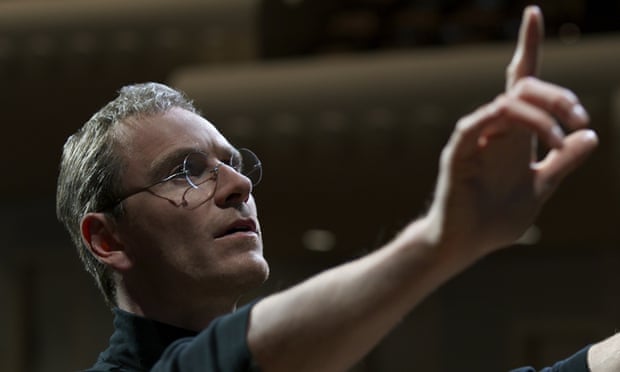 Allow me to indulge myself in the most obvious comparison I can humanly muster for analyzing Steve Jobs: it is a little like Apple, the company ushered into the modern age by the titular behemoth of this film, who, with said ushering, may have ushered in that modern age with it. Which is to say, Steve Jobs is sleek in its interface, pinpoint in its clarity and ease-of-use, slightly idiosyncratic in its egotistical imperfections, vaguely refreshing and unique, and when you chew away the eccentricity and the fat, not all that different from anything else on the market. With its highly literate, theatrical three-act structure that eschews the conventional “life story” approach for a just slightly less conventional “process-oriented, real-time discover-the-man-as-he-works” parade of sequences, Steve Jobs promises something different, maybe something revolutionary. Like Apple, or any number of other vacantly, circumstantially liberal corporations like it – Google, the Democrats – its superficial differences only serve to mask its pat, corporate nature.
  Update at bottom
 Spectre begins as it closes: festering paranoia, sinister purposes, and just a touch of evil. A man in a skeletal mask devoid of humanity skulks across the screen, phallically piercing the frame from the background and doing bodily harm to the image. He is in search of a target, the specifics of which don’t matter. Presumably, he is our prime antagonist, an assassin who would do wrong by the world. In a sly moment of visual wit, we are proved right. He is an assassin, and his name is James Bond. In an unbroken long take in Mexico that lithely swirls and slithers around the backwoods of the frame, the camera preys with Bond, following him and preparing for the prowl. We understand Bond for who he is: a specter in the dark, a ghost in the light. A hunter, and a killer.
