 Oliver Stone’s cinema is always at its best when it is most explicitly akin to the art form it most closely mimics: propaganda. That’s not a put-down; all cinema is subjective, and while most films strive for the diaphanous lie of objectivity, a live-wire polemical of spitfire bias isn’t something to shun. Objectivity, anyway, is often a pacifying gesture for films without an authorial personality or a humbling vision of their own camera’s perspective – a clinical, balanced approach only squares off the edges of the audience-camera dialectic and hides the essence of all cinema as a perspective, a vision, an embodiment of an idea or a view. Objectivity is nothing more than a cemetery where films without a pulse, without an identity of their own, go to lay their heads down to rest.
Stone’s style isn’t unique, but it is a boldface and brio-filled reflection of a cocaine-addled decade that boldly foregrounds the instability of its own aesthetic, one equal parts Pontecorvo indignation and Peckinpah insolence. Released in the same year as Stone’s career-making in-the-trenches Platoon, the grotto of Salvador is a superior film through and through. While Platoon slightly pacified its deranged anger with baroque visual gestures out of a byzantine opera more than the heart of darkness swamps of Southeast Asia, Salvador keeps things low-to-the-ground. If Platoon was equal parts Aerosmith-grit and Boston-histrionics, Salvador is the snarling Iggy-Pop-fronting-Stooges of war pictures. Continue reading →

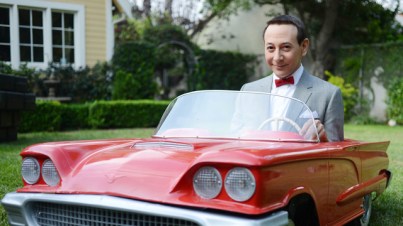 Pee-wee’s Big Holiday
 Like most of the great experiential directors, Terrence Malick has dedicated his career to the embodying of feeling and internal emotion in external perception, rather than – as is the wont of most self-conscious, overweening youthful filmmakers – embedding meaning in hidden artifacts to be glimpsed only by those who know how to look. Malick understands the beauty of the external world as a manifestation of the internal, relying on the gliding fantasia of his always-discovering camera to define humanity, and cruxing emotional growth in the sublimity of his god-glimpsing light and shade dynamics.
 Proposed to producers as a hippie-dippie psychedelic fallout shelter for the grooving ’60s to escape to in case of mass assault by the impending cynicism of the ’70s, Donald Cammell and Nicolas Roeg’s vituperative Performance is, instead, a sulfurous and fluorescent molotov cocktail thrown straight into the decade-long party the ’60s had been having with itself. Announcing itself with the foreboding funk of a hearse-like car careening across the countryside, the cryptic seizure of the film’s editing then immediately interjects with an explicit sexual tryst that sours into a fiery throttling match between fleshy shapes that soon enough barely even resemble the human form. We’re a minute in and we already cower in fear for the sadomasochistic holocaust the co-directors are about to unfurl upon us.
  JJ Abrams probably needs to be stopped. He’s managed the Ford production line for the prepackaged cinematic spirit of the times more abominably than any of his fellow new-school blockbuster savants, and like most of them, he’s a genius marketer in a mostly soulless filmmaker’s body. The albatross of his films is also their raison d’ etre: their desperate, unquenchable desire to be answered. He’s turned the Christopher Nolan puzzle-box A-to-B-to-C filmmaking style, distressingly linear and devoid of personality, into a cottage industry, propping up mostly serviceable but unexceptional films devoid of personality with marketing constructs that obfuscate and ossify his products around and within layers of carefully calibrated, ultimately pointless mystery.
  The Bitter Tea of General Yen
 Jean-Luc Godard, a filmmaker as prone to hyperbole in his own way as our current subject, once intoned on the merits of cinema up to the point of his own game-changing chicanery. Writing that “there was theatre (Griffith), poetry (Murnau), painting (Rossellini), dance (Eisenstein), music (Renoir)”, he implied a stoppage – a modernization of cinema to its own fully-emerged, blossoming self – with his godfather Nicholas Ray, one of the most brash American filmmakers in existence and a director whose expressionist-tinged monstrosities of American life desperately beg for a rediscovery today.
 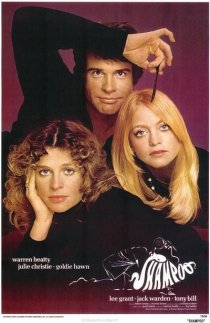 Filmmaking maverick Hal Ashby was an elder statesman of the New Wave, more akin to the literary largesse-and-trepidation cocktails of Robert Altman than the fiery brimstone of the younger hooligans of the era weened on Godard and his fellow travelers. Martin Scorsese he was not, but he did stake out his own claim as a chronicler of the decade that quietly fell in love with him, at least for a film here or there. Although none of his features would meet the vociferous acclaim of his debut work Harold and Maude, Ashby would evolve as a journeyman filmmaker whose comic visions of life belied their exploration of the just-past-due, still lingering, now haunted fantasia that was the death spasm of the 1960s.
 Carl Dreyer’s unerring spiritualism hangs over Ordet like a ghostly pallor, but it does not – as many critics fail to realize – define the film’s essence, at least insofar as the ascetic way many scholars interpret the word “spiritual”. Much like Tarkovsky, who arguably took over the reigns for Dreyer as he was exiting the world himself, Dreyer’s spiritualism was not a nebulous, free-floating nexus of dogma and soul-searching but a physical, tangible expression of living, being, and breathing. Thus, while so many scholars reduce Dreyer to his otherworldly austerity, they fail to glimpse the glimmers and flickers of confrontational, even primal human emotion and active experience radiating within, out of, and beyond the cramped walls of his human locals.
  Platoon
