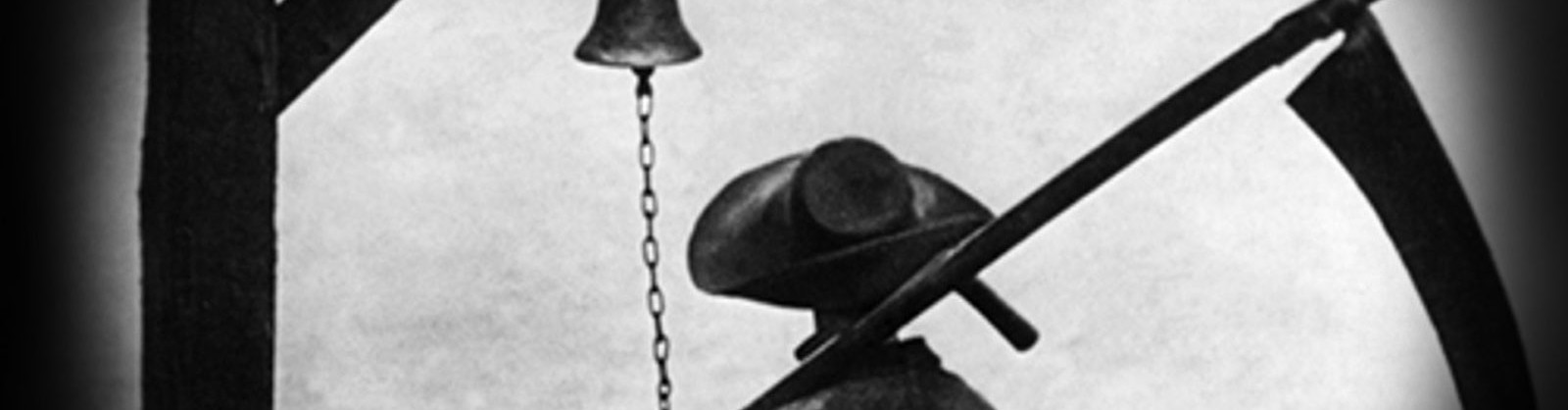
 Ray lived by night, Godard left us breathless, Penn ignited the New Wave, Altman turned the camera back on thieves like us, and Malick informed us that lands, despite being the crux of majesty in the world, were indeed bad, all prismatically glimpsed from the confines of the same essential story of lovers on the run from the law. Before all of them, though, a German expat, death and national turmoil lingering in his mind and social opprobrium hot on his tongue, took the same story and welcomed it as an opportunity to remind us that innocence, once drained, has no life left to give. A rejoinder to the torrential downpour of Nazism absconding with the ostensible innocence of his old home and a riposte to the dislocation of Depression-era life in his new home (two paths that would cross circa 1939), You Only Live Once sparkles with director Fritz Lang’s inveterate directorial gloaming. It isn’t the destruction-maestro at his most malevolently implacable (M could never be topped). But this mostly unknown film today not only tackled present-day social schism with fractured, sharded filmmaking but also, arguably, served as Lang’s most explicit premonition of the genre he would become most famous for: the noir. Continue reading
Midnight Screening: You Only Live Once
Leave a reply
 Fritz Lang’s post-Metropolis rejoinder to his own maximalist desecration of modern German society is a fanciful, feisty kaleidoscope of Berlin bedlam and Weimar-era hedonism untethered from the astringent social critique of Lang’s Mabuse pictures. While Rudolf Klein-Rogge plays a monomaniacal mastermind of pandemonium here, as he did in Dr. Mabuse from six years before, this erratic, erotic, orgiastic display of Lang’s bravura skill shoeshines German Expressionism with pumped-up serial and rubs itself down in a torrid love affair with presentation itself. If the Mabuse films secretly smuggled in a critique of German society, Spies is, relatively speaking, more of a love letter to the temporal high of monomania, even if it is a note written with a poisoned pen. Certainly, Lang was well aware of the horrors of unfettered ’20s capitalism in Berlin and the imminent rise of the Nazi party – three years later, he would direct the ultimate cinematic statement on Nazism without even mentioning the word. But, just this once, and until its startling and corrosive finale, Lang let his monocle down in one of the ultimate cinematic odes to filmmaking as toybox more than toolbox.
  With The Witch back in theaters and having a field day at the box office, let us look back at the single greatest film about witches ever to grace the screen.
  The incorporeal spirit of his dueling godfathers, Sergio Leone and Don Siegel, haunt Clint Eastwood’s second directorial effort, which also invites the tenebrous psychosis of Eastwood’s debut Play Misty for Me to the party. From Leone, Eastwood attunes to the primordial, baroque expanse of the Western as a dreamscape or an amoral vetting ground rather than a physical place. As a counterbalance, Eastwood matches the florid poetry of Leone to Siegel’s terse brutality to concoct a Western as comfortable with surreptitiously shooting you in the back as it is with orchestrating the social theater of the high noon showdown.
  Deliverance is driven by nihilistic impulses that subsume all sense of morality under the unremitting decay of primal, masculine gruesomeness. The story of four Atlanta businessmen trapped and hunted in rural Northern Georgia, John Boorman’s tone poem to nature as implacable object abstains from ever empathizing with the four men. Excepting Ronny Cox’s Drew, the only primary player who even considers the value of rural natives in an eerie yet oddly touching banjo duel, by far the most famous scene from the film to this day, none of the characters fare well as moral specimens. Arriving in a village hewn out of the earth and continually threatened by it, Ned Beatty’s Bobby bellows about the place, and when redressed for potentially annoying the people of the town, his retort, “People?”, suggests his ignorance about the location he now inhabits.
  It’s hard to deny that a palpable misogyny suffuses The Brood, and director David Cronenberg’s post-divorce fractured attitude toward main character Nola (Samantha Egger) does malignantly spread throughout the film. But as the nexus between Cronenberg’s bodily, corporeal grindhouse films from the ’70s and his more cerebral psychoanalytic studies, The Brood is a more troubled affair. For one, this tale of marital fallout is calibrated for a tenebrous blamelessness, with Cronenberg’s austere style vacillating between perspectives to reform our preconceptions of which parent is truly justified in this atomic deconstruction of the essentially self-sabotaging nature of the nuclear family.
 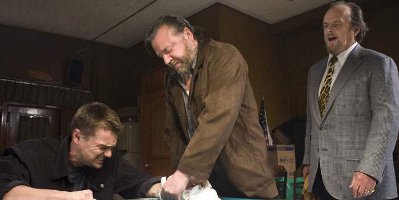 The Departed
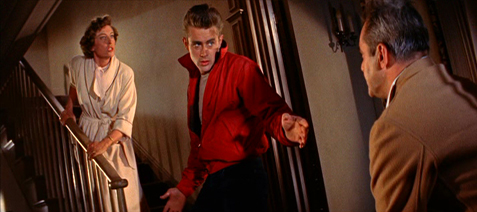 It’s a double-edged sword that Rebel Without a Cause is simultaneously the raison d’ etre for many a cinephile’s knowledge of director Nicholas Ray at all, and that it is, simultaneously, a black hole suffocating energy and consideration from Ray’s cinematic canon elsewhere. Not to mention, for most people, the name associated with Rebel is not Ray, the underdog of American film in the ’50s and perhaps the missing link between the classical Hollywood melodrama and the angry young hooligans like Godard and Cassavetes of the ’60s. Instead, the claim to fame of Rebel is the hot-headed bundle of nerves that was James Dean, arguably the pop culture icon of the ’50s as well as an embodiment of the very spirit Nicholas Ray epitomized as a filmmaker: pulpy but passionate, lean but expressively sensitive, expressionistic but timid, and above all trembling with the unspeakable, implacable throb of constantly spinning out of control.
 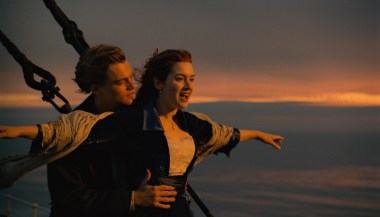 A self-actualizing, self-arousing, and ultimately self-validating Herzogian feat (without the psychosis) that is only occasionally self-enervating, Titanic ultimately stands as not only a chronicler but an embodiment of the spirit, and the hubris, of its subject matter. A three-hour aphrodisiac engorged with cinema, you might say, if you were inclined to peruse the halls of the Freudian catalog that heroine Rose so clearly mobilizes when remarking on the prodigious self-congratulatory caliber of the ship that the industrial revolution and its classist girders would almost drown in.
  Political scorn has embarrassed Forrest Gump for two decades now, with the most common source of critique being the film’s glimpse of the rise (or return) of the American right in the mid-’90s, a revolution led by Newt Gingrich, a Southerner like Gump, although a considerably more blustery one at that. The attacks aren’t unfair – for a film that sometimes aggrandizes itself on a second-by-second basis, its social conscious is valid critical fodder, and the film’s exclusionary attitude toward gender and racial unrest proposes an almost oblivious Southern wait-and-see gentility toward civil disobedience. Gump is in fact an almost willfully obedient motion picture, with its then-new-school technology a masquerade for its rigorous cinematic traditionalism.
