
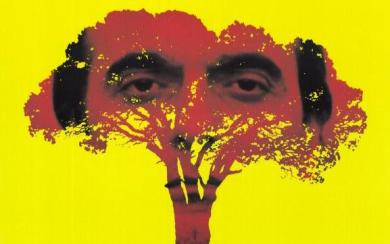
 Watching the great modern Iranian film by the great modern Iranian director, it’s a slippery path for any reviewer to bog oneself down in the essence of the film’s commentary on Iranian society (indeed, it is a crutch, if not a fallacy, to turn any review of a film into an expression of nation’s cinema, as thought cinema is exclusively about the nation it derives from or as though a national cinema is a monolith). One can be sure that Taste of Cherry has notable comments on modern-day Iran and the intersection of religion and governance unique to that nation, but this Beckettian existential drama can be contained by no nation, no person, and no theme. Continue reading
Un-Cannes-y Valley: Taste of Cherry
Leave a reply
 Carnival of Souls should have befallen a watery grave decades ago, and yet, like its inveterate crash zooms, or the nagging figments of a nightmare or a half-imagined shard of memory, it lodges itself somewhere in the dankest, most indecipherable thickets of the mind. Who knows where it is stored precisely. Probably in the muddy, constantly-slipping-away but always-haunting-you halls next to Eraserhead and you parent’s wedding videos, a duality that very much encompasses the film’s bemusing, off-off-Broadway existence.
  The historical prestige genre, entombed in its ever-lasting leisure, ain’t got nothing on Ken Russell’s The Devils. A power-mad concoction of scorching lecherousness and sacrilegious, anti-social visual brio, it’s a torrid affair, but love is nonetheless the only applicable word for anyone smitten with Russell’s peculiar brand of rattled-with-fever historical spasms. Few directors have ever barreled so gleefully into the dankest regions of their own inner mental faculties with such a cavorting brand of heretical dissidence, a defiance to not only social propriety but filmmaking rule of thumb. Fitting for a work about witches, Russell’s inimitable work feels like cackling witchcraft conjured out of nowhere but his own devilishness.
  The vaguely taxidermied trailers for Jon Favreau’s The Jungle Book promised nothing more, and nothing less, than the latest in the continued death throes of Disney’s deranged vision quest to reclaim the surprise box-office domination of Pirates of the Caribbean. Having cascaded through animated properties both obvious and ill-timed over the past five years, the studio seems patently unwilling to give in to the critical and commercial failures of their many live-action properties in recent years. Yet the chiefest surprise with The Jungle Book is that it’s actually trying to pump some fresh blood into the corpse of Walt Disney’s final supervised feature-length animation release, rather than merely desecrating the corpse by propping it up on strings and performing a demented CG pantomime with it. And this is for a film whose idea of clever is to recast King Louis as a jungle mafia don voiced by an only semi-conscious Christopher Walken. But this is live-action Disney, now; grading on a curve is acceptable, like it or not.
 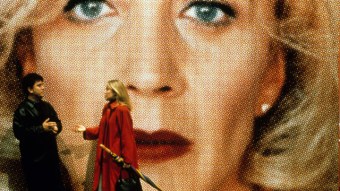 A spellbinding evolution of Pedro Almodovar’s all-women-on-board feminism and his dynamite-cased challenge to the realms of normality, All About My Mother deftly explores tensions in human identity as it transmutes cinema into a portal for escape, community, and aesthetic rebellion against the reality principle. A fantasy worthy of Chaplin or Tati, Almodovar’s hypnotic, incandescent fantasia of pop-art styles and unchecked melodrama encircles true cinematic bravado while visualizing the stylistic wanderlust of a woman searching for a new identity after her normative gendered status as “mother” is prematurely ended in a swift burst of tragedy. Although it redresses the failure of its medium to adequately entangle itself in the complications of female relationships, Almodovar’s style can’t be mistaken for anything but a fantastical ode to a century of cinema that, sometimes inadvertently, managed to provide respite for the very women it so often neglected.
  Like other sublime cinematic explications of the femininity under duress from the ’90s – The Double Life of Veronique, All About My Mother, and Farewell My Concubine chief among them – The Piano treks into uncharted waters of the cinematic variety as well as the social. In the New Zealand landscape – prefiguring and riposting the picturesque post-card hollowness of The Lord of the Rings – Jane Campion siphons off a visual limbo that boldly provokes us to consider space internally and externally. Campion’s expressive romanticism evokes the lushness of Jane Austen as well as the contradictions in internal, mental states suggested by the Victorian literature that has become so entwined with Western conceptions of both feminine oppression and internal selfhood rupturing against the dying of the light. The non-natural, hyperbolically romantic vistas become counterpoints to the frail, trapped humans who must withhold their emotions from the predation of these landscapes. And, in typical romantic form, the film’s incontrovertible splendor also serves as a visual lexicon for dreams and desires that always fight to waft and permeate out of their fleshy prisons.
 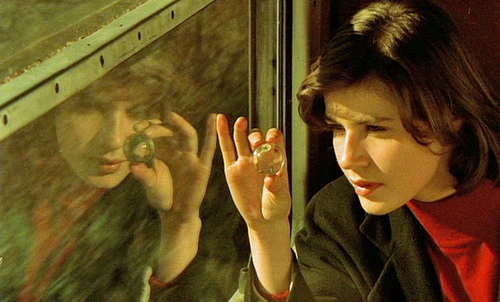 The easy path with Krzysztof Kieslowski’s The Double Life of Veronique is to turn it into a prison, a detention center to trap ideas and themes, to stagnate the film and hoist it on the petard of its own conceptual dualities and symmetrical intricacies. To flatten it, essentially, by turning it into a psychoanalytic study or a perceptually oblique delivery mechanism for a philosophical thesis about order. Temptation beckons us to plunge deep into the depths of a work, following a shaft of light to the darkest trenches of the marina to unearth its supposed hidden treasures. In doing so, however, we may dig our own waterlogged grave.
 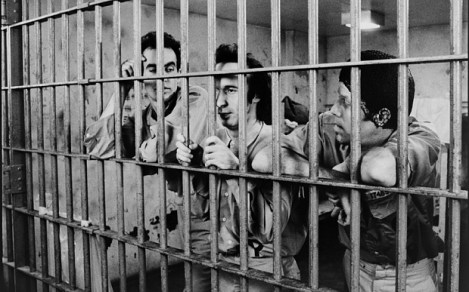 So, a great many of the films I wish to discuss for the Cannes Film Festival series are exceedingly difficult to come by, so we’ll be keeping things fluid around these parts. I plan on, hopefully, fulfilling the series by the end of May (that’s a review for every year of the festival until the present) but the order of the reviews is, as of this point, up in the air. I’ll be keeping things fresh, skipping as I see fit. It’s just the way it’s gonna be. Think of it as a way to keep us on our toes. Speaking of which, and speaking of today’s subject, not a better film exists for the subject of toes and keeping us on them like we’re dancing on hot coals …
  “Importance” has always been an albatross around cinema’s neck, or the neck of any popular medium of art. The trouble isn’t that it forces artists to shoot for the middle (not middle America or the middle aisle but the middlebrow, aesthetically speaking), but that it so often precludes surreptitious variances in tone and style, it douses cinema in a layer of pummeling pragmatism and assured complacency. It primes a film for the belief that the narrative it is telling, the content of the art, is so essential and valid that playing with the form in which that content is presented becomes tantamount to heresy. It asks us to accept the known, the obvious realm of “content” and narrative, at the expense of the dangerous realm of style and form.
  Finally, after months of delay, it’s time to complete the second half of the Cannes Film Festival Series I began after last year’s festival. I have no proposed schedule, but let’s just say, if I’m on my best behavior, I hope to be done by this year’s festival in May.
