
 Oliver Stone’s cinema is always at its best when it is most explicitly akin to the art form it most closely mimics: propaganda. That’s not a put-down; all cinema is subjective, and while most films strive for the diaphanous lie of objectivity, a live-wire polemical of spitfire bias isn’t something to shun. Objectivity, anyway, is often a pacifying gesture for films without an authorial personality or a humbling vision of their own camera’s perspective – a clinical, balanced approach only squares off the edges of the audience-camera dialectic and hides the essence of all cinema as a perspective, a vision, an embodiment of an idea or a view. Objectivity is nothing more than a cemetery where films without a pulse, without an identity of their own, go to lay their heads down to rest.
Stone’s style isn’t unique, but it is a boldface and brio-filled reflection of a cocaine-addled decade that boldly foregrounds the instability of its own aesthetic, one equal parts Pontecorvo indignation and Peckinpah insolence. Released in the same year as Stone’s career-making in-the-trenches Platoon, the grotto of Salvador is a superior film through and through. While Platoon slightly pacified its deranged anger with baroque visual gestures out of a byzantine opera more than the heart of darkness swamps of Southeast Asia, Salvador keeps things low-to-the-ground. If Platoon was equal parts Aerosmith-grit and Boston-histrionics, Salvador is the snarling Iggy-Pop-fronting-Stooges of war pictures. Continue reading
 Jean-Luc Godard, a filmmaker as prone to hyperbole in his own way as our current subject, once intoned on the merits of cinema up to the point of his own game-changing chicanery. Writing that “there was theatre (Griffith), poetry (Murnau), painting (Rossellini), dance (Eisenstein), music (Renoir)”, he implied a stoppage – a modernization of cinema to its own fully-emerged, blossoming self – with his godfather Nicholas Ray, one of the most brash American filmmakers in existence and a director whose expressionist-tinged monstrosities of American life desperately beg for a rediscovery today.
 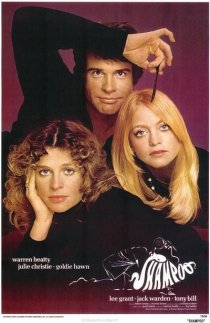 Filmmaking maverick Hal Ashby was an elder statesman of the New Wave, more akin to the literary largesse-and-trepidation cocktails of Robert Altman than the fiery brimstone of the younger hooligans of the era weened on Godard and his fellow travelers. Martin Scorsese he was not, but he did stake out his own claim as a chronicler of the decade that quietly fell in love with him, at least for a film here or there. Although none of his features would meet the vociferous acclaim of his debut work Harold and Maude, Ashby would evolve as a journeyman filmmaker whose comic visions of life belied their exploration of the just-past-due, still lingering, now haunted fantasia that was the death spasm of the 1960s.
 Carl Dreyer’s unerring spiritualism hangs over Ordet like a ghostly pallor, but it does not – as many critics fail to realize – define the film’s essence, at least insofar as the ascetic way many scholars interpret the word “spiritual”. Much like Tarkovsky, who arguably took over the reigns for Dreyer as he was exiting the world himself, Dreyer’s spiritualism was not a nebulous, free-floating nexus of dogma and soul-searching but a physical, tangible expression of living, being, and breathing. Thus, while so many scholars reduce Dreyer to his otherworldly austerity, they fail to glimpse the glimmers and flickers of confrontational, even primal human emotion and active experience radiating within, out of, and beyond the cramped walls of his human locals.
  Platoon
 One Flew Over the Cuckoo’s Nest
 The passing of ace cinematographer Haskell Wexler earlier in 2016 reminds one that the most notable visuals in a film are not always those which buttress already stellar offerings, but those which almost singlehandedly lift entombed, waxy screenplays up from the dregs in the first place. Case in point, his influential, remarkably punchy, wonderfully filthy work enlivening In the Heat of the Night, where he saves a film from an enervating screenplay precisely by suggesting enervating Southern oppression in the way a parade of declamatory verbiage never could.
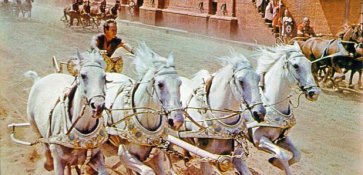 Ben-Hur
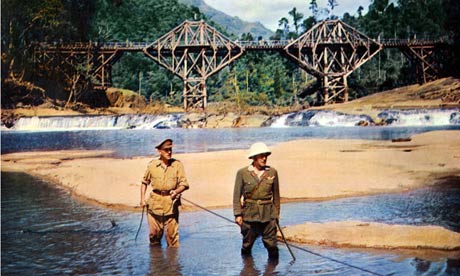 If The Bridge on the River Kwai is an inflection point in the bifurcated career of the most quintessentially British of all directors, David Lean, it is no victim of a split-decision. Emblazoned with both the staunchly intimate character focus of Lean’s earlier inspections of British life and the bellowing grandeur of his boldface later pictures, The Bridge on the River Kwai is a meeting of minds with a sweep that not only contrasts but amalgamates the luxuriant and the domestic. It lacks the fiercely enigmatic streak of Lean’s later Lawrence of Arabia – where delusions of self-immolating grandeur, imperialist mystique, and hot-headed rebellion conspire to denounce the essential vision of prodigious orientalism that sticks to Western cinema like a fly to excrement. But such concerns are valueless amidst Bridge’s vigorous cinematic workout and its scorching exegesis of the essential social codebook of Twentieth Century British life.
 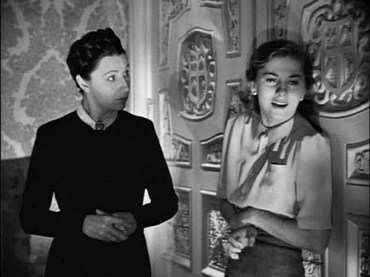 Of all the Alfred Hitchcock films in existence, one shouldn’t feign surprise that it was Rebecca that was lovingly overcast with the radiant glow of the amber Oscar. Frankly, and as is often the case, the reality is that the singular Oscar glory was afforded to one of the more stolid, “respectable” pictures in the canon of a director that thrived when he was barreling away from respect at a hundred miles an hour. By the standards of sub-expressionist horror, mind you, Rebecca is plenty disturbed, with Hitch’s direction sterling and suffocating even if it’s less maverick and personal than it would be later in his career. But watching Rebecca, a ghoulishly charming little bedeviled jewel in bewilderingly trumped-up costume drama airs, it’s painfully obvious that he was playing mega-producer David O. Selznick’s mercenary at this point, and that the film’s Oscar glory is less a statement to any truly revolutionary or thought-provoking aims than to the sheer size of the film’s majesty. While Vertigo, Rear Window, Strangers on a Train, and a dozen other Hitch films animate wonderfully contradictory impulses to truly destabilizing ends, the only thing Rebecca animates is Selznick’s production budget. And the only thing it tests is the size of Selznick’s ego, his inimitable capacity to gild and ornament a competent husk of a film with all the production decorum his bottomless pockets could buy.
