
 Proposed to producers as a hippie-dippie psychedelic fallout shelter for the grooving ’60s to escape to in case of mass assault by the impending cynicism of the ’70s, Donald Cammell and Nicolas Roeg’s vituperative Performance is, instead, a sulfurous and fluorescent molotov cocktail thrown straight into the decade-long party the ’60s had been having with itself. Announcing itself with the foreboding funk of a hearse-like car careening across the countryside, the cryptic seizure of the film’s editing then immediately interjects with an explicit sexual tryst that sours into a fiery throttling match between fleshy shapes that soon enough barely even resemble the human form. We’re a minute in and we already cower in fear for the sadomasochistic holocaust the co-directors are about to unfurl upon us. Continue reading
Midnight Screening: Performance
Leave a reply
 Oliver Stone’s cinema is always at its best when it is most explicitly akin to the art form it most closely mimics: propaganda. That’s not a put-down; all cinema is subjective, and while most films strive for the diaphanous lie of objectivity, a live-wire polemical of spitfire bias isn’t something to shun. Objectivity, anyway, is often a pacifying gesture for films without an authorial personality or a humbling vision of their own camera’s perspective – a clinical, balanced approach only squares off the edges of the audience-camera dialectic and hides the essence of all cinema as a perspective, a vision, an embodiment of an idea or a view. Objectivity is nothing more than a cemetery where films without a pulse, without an identity of their own, go to lay their heads down to rest.
 Watership Down begins with an iridescent slab of primal, irradiated cartoon psychosis, a deceptively primitive work of mythological animation as welcome in the Disney canon as it would be adorning Ancient Greek pottery. Regaling us with the oil-and-syrup concoction that is the mythological fable of rabbit-kind, we’re informed how the fecund species was blessed with fleet feet and cursed with a menagerie of predators. The simultaneously timid and trepidatious imagery of crayon-infused characters backed by an illuminated white hell evokes a cautionary tale most bold. Animation in 1978 was at something of a nadir as up-and-comers were rabidly chasing down the cadaverous corpse of Disney and looking to impose new styles all their own, and in this light the intro of Watership Down feels particularly prescient. Watching the introduction of Watership Down, it’s as if the film chose to begin with a despairing version of the classical American cartoon style – all curvaceous, simple lines and expressively elegant crayon-scrawl – to pay homage to the old before casting about with the new.
  Flesh for Frankenstein
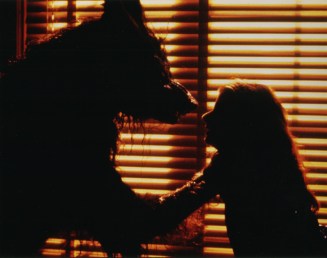 Writer-director Joe Dante is pop culture dead weight today, but in the mid ’80s he was the zeitgeist. A progenitor to the highfalutin sub-horror irony of Scream and a cornucopia of too-scared-to-admit-they-are-horror films in the intensely glib world of ’00s horror, Dante’s brand of irony was much less prone to the fraudulence of incessant hedging. His earliest films, Piranha and The Howling, upend horror tradition without fecklessly resorting to ingratiating pleadings of blasé, sycophantic self-superiority. They rib and tickle, but they’re also honest-to-god horror films, as marinated in tenebrous cinematography and bone-rattling sound as any films of their time. They tease us, but they do not trick us: they mean what they say, and they bite.
  Blazing Saddles
 Elaine May’s career-ending 1987 blockbuster social tract Ishtar, a lopsided work of equal parts monomaniacal egomania and bracingly scabrous anti-masculine comic commentary, has spent the better part of a decade being partially rescued by youthful, revisionist film critics. Now, that film’s partial reappraisal is arguably unearned; its phenomenally sardonic first half is mostly undone by an untethered, obsessively messy back portion that sees May woefully incapable of handling the ridiculously inflated budget of the production. It feels like wishful thinking to lump it in with the equally voluminous anti-American critique of Western iconography that is Michael Cimino’s much more deserving masterpiece Heaven’s Gate. But if reappraising Ishtar is a necessary casualty to resurrecting Elaine May’s bracing back-catalogue, then so be it. She remains responsible for a number of the lost masterpieces of American cinema, a cadre of the best films released in arguably the most impressive decade for the nation’s cinema.
  After the laconically witty, good-natured “wait, how much money are they giving me?” spurt of Big Trouble in Little China, John Carpenter decided his steadily encroaching ascent into mainstream fluff required a course correct. His 1987 feature, Prince of Darkness, reflects a homecoming of sorts, a rejection of the more-is-more pomp and circumstance of the 1980s for the merciless fringe-dwelling independent malevolence of Carpenter’s upbringing in the 1970s and his time being reared on the works of Val Lewton, Samuel Fuller, and Nicholas Ray. Antithetical to good cheer, the fluctuating energy levels of Prince of Darkness occupy a secluded spectrum from poison-cloud malevolence to throat-grabbing holocaust of horror. If Big Trouble was escapism, Prince of Darkness feels like it cannot be escaped.
 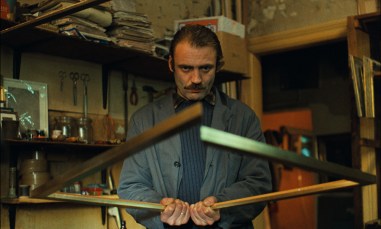 Relative to his New German Cinema compatriots – or sparring partners more appropriately – certifiable humanist Wim Wenders was a late bloomer. His ’70s is dotted with highlights, but you won’t find an Aguirre or a Petra von Kant hiding among them, even if his Road Trilogy begs to be rediscovered to this day. This is no knock on Wenders; his years-long quest to discover something at the mountaintop of (usually American) cinema necessarily required nurturing and exploration that the more primal impulses of Rainer Werner Fassbinder rejected as vestigial structures of sane society. Plus, by the end of the ’70s, Wenders still had the finest modern study of American geography-of-the-mind in his near future, while Fassbinder’s cocaine-addled filmmaking was about to overflow into personal disaster. Neither filmmaker was necessarily superior to the other (although crossing their streams would likely prove a recipe for nuclear fallout), but 1977 was still a year of personal journey for Wenders. He hadn’t yet reached his destination.
  There’s something elusive and mystical about confronting a cinematic stand-by, a work read and tweaked and revisited by directors across decades and nations. The post-They Live By Night world was ushered in almost immediately by the psychotic, sexually-charged thrust of Gun Crazy, which toyed with many of Night’s themes, but it wouldn’t be for another decade until director Nicholas Ray’s contrarian style would emerge as canonical in the minds of the French New Wave. Watching The Live By Night, you can practically imagine the entire Cahiers crowd almost asphyxiating on autoerotic fantasies of their own cinematic futures. This imaginative hyperbole is entirely fitting for a work like They Live By Night, too, since it is at once latently sexual and surrounded by violent hairline fractures that strut into the cinema and threaten its very being.
