
 I Walked with a Zombie was the second film Val Lewton produced once given complete control of RKO’s horror unit, and it was released only a year after Cat People, his most famed horror film. Given this, one might expect a retread, but I Walked with a Zombie is certainly not the film anyone then or now would be expecting. A tension seethes in the air and grasps all, but the film doesn’t demand in the way a work like Cat People is so tersely constructed to fight for our attention. Absent are the soul-deep colors of Cat People which lighted up the screen with black energy. And in place of the rampant diluted German Expressionism of American horror throughout the ’30s and ’40s, all caught up in harsh and angular nightmares, we have something that more closely approximates a hazy dream, a curious cross between an English period drama and a work of French impressionism that centers mournful, elegiac long takes and has room enough for lost secrets deviously begging to get out . It is, above all, wholly distant from anything resembling horror logic, and it is all the more fascinating for it.
Continue reading
Midnight Screening: I Walked with a Zombie
Leave a reply
 Update in late 2019 with the release of Dark Fate: The glum and more self-consciously morose later sequels track, recode, and needlessly convolute this film’s elegant, inescapable trudge toward oblivion, shading and sharding Cameron’s original vision in various ways, but they all completely miss the original’s brilliance: its sense of soul-death. Nominally an action film but far divorced from the self-amused tone of the Schwarzenegger pictures that were in the can as soon as this one made a fortune, The Terminator is as implacable and monosyllabic as its namesake: a blood-and-guts slasher film in a metallic overcoat, and one with significantly less Pavlovian satisfaction at the death it deals. Brutal simplicity at its finest, The Terminator essays a dystopic future that ultimately, tragically, realizes its far-flung visions of eventual catastrophe already came to pass in the present while it wasn’t looking. How far this franchise has fallen …
 Martin Scorsese’s lived-in film adaptation of The Band’s legendary, star-studded farewell concert, cheekily titled “The Last Waltz”, is wholly at odds with the fundamental logic of the conventional concert film, and it is all the more fascinating for it. At the eve of their dissolution, Scorsese chose to film the Band warts and all. He captures, more than anything, their own distance from the music they no longer necessarily want to call home. You can feel his love for the energy of raw music, yet he uses this energy to capture a fundamental malaise. His camera becomes their most knowing fan, giving the film a live, human physicality even as it deals in the deadened decay of men too tired to care anymore. The Rolling Stones’ documentary Gimme Shelter, itself fairly stunning, is haunting for the way a single tragedy intervened and permeated the celluloid of the whole film. Here, however, we come to understand something more deadening: the perpetual tension of joy and melancholy of life on the road, something a tragedy wouldn’t so much break-up as become one small portion of. On this tension between the lively and the embalmed, the film presents a fascinating vision of humanity and performance equaled by few films.

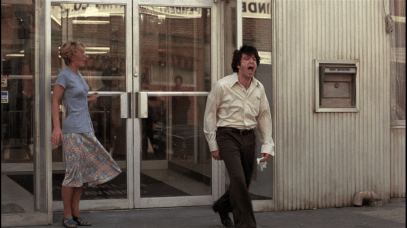 Edited
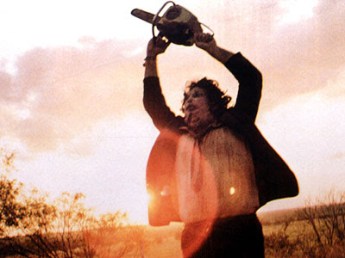 Updated mid-2017 after another rewatch – such an amazing, amazing film, not particularly violent in a diegetic sense, but one which feels as though violence has been done to it.
  Terrence Malick didn’t crash into the film-world – he stumbled into it, but the impression he left wouldn’t convey the truth of it. A philosophy student at Harvard who studied Kierkegaard, Wittgenstein, and Heidegger, he went on to teach at MIT after a petty disagreement with his advisor while studying as a Rhodes Scholar at Oxford (although in the world of philosophy, everything and nothing is petty). At some point along the way, he decided he felt like making a movie, and the world was never the same. That film, 1973’s Badlands, is so stunningly like every other kids-on-the-run crime film from the American New Wave from a distance, it’s almost comical. But from up-close (or even medium distance), it’s so glaringly apparent that Badlands is the antithesis of the films it’s often compared to (ahem, Bonnie and Clyde) that the initial comparison seems so superficial as to not even be worth noting. Badlands is unlike any film from the period, and American cinema more genuinely. It is a singular experience, and a towering, titanic one.
 The Long Take