
 Federico Fellini, the grand master of Italian cinema, began his life behind a camera as a young lad among the neo-realists, a protege of sorts to De Sica and Rossellini and their own habits of redefining cinema forever. Fellini, like those masters of the form, sought to reject Hollywood convention and lay down a thick layer of everyday humanity with non-actors and grungier camera techniques less galvanized in Hollywood glamour and melodrama. This shift itself was a towering upheaval to the cinematic tradition, a tangible stimulant to directors everywhere to shake the foundations of film land and brace for impact.
But Fellini was not done shaking. The neo-realist movement, for him, was a jumping off point, a stepping stone for his own more whimsical, more blunted, and dare I say more challenging vision of what cinema ought to be. Beginning with the seminally shattering La Strada in 1954, Fellini married a form of realism to a carnivalesque wonder and an omnivorous desire to break with reality when it could help the emotional truth of his story at the expense of conventional logic. Continue reading
 Ain’t Them Bodies Saints is little more than a New Hollywood pastiche, a loving and careful waxworks recreation of a style and type of cinema that was at one time, a great many years and Hollywood eras ago, the most lively and startling thing to ever happen to American cinema. As a film, David Lowery’s recreation of that style has not one new idea to bring to the table the New Hollywood built out of rustic, unpolished wood and then abandoned long ago. All Lowery is doing is digging through scrap heap, separating out the noble rust from the ignoble variety, and refashioning it into a garage sculpture where the very nature of the metal – falling apart, worn to the point of triteness – is a badge of honor, a reminder of how old this sort of tale really is, and how lively it can still feel when it is carted out after it hasn’t seen the light of day in too long. It doesn’t offer a new idea, but it offers a more humble reminder: in the New Hollywood of the 1970s, we now see not only a scorching fresh breath into the room of Hollywood’s musty old classicism, but a peculiar, well-worn form of old-timey comfort. Those New Hollywood films are now part of the classic American cinematic tradition, and Lowery is merely playing a requiem for them.
 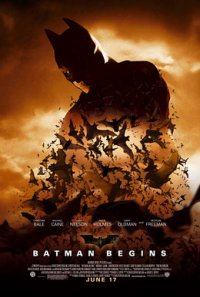 The comic book movie in 2005 was entrapped in its own split-decision bifurcation. On one hand, the likes of Elektra and Fantastic Four were omnipresent holdovers from the 1990s and markers of a genre strangling itself into childish submission. On the other, Robert Rodriguez’s Sin City sought to experiment with the comic book form as an avenue for pure cinema, and David Cronenberg’s A History of Violence was caught taking the medium of cinema to task with the violence of the human condition. Both were attempts to push the comic book medium to new depths, but both also tacitly exposed the limits of the superhero genre by eschewing the likes of Spider-Man or Superman for stories that, at their structural elements, had very little to do with the tradition of the comic book. Just as the comic book had grown up and left some of its inner core back in the minds of teenagers, so too was comic book cinema moving away from the fluff and the puff and toward something a little more brutalized and tragic.
  When we last left him, former police office Max Rockatansky (Mel Gibson) lost his family and his best friend, and had fulfilled a most unfulfilling form of revenge on the now lawless highways of the Australian outback. He had lost and repaid the loss only to realize that there was nothing to be won back. When we last left him, there was nothing left for him but the empty road.
 But 1995 was not merely a year for corporate excess and nihilism crawling out from the woodworks; it was also a year of magic and wonder, and a childlike work of supreme, effervescent joy the likes of which cinema had long forgotten…
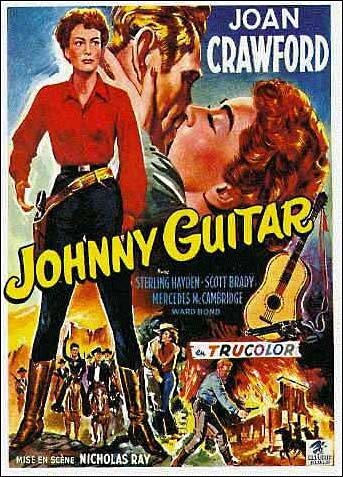 Is there any way to announce a consideration of Johnny Guitar other than the now famous Jean-Luc Godard quote about Nicholas Ray being “cinema”? Famously, the director expressed that Ray was among the first, if not the first, American auteurs to do with cinema as only cinema could, taking up the poetry of dialogue and the untarnished, painterly quality of art and the distant timelessness of theater and encircling them with the vulture of film, engorging itself on the carcasses of other mediums and ensuring they lived on, in altered, transmuted form, inside cinema.
 House of Flying Daggers
 Andrew Dosunmu’s Sundance hit presents a tale as old as time, yet lively, immediate, downright kinetic visual craftsmanship ensures it remains as trenchant and pointed today as at any time in history. Adenika (Danai Gurira), a Nigerian immigrant to America, marries Ayodele (Isaach de Bankole) and spends a good many months struggling with him to produce a baby. They are not sure what precisely is wrong, yet whatever initiatives they try fail. Ayodele’s mother Ma Ayo (Bukky Ajayi) desperately wants the baby, perhaps more than either of its hypothetical parents, and she has an alternative, somewhat unsavory suggestion about how to resolve it. It’s a tale of simple, distraught, confident, torn emotions, but as with most movies, it is the story-telling, and not the story, that comes through in the end.
  Edited
 The Long Take