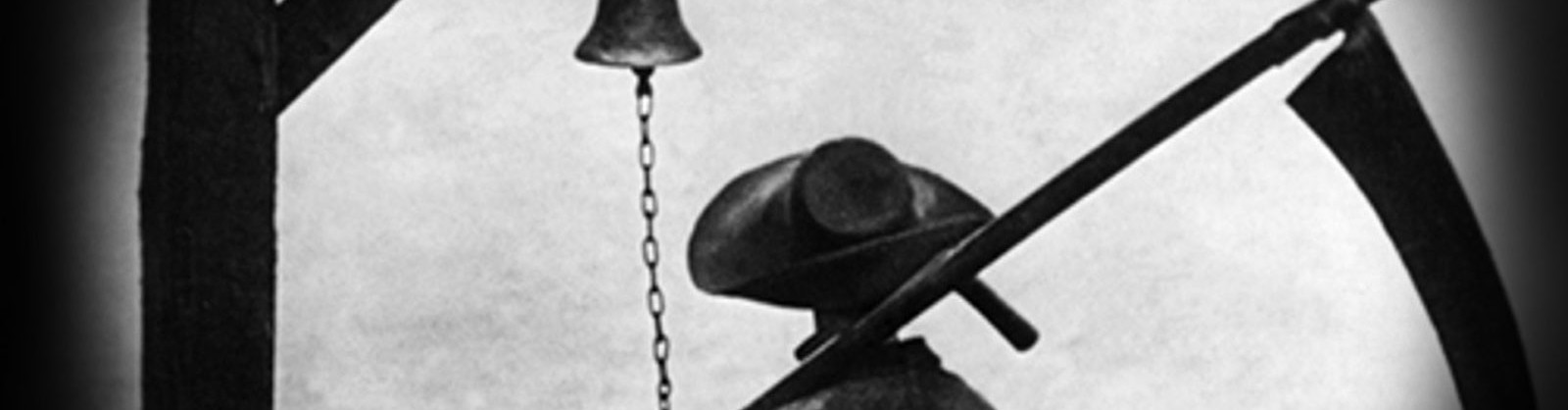

Update late 2018: Watching the film again, its vaguely exoticizing view of Brazilian culture is a more important discussion point than I let on in my original review, but as is its frequently scintillating signifying on Greek drama, its navigation of the Afro-diasporic tradition of updating and reconfiguring the Western canon in ways which both appreciate and assess the immanence of European thought by exploring how applicable Western narratives may or may not be to non-European cultures. Plus, it’s intoxicating cinema.
signifies both on the tradition of carnivalesque inversion of the world in the Carribean and … culture and on social mimicry to … and subvert white forms of …, including conjuring the spirit of classical tragedy and … to …
certainly a question for debate, whether … is merely essentializing, or whether, as many Negritude philosophers have debated for decades, there is a way to think-through what were once considered, in an Orientalist manner, “gifts” of … “bestowed” by the non-white world, in a way which takes seriously their critique of Western rationality and ascetic … – their denial of play, rhythm, etc – without …
Original Review:
Black Orpheus opens with a gesture that is both instantly transfixing and entirely pragmatic. A close-up in static of a classical Greek marble bas relief presented with stately respect and disquiet, and then a cataclysm of percussive instrumentation and flamboyant color from a Brazilian festival bursting through the image, almost blowing it up as we are pulled right into the vivaciousness of Brazilian culture and everyday life. It is an instantly lovable, provocative jab at the regal historicism of European art lulled into submission by the weight of relying on the past. It is a pop-art statement to the fire and enticing chaos of Brazilian life. An instant announcement that this film is not going to be your classical Orpheus myth, deriving instead from another artistic and cultural tradition entirely, one brimming with life and present-day presentational zest and movement. Continue reading
 It is hard to imagine a better version of Jacques Cousteau’s The Silent World, and that is a troubling fact. Lit with a fluorescent technicolor expressiveness, this non-narrative documentary of undersea images is like a peek through the looking glass of another world, exactly the magical, alien world of whimsy and majesty that Cousteau dedicated his life to and dared to see in his dreams. With the soon-to-be seminal Louis Malle (who would direct through the French New Wave and then hop on over to Hollywood) by his side, The Silent World is a visuals-first extravaganza of lush, hysterical colors and evocative silences. All these years later, it is also, perhaps unintentionally, a showpiece for the arrogance of mankind, and the terror of humanity at its egotistical worst.
 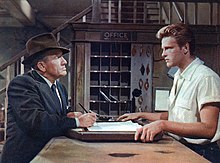 John Sturges, mostly famous for his two later rugged process-driven films, The Great Escape and The Magnificent Seven, drew out a mostly forgotten niche of manly not-quite-action films. They weren’t really violent, but they had the soul of action entertainment in their braggadocio and mechanics-first brand of raspy storytelling. His two most famous films are given at least the repute of minor-classics, but he is not particularly associated with them. He was a man who worked with groups of talented actors, and they often dwarfed him in the final analysis, not because he was appreciably under-skilled, but because he always subsumed his skill to the mechanics of the narrative, and we as a society tend to focus on actors and narrative at the expense of directors. He didn’t have a truly unique style, so to speak, but he was an ultra-competent director, and arguably the ultra-competent director. And his competence never tipped over into out-right genius quite like it did in Bad Day at Black Rock.
  Othello should not exist. Not William Shakespeare’s venerable play, one of the great tone poems to dueling egos and wanton desire filtered not through hero and villain but split personalities tearing each other apart until neither can have what they want. But Orson Welles’ Othello, a work of ramshackle, stitched-together genius if ever humankind has produced one. It isn’t Welles’ greatest film, but it is likely the surest explanation of his unmatched gall, of his unending sweat, and of the limits, or lack thereof, of his genius.
 In 1945, Billy Wilder was still becoming himself, but he wasn’t a Hollywood newbie. The Lost Weekend, would win him two Academy Awards for writing and for directing (he would win again for writing in 1950 for Sunset Boulevard and become the first person to win separate Oscars for writing, directing, and producing in the same year with 1960’s The Apartment). It would firmly plant him in the big leagues of Hollywood, but the picture was made on the back of his supremely successful hard-boiled exercise in nihilism, Double Indemnity, from the year before. In this light, had it not been for Double Indemnity, it would be easy to claim that The Lost Weekend just wasn’t quite there yet, or that it was still the product of a director and a writer identifying their place in Hollywood. But then, Double Indemnity burns with Wilder’s patented fiery brand of ice, and The Lost Weekend is merely a sharp noir in full-on potboiler mode. Good Wilder, surely, but not Wilder at his best.
  Now, for “Film Favorites”, two of the most beautiful experiments in color ever made: Akira Kurosawa’s Ran and Michael Powell and Emeric Pressburger’s The Red Shoes.
  The American
 It is said that the best horror films traffic in the slithering, slimy replacement of the mundane by the uncanny. True, to some extent, but the best of the best posit something more. Take 1974’s The Texas Chainsaw Massacre by Tobe Hooper, a work that posits the mundane as the uncanny, locating a world where the mundane regions of American society were the most uncanny. A world where mundane and innocent society never really existed except in the romantic dreams of the American imagination. A world where everyday life is actually an uncanny abyss of demonic activity just waiting to swallow goodness and human life up whole.
  By and large, this adaptation of David Mamet’s 1984 update of middle-century tales of economic middle-American woe is a trenchant, vital work of writing enlivened by a cornucopia of destabilizing performances of the highest order. It is, admittedly, hard to square with the cinematic adaptation when so little of the piece actually benefits at all from being made into a film, visually speaking. But sometimes the felt force of the writing is so affective on its own you just have to let measly little things like “filmmaking” slide.
 The Long Take