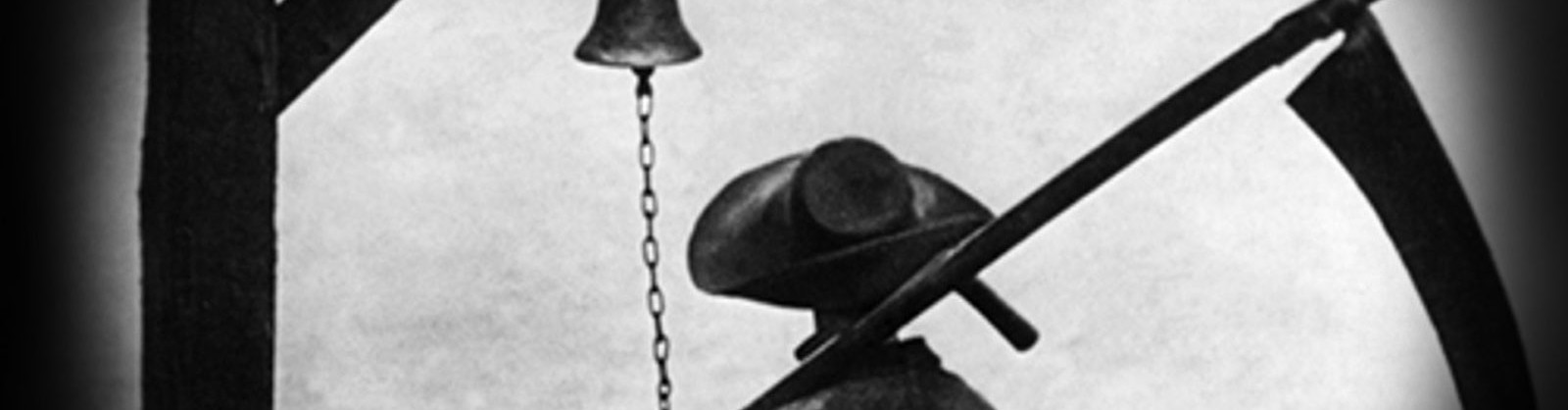
 Update 2018: I know Coppola’s film is famous for its sound, but there’s an indescribably elegant moment in the middle of the film that not only encapsulates The Conversation but sums up the American New Wave. When Hackman’s character witnesses what he believes to be a murder after a drawn-out waiting game, a bloody hand lashes out at the frame, the film graphically matches to Hackman’s hand rising in terror, and the rest of a scene which had so elegantly wound-up its suspense in perfect continuity style now unwinds itself into a pit of abjection, the continuity of the editing ripping to shreds as if the film is scratching at its own celluloid in itchy paranoia. Hackman returns into his hotel, his fears clarified, but he can not ensconce himself in the safe haven of continuity cinema anymore. The film practically undoing itself before our eyes, it’s an incredible visual, and an even more incredible visual metaphor for the US in the ’70s.
Original review:
Francis Ford Coppola arguably had a more sterling streak than any American director, or any director bar nation, throughout the 1970s. Partially, this is because he brought only four films to screen during that decade, but this argument elides the quality of those films. 1972 brought the most famous, the romantic, classicist The Godfather which moved with rhapsodic, soulful flourishes, and its 1974 sequel only went further by adding on narrative heft to the point where it functioned less as a film and more as American opera of capitalism and criminality.
Not content to release one of the grandest statements of all time on the American condition without also almost killing himself in the process, Coppola then had to set out to do exactly that on a four year trek that nearly claimed his sanity and the lives of many crew members. The production of Apocalypse Now famously became the story of the film, replicating the jungle-fueled haze of the narrative as Coppola and company became lost in disease, destruction, and their desire to put to rest the ultimate American story of the ’70s and to create and perfect the very of idea of opulently grimy filmmaking in the process. The voodoo of location worked its magic on them a bit too well, but the location was not the jungles of the Phillipines; it was the jungles of the mind. That mind was one of the most committed, perfectionist directors of the ’70s, a mind that almost got the better of him but one which took America to task in a way few other New Wave directors even attempted.
Continue reading
 Having finished the extended yearly New Wave series that somehow held me hostage until well into the mid ’90s, I’ve decided to go back to a couple of reviews I had milling about but didn’t make it into the yearly bit. Both are related formally in that they star Gene Hackman and more existentially in that they illuminate important realities about the cynical ’70s that frighten like few films we can think of, and which may be more relevant today.
  Science fiction was in vogue in the late ’70s, largely due to the success of George Lucas’ Star Wars, which kick-started perhaps the greatest popular revolution in American film history and drove the medium to new commercial heights. Of course, it saw mixed results for the art-form: a rebirth of genre filmmaking married to the deadening and eventual end of the New Hollywood drama which had married classical themes to European New Wave modes of storytelling to brilliant effect and which, in fact, made American film interesting after a long drop-off in the ’60s. After Star Wars, many studios grew less interested in drama and shifted toward pop commercialism, aiming for big, big, and bigger at the expense of nuance.
 Edited
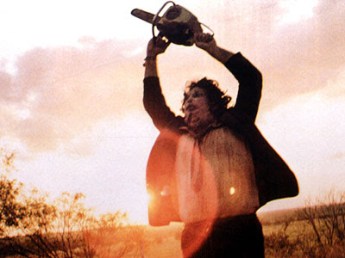 Updated mid-2017 after another rewatch – such an amazing, amazing film, not particularly violent in a diegetic sense, but one which feels as though violence has been done to it.
  Terrence Malick didn’t crash into the film-world – he stumbled into it, but the impression he left wouldn’t convey the truth of it. A philosophy student at Harvard who studied Kierkegaard, Wittgenstein, and Heidegger, he went on to teach at MIT after a petty disagreement with his advisor while studying as a Rhodes Scholar at Oxford (although in the world of philosophy, everything and nothing is petty). At some point along the way, he decided he felt like making a movie, and the world was never the same. That film, 1973’s Badlands, is so stunningly like every other kids-on-the-run crime film from the American New Wave from a distance, it’s almost comical. But from up-close (or even medium distance), it’s so glaringly apparent that Badlands is the antithesis of the films it’s often compared to (ahem, Bonnie and Clyde) that the initial comparison seems so superficial as to not even be worth noting. Badlands is unlike any film from the period, and American cinema more genuinely. It is a singular experience, and a towering, titanic one.
 Were you expecting maybe Bugs Bunny? So we arrive at 1972, not nearly the best year in the American New Wave, but the year with the release of the most famed film to call the time and place home. Yes, The Godfather is a classic piece of American cinema and a great film in its own right. I’ll maintain a certain confusion as to its status as the most loved of all American films (only rivaled by Citizen Kane and Casablanca). It’s undeniably stellar, but there is a mighty space on the couch between very great and quintessential, and I’ll leave the discussion with that. Mostly, it’s just a film that so much has been written about, I do not feel I can add anything meaningful (not that such a pesky thing has ever stopped me before, but I’m not above bad excuses).
 The Long Take