 Left Behind
This film was approved by Satan.
Now, something interesting. Not the film; the film is deliberately passionless. But the existence of the film? Now that is something worth milling over, and savoring the bouquet. Written by Paul Lalonde and John Patus, and based on the novel of the same name by none other than Tim LaHaye and Jerry Jenkins – Yes, The Tim LaHaye and Jerry Jenkins – Left Behind is not the first adaptation of this very novel. Famously, Kirk Cameron’s absolutely bizarre cottage industry of hair-budgeted Christian conversation-pieces adapted the work in 2000, eventually leading to a proper series of religion-by-way-of-looney-bin pieces of sheer, unmitigated thematic emptiness bolstered by filmmaking of such wanton incompetence that the films almost doubled-back on themselves into intoxicating dare-yourself-to-continue-on heights. Add to this recipe for a walking disaster the divine likes of Nicolas Cage and, I mean hey, who wouldn’t want to see a Nicolas Cage-fronted film about the end of times done-up in Biblical proportions and filled with all sorts of ooey, gooey fire-and-brimstone dialogue for Cage to deliver at the tips of his toes and in the depths of his derangement? Continue reading
 The directorial debut of Alex Garland – he who wrote 28 Days Later and Sunshine, two of the finest genre films of the 2000s – is a fascinating beast for two reasons. First, it is not a particularly sterling work of writing at all, opting too often to tell when showing would be a better service, and uneasily dancing around some particularly flat-footed dialogue from time to time that causes the film to stumble over itself more often than is acceptable. Second, and this may prove the more important fact in the long haul, it is a shockingly forward-thinking, challenging work of direction from a man who has never formally directed before (although one can be sure he has osmosis-ed his fair share of tips and tricks from working with Danny Boyle, one of the finest stylists of the modern era). Part of the visual craft has to do with what I hope will be the big coming up party of cinematographer Rob Hardy, who consistently hints at the Kubricks and the Tarkovskys of the world without ever outright quoting them. But too much of what makes Ex Machina work is too tied into the framing and the mise-en-scene beyond the cinematographer that credit must be given where credit is due. Flaws aside, Garland has learned how to create a cinematic vision that is always, sometimes even in spite of itself, refreshingly cinematic.
  Yankee Doodle Dandy really doesn’t make it easy for itself. Consider the strikes against it. It is a Grand Old Biopic madly in love with its own subject matter. It is filmed by a director, who, for all his multitudinous strengths, was never all that invested in subverting or transforming his screenplays, a filmmaker who drew his vigor and interest precisely from the subject matter and the screenplay he was tackling. It is also a quintessential work of matching a great actor to an important historical figure, just about the biggest talent-suck set-up any film could possibly dread. With a performance and a subject to fill the box office and wow the middlebrows, a director has carte blanche to indulge in all the soporific tendencies of a screenplay, to blindly and blandly fill the screen with blasé Important Moments rather than to actually prop up the storytelling with invigorating artistic gestures. It is, in other words, a work that was dead in the water – artistically speaking at least – even before its release.
  Rene Clair didn’t have it easy. Soundly trounced by the French New Wave and never really forgiven in the public consciousness, Clair was a hot button go-to guy in the early days of sound cinema, a born-and-bred scientist with tools in sound and space who saw cinema – like all the great early masters – as an expressive, flexible plaything more than a get-the-job-done tool. Play he did, although his somewhat overly-formed style admittedly hit a limit when it traded in the dangerous waters of experimentation for something a touch more gentle and composed. Clair enjoyed a good composition as much as the next director, but there was his compositions always ran the risk of boxing him in to a settled path, rather than letting him loose to ravenously tear down the walls and traverse new, unsettled regions of cinema. He had his limits, in other words, but the 2010s hardly even acknowledge him. Clair was a class act, and whatever his American films did to keep him away from true adventure and challenge, he never gave a film less than his full attention. The no man’s land that is his reputation today seldom takes into account his very real, if somewhat overly-rigid, talents as a filmmaker.
  When Ana Lily Amirpour recently released her lushly sensualist horror film A Girl Walks Home Alone at Night, her cinematic passion was matched in its cathartic potency only by its free-wheeling desire to devour all influences. Obviously, Jim Jarmusch was the cipher through which her film’s identity was largely cracked, but in her sun-deprived cinematic wasteland, another female filmmaker was a key stepping stone: Kathryn Bigelow, a women who has since made a pit-stop in can’t-be-this-good action cinema before taking a well-deserved break to produce two of the finest naturalist war thrillers ever made. She went on to make more composed films, in other words, and probably better ones too, but her underdog outlaw passion in the world of film never burned as brightly as it did in her first big break: the 1987 film Near Dark, nothing less than a full-on vampire-western-romance-horror (a mouthful, but it should sound familiar to fans of Amirpour’s debut). It takes a lot for a film to invent a genre. That it comes within an inch of perfecting it on its first try is not only testament to Bigelow’s fully-formed craft, but of her restless, travelling spirit.
  Anyone familiar with Jacques Tourneur doesn’t need to read a review for evidence to the claim that Out of the Past is one of the best film noirs ever made. But that doesn’t mean establishing and specifying what is so undeniably great about it isn’t a worthwhile pleasure all the same. Cutting his teeth on Val Lewton’s near poverty-row horror unit for RKO, a team that single-handedly saved American horror in the 1940s by injecting a dose of the European, and a team which counted Tourneur as its most valuable member, Tourneur is one of the unheralded masters of the medium of cinema and one of the most poetic genre directors ever to grace the silver screen. Pairing him to noir like a fine wine to a slab of deliberately indelicate beef is too obvious to be a stroke of genius, but the results are no less marvelous for the “why didn’t they think of this earlier” nature of the film.
 And now for something completely different, although not that different when you really think about it.
 At some level, we must concede that Michael Curtiz was more of a filmmaker of efficient craftmaking than superlative artistic ambition; this sense of getting-the-job-done pervades even his masterpiece, Casablanca, but gosh darn it, well-oiled-machine filmmaking has never been more delectable than Michael Curtiz filmmaking. The perpetually underrated master of the craft was no auteur, nor did he want to be, but his films sparkle with single-minded clarity and blunt craft like nothing else from the Hollywood machine in its early days. Again, he was a studio guy for Warner Bros and he always operated with a sort of humility to his stories that saw him not so much take control of them and do with them as he would; rather, he focused on a propulsive forward movement to his tales, a sort of inescapable quality that made the stories feel like they were telling themselves first and foremost. Yet Curtiz was always there, making functional filmmaking the food of the gods and cutting through the fat to produce films that, if not entirely perfect or challenging in the most overt of ways, were at east the most perfect versions of themselves.
 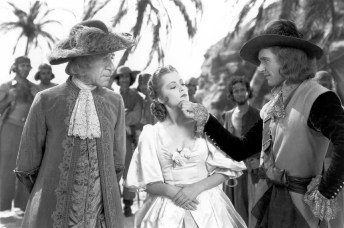 Analyzing the work of an Old Hollywood stalwart is no easy task. All the prime candidates have been written about to death; who, in all my majesty and knowledge, can I actually tackle without self-repetition? So much I wanted to take on Nicholas Ray, one of the reigning “brash young men” skirting around Hollywood royalty in the 1950s, but having reviewed In a Lonely Place and Johnny Guitar (and thinking his most famous film, Rebel Without a Cause, is the least fun film of his to write about) crossed him off the list (Bigger Than Life desperately needs a review though). Jacques Tourneur certainly popped up, but I’ve already covered his two most famous films, Cat People and I Walked With a Zombie, and Out of the Past and Night of the Demon can hop their way on over to Midnight Screenings anyway.
 That Universal Soldier: Day of Reckoning exists indicates something is wrong with the world. That it is, against its better judgment, a near masterpiece, at least in terms of filmmaking principles and matching those principles to its narrative concerns, implies something is far worse with the world than anyone could have imagined. But yes, the fourth or eighth or ninety-sixth film in the bro-fest science fiction routine slaughterhouse that is the Universal Soldier series, tangled up in its Roland Emmerich-directed roots and choking on them for decades now, is good. In fact, in its own way, it’s fairly great. And how shocking that this way approximates ’70s art-house horror/crime/thriller/ sci-fi that only passingly gestures toward any idea of “action” and even then does wonders to detach “action” from anything resembling Roland Emmerich. What a strange, strange film. Plus, if it means anything to you, it is probably, by several orders of magnitude, superior to anything Dolph Lundgren or Jean-Claude Van Damme have starred in (although the post-structuralist JCVD, a sly little nightstalker of a film, comes pretty close for the latter star). Pleasures abound in this weird, weird world of ours, folks.
