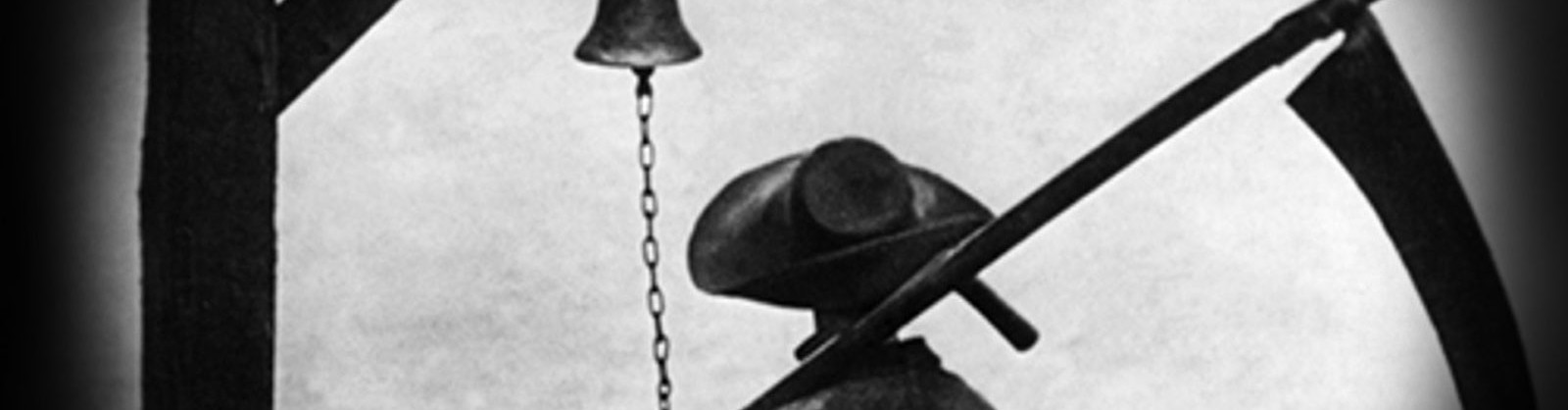
 With the imminent release of The Witch upon us, let us look back at another famous movie with a villainous witch.
Probably no film has been loved and embraced by humankind more than The Wizard of Oz, but something about actually discussing the film almost feels heretical in an environment where blind belief in its charms has encumbered any and all serious consideration of the film as art. That’s not entirely a negative; a magisterial work of childlike ambition like the 1939 Wizard seems to tap into a font of innocent emotion with its blaring cacophony of primary-colors and elegantly simple, almost subconscious color contrasts. So much does the film take us beyond the pale of adulthood that it feels disingenuous to deny its transportative effect that functions on an almost pre-cognitive level.
 A weekend into its release, the mostly loose-limbed Deadpool is certifiably an accidental but genuine pop-culture zeitgeist-defining event rather than the belated cult classic it would have been at any other time in history. One can only predict the ripples of the film’s success, but some cause for celebration erupts. So many superhero movies – Christopher Nolan’s elephantiasis-prone Batman films not least among them – are content to cart around the depressive husks of their beings, especially over the past decade of glum, operatic, tortured superheroism. In this light, Deadpool represents a more manic, cheerier alternative to the doldrums of the self-imposed superhero funeral we’ve been undergoing since the genre supposedly “matured”. But it also suggests a more classical spirit: that being a superhero might, dare one say it, be fun.
  Fitting for a film about conviction and the inclement weather that tests it, Hail, Caesar! ought to wash away any and all false prophets proclaiming visions of the Coen Brothers’ malfeasance and sociopathic hatred for mankind. Cynicism is their tool, and their films are prone to a particular brand of withering sociopolitical critique, but the two writer-directors are, and have been, expert stegenographers for the better part of three decades now. Hiding in plain sight in almost all of their films is a stress-tested but never broken love of both the sweeping grandeur of cinema and the gnomic bits of dogmatic human persistence undercutting the seemingly abusive, surrealist death and destruction sometimes at play in this universe of ours. There’s is a scabrous, sometimes maladjusted brand of humanism, but the Coens are humanists nonetheless.
  After the laconically witty, good-natured “wait, how much money are they giving me?” spurt of Big Trouble in Little China, John Carpenter decided his steadily encroaching ascent into mainstream fluff required a course correct. His 1987 feature, Prince of Darkness, reflects a homecoming of sorts, a rejection of the more-is-more pomp and circumstance of the 1980s for the merciless fringe-dwelling independent malevolence of Carpenter’s upbringing in the 1970s and his time being reared on the works of Val Lewton, Samuel Fuller, and Nicholas Ray. Antithetical to good cheer, the fluctuating energy levels of Prince of Darkness occupy a secluded spectrum from poison-cloud malevolence to throat-grabbing holocaust of horror. If Big Trouble was escapism, Prince of Darkness feels like it cannot be escaped.
  It would not be incorrect to treat Yasujiro Ozu’s works as a mere question of how geography intersects with modernity, but it would be incomplete. Surely, his mid-century, middle-class films about Japanese men and women both enlivened by and enveloped within the social structures around them do unearth great truths about the specific nature of life in post-war Japan and, particularly, about generational divides. His Late Spring, a story about a woman, Noriko (played by Setsuko Hara) in the late spring of her life and her father, Shukichi (played by Chisu Ryu), no doubt treats on the same issues. With the daughter aging beyond the father’s interest, he, a widower himself, feigns a fake marriage plan to convince his daughter that there will be no room for her in his house. Naturally, the hope is that she will find a marriage partner herself, and questions of gender oppression and the iron grip of social expectancy marinate throughout Late Spring, coursing through the veins of the diorama-like closed-spaces that Ozu relies on to ensnare his characters in the vise of social geometry.
  Robert Altman’s great mode as a director was the comedy of desperation, or in some cases the more elemental buddy film of loneliness, both genres served well by his democratic, crowded, fragmented spaces defining loneliness not as a form of isolation opposed to collectivism but as an isolation within community. For the Altman welterweights who think of the director’s ’70s as MASH, Nashville, and a murderer’s row of films of lesser import withering on the vine in between those two powerhouse works of communal chaos, California Split’s nominally more centered, two-character pas de deux seems more straightforward and less robust. In comparison to the wide swaths of partial Americana glimpsed in the roving camera of those, his more famous films, one might obfuscate and avoid California Split by nominating it as “lesser Altman”.
 The perennial punching bag of the French New Wave, Alain Resnais’ very willful 1961 Last Year at Marienbad, a descent into psychotropic memory and defiantly deviant notions of storytelling and fiction, hasn’t had it easy. Resnais’ most debated film has spent over a half century as alternately much-beloved expressionist think-piece, bamboozling artifact of a more radical cinema long past, and benighted object of a time when movies were nothing but arrogant, oblivious ego-stroking carnival clowns in search of an audience of zero. One of the true “love it or hate it” artifacts of cinema, let no one say Resnais’ work calls for mere shrugging off. Either delusional or concerned with, but not victim to, delusion, it remains about as unknowable and provisional a film as the species has produced, and thus as fascinating. Totally undermining classical presumptions about narrative, Resnais’ film is riddled with conditional tenses and scrambled cadences, culminating in a truly heinous detonation of foundational or categorically true knowledge. Although suffused in the pallor of death, for a certain kind of audience, it’s a modernist jolt, one of the few truly idiomatic films.
 With the release of Hail, Caesar!, a look back on some of the Coens’ previous comedies is in order.
  With the release of Hail, Caesar!, a look back on some of the Coens’ previous comedies is in order.
 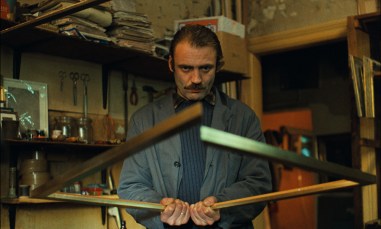 Relative to his New German Cinema compatriots – or sparring partners more appropriately – certifiable humanist Wim Wenders was a late bloomer. His ’70s is dotted with highlights, but you won’t find an Aguirre or a Petra von Kant hiding among them, even if his Road Trilogy begs to be rediscovered to this day. This is no knock on Wenders; his years-long quest to discover something at the mountaintop of (usually American) cinema necessarily required nurturing and exploration that the more primal impulses of Rainer Werner Fassbinder rejected as vestigial structures of sane society. Plus, by the end of the ’70s, Wenders still had the finest modern study of American geography-of-the-mind in his near future, while Fassbinder’s cocaine-addled filmmaking was about to overflow into personal disaster. Neither filmmaker was necessarily superior to the other (although crossing their streams would likely prove a recipe for nuclear fallout), but 1977 was still a year of personal journey for Wenders. He hadn’t yet reached his destination.
