
 There’s something elusive and mystical about confronting a cinematic stand-by, a work read and tweaked and revisited by directors across decades and nations. The post-They Live By Night world was ushered in almost immediately by the psychotic, sexually-charged thrust of Gun Crazy, which toyed with many of Night’s themes, but it wouldn’t be for another decade until director Nicholas Ray’s contrarian style would emerge as canonical in the minds of the French New Wave. Watching The Live By Night, you can practically imagine the entire Cahiers crowd almost asphyxiating on autoerotic fantasies of their own cinematic futures. This imaginative hyperbole is entirely fitting for a work like They Live By Night, too, since it is at once latently sexual and surrounded by violent hairline fractures that strut into the cinema and threaten its very being. Continue reading
Midnight Screening: They Live By Night
Leave a reply
 Identities intimate and societal, opaque and translucent, course through the veins of the somewhat curatorial Phoenix, although complexities are little more than skin deep when the curtains are called at the end. Christian Petzold’s film about personal and national visage talks a mighty talk, entangling itself in historical woes and post-Holocaust turmoil in a museum-bound Austrian society. Of course, a tale about a woman Nelly (Nina Hoss), recently returned from a Nazi death camp with a surgically altered face can’t but wade in the murk of history, especially when said woman reintroduces herself to her husband (Johnny or Johannes, played by Ronald Zehrfeld) who doesn’t seem to recognize her but finds a use for the new face that she wields anyway.
 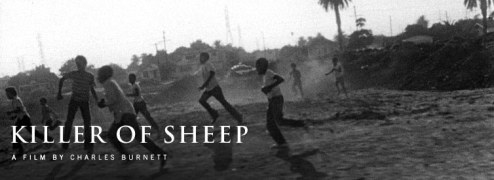 A truly great film may be informed by the background of its construction, but it rejects the complacency of time and space and proposes a view of life both timely and ultimately timeless, if not all-encompassing. For Charles Burnett, life is filtered through the Watts ghetto of LA where rituals of play, self-sacrifice, and destitution conspire to reveal a life both fully lived-in and never truly understood. But the ghetto is a prism for Burnett, not a prison. Although his film was denied a deserved canonical status for decades, his view of life is as textured as a De Sica, a Renoir, a Bresson, or a Cassavetes. Like all of those filmmakers, it defies its existence in the material world for a vision of humankind that transcends boundaries even when it confronts them.
 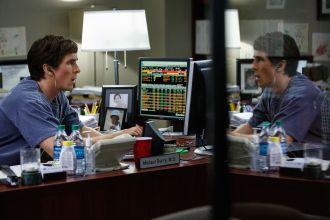 Give a film credit where credit is due: with The Big Short, the film’s interests are not withheld. Flippant, ingenuous, vacantly screwball-y, the caper film credentials are plastered all over The Big Short’s snazzy, flash-in-the-pan cinematography and relatively rudimentary bag of metatextual tricks. It’s a little like Great Recession fast food, although its overweening sense of “cool” calls back to the mid-’90s glut of post-Tarantino provocateurs with a camera. For the vast majority of its run-time, Adam McKay (of the Will Ferrell, internet comedy school of modern filmmaking) and co-writer Charles Randolph are not especially vexed by their total and complete disregard for the casualties and consequences of a crisis that can never fully be contained, or explained, in a single film, so for mot of the run-time, they don’t even try.
 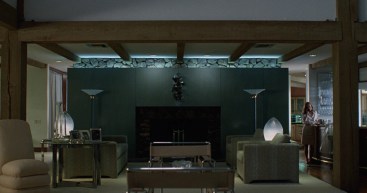 With Carol regalvanizing Todd Haynes’ career in a layer of cinematic majesty, let us take a look back upon his initial breakthrough into the mainstream.
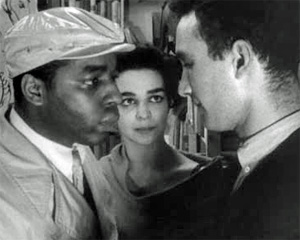 The unbecoming style of John Cassevetes’ devoutly rough-hewn social renegade Shadows belies its grandfatherly status as the giant upon which American independent cinema stands to this day. As freewheeling and robust as the film is, and as fringe-worthy as its style might seem, it’s perhaps ironic that the film has established its own tradition of dissonance and reckless anti-cinema in the hearts and minds of American beats and would-be enfant terribles for over fifty years past its initial release. Temptation begs to reduce it to has-been status, as if the film’s meaning was lost in its release and time has deluded its tempestuous critique of social norms and filmic image construction, as though its status as the head of a new order diminishes its rejection of the old order.
  Releasing films at a mile-a-minute in the ’70s, Robert Altman was more aged than his New Hollywood contemporaries, but certainly no less rambunctious. If anything, his age only fulfilled a craving desire to destabilize the industry even further, a goal Altman set about predominantly, although not exclusively, by inverting the classical Hollywood genres of his youth. His best film, McCabe and Mrs. Miller, is a lyrical, impressionistic Western stripped of individualism that relies on dream imagery, like many Westerns, but not to reiterate the American Dream, as so many Westerns of the past had done. Instead, Altman interrogates a counter-myth where opium-caked red dreams are necessarily, and often falsely, clouded refuges from the cold blue expanse of an outside realm that humans never really conquered, but simply hid from. His next genre deconstruction was something of a follow-up, but one that met with a much different fate. While people who didn’t fully understand McCabe still fell in love with its poetry, 1973’s The Long Goodbye, a noir grabbed by the neck and set down in a time period antithetical to itself, only produced befuddlement when it didn’t instigate outright hatred.
  Over twenty years into Michael Haneke’s career, a film like Goodnight Mommy isn’t going to impress anyone with its originality or its formal invention. At this point, formally chilly works comprised primarily, even exclusively, of bleached-white, modernist domestic spaces as barren of life as a morgue are the de facto Austrian exports to the world, at least cinematically speaking. Although Goodnight Mommy wasn’t directed by Haneke, it sometimes feels like his attempt at Hour of the Wolf, utilizing his giveth-and-taketh (and taketh, and taketh) style much like Bergman did in that venerable motion picture for an outright horror show. Let know one say that directors Veronika Frenz and Severin Fiala do not know their trade well. When they are bounded from perusing their more idiosyncratic gestures, maybe they know the rules of their trade a little too well in the end.
 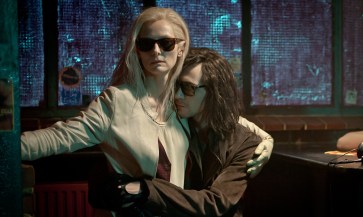 Only Lovers Left Alive, Jim Jarmusch’s wry, dust-caked lament for the ways of the past and withering put-down of the post-modern romantics who would lament with him is probably the quintessential Jarmusch film, which is different from being the best. Part of the film’s revelatory reality is simply a divine meeting of subject and author: Jarmusch’s characters have always occupied a state somewhere between cadaverous moan and death-enclosed howl even in their nominal life, so Jarmusch has made a several-decade career out of opening an unstated portal between the live and the dead anyway. The literal, manifest “death” in Only Lovers Left Alive (yes, it’s a vampire film) falls right into place, you might say, and Jarmusch’s sly, detached wit and fatal-loined aesthetic luxuriance follow like zombies to a fresh brain. Or hipsters to a Robert Johnson record.
  Guy Maddin, gone too long? With The Forbidden Room, a mind-boggling witch’s brew of cinematic primeval swill, psychotropic kitsch, mental dicombobulation, the kitchen sink and the bathtub too, Maddin intends to show us where he’s been. The simplest answer is down the rabbit hole of forgotten cinematic, recklessly compiled in research halls, forlorn still images, and in the dankest depths of cinematic archival libraries. Hard at work reconstructing (and most deconstructing) a series of early lost films from scratch, Maddin has released The Forbidden Room, a love letter to the out-of-the-way cinema that haunts modern digital filmmaking sheen like a phantom-like specter. Love is a plaything in Maddin’s world through, and the ostensibly archaic concoction bubbles and burns into cinematic liquid as Maddin’s love of cinema flies far away from mere recreation and into a psychotic opium-laced crosshatch of memory, trauma, and the collapsing back alleys of the human mind. No more pastiche, The Forbidden Room is a living, breathing, fighting, joking performance art piece, rejiggering the past and transforming it from waxworks show into a cinematic scalpel cutting into the human mind.
