
 Death Becomes Her
With 1994’s Forrest Gump, Robert Zemeckis finally succumbed to the primary weakness of his Socrates, Steven Spielberg: trying to cleanse himself in the waters of dramatic absolution, falsely presuming that historical allusion and narrative heft side-winds into genuine complexity. A real artist – something Zemeckis had been, however intermittently, for the decade until that point – knows that art comes in all forms, nimble and dexterous or heavy and tortured. Craft in any form inspires depth; depth doesn’t have to be appended onto a film like a sledgehammer impacting the piece with the self-serious melodrama of a Schindler’s List or a Forrest Gump. Continue reading
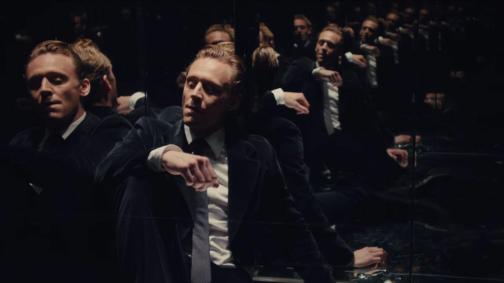 British indie darling Ben Wheatley has made a living for himself electro-shocking the ostensibly comatose world of cinematic death, parceling out and sowing the seeds of a strip of filmic land that is necrotic and cadaverous but never embalmed or lifeless. His films are death-marked but not deadened. Now on his fifth film, his masterpiece remains his 2011 effort Kill List, a modern reworking of the quintessential British horror film The Wicker Man. Until this point, that 1973 work has doubled as a sort of spiritual guiding light for Wheatley, who has by and large drawn himself to the lurking terrors in the pastoral rather than those which creep into the mental cogs and emotional rivets of automatized modern society.
 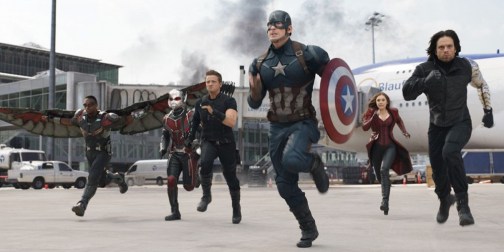 Relieving the film of the obvious comparison at the start, Captain America: Civil War is an unambiguous improvement over Zack Snyder’s lugubrious exercise in self-satisfaction Batman v Superman. But Civil War’s success on that front is almost exclusively a question of relatives rather than absolutes. It is not that Civil War meaningfully adopts a different track to success than Dawn of Justice (the amusingly wishful subtitle of Snyder’s film), so much as it is that Civil War simply repeats the failures of Dawn of Justice to a lesser extent. Both films valiantly extend the Nolanesque concern for ethical turmoil and vigilante justice, and they both ashamedly retreat into Nolan’s wheelhouse of erecting statuesque themes to double-down on their own self-importance only to explode those very questions in a hail of blockbuster-baiting bullets for the masses. Rather than barreling into the ethical crevices of their genres – ultimately expanding their potential – these two films ultimately reaffirm the essential limits of the genre they pine to knock down. A decade after Batman Begins, the superhero genre’s growing pains continue to do nothing but elide its essential immaturity. Rather than aging gracefully, the genre feels like a bunch of kids playing in their parents clothing.
 Shadow of a Doubt
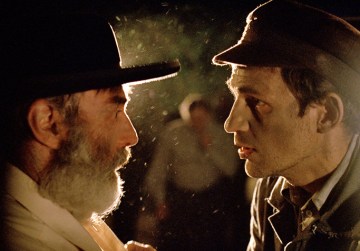 Son of Saul
 Cosmopolis
 Sleeping Beauty
 Oldboy
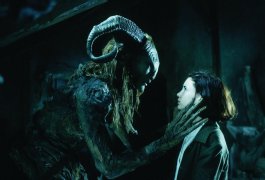 A decidedly outre expression of childhood trauma, Pan’s Labyrinth is a wartime fantasy from the deranged, consequence-ridden non-American realm of classical fables filtered through the oblong mind of one of modern cinema’s great dreamers. A bifurcated (unnecessarily, I might add) tale of adult conflict and childhood coping set against the Spanish front during WWII (when Franco’s repressive government was fighting ragged rebels), the most poignant gestures of director Guillermo del Toro’s vision are his most voluptuous and baroquely nightmarish.
