
 One must undeniably validate the valor and reflexivity of one of the few cinematic treatments of the Holocaust by an honest-to-god Holocaust survivor, but a good critic must also remember that bravery doesn’t inherently beget beauty. Director Roman Polanski’s troubled, torrid life aside, The Pianist – if a masterpiece – ought to withstand the test of time on its own merits, rather than on the shoulder’s of Polanski’s personal story, difficult though it may be to disentangle the two. No one film should be a sycophant to its back-story, fascinating though the behind-the-scenes realities of The Pianist may be. Continue reading
Un-Cannes-y Valley: The Pianist
Leave a reply
 The cabal of proponents for Martin Scorsese’s most recent Goodfellas retread, The Wolf of Wall Street, dance around the central garrulousness of the film with superficially enticing claims that its engorged, laborious pomposity is tantamount to a claim against head honcho Jordan Belfort and his trying brand of indulgent charisma and hedonistic living. The claim doesn’t hold much water, although Scorsese’s intention may have been to pummel us with the initial sweat glands of living for the moment until our body’s capacity for perspiring freezes over in the thickets of hedonism. It may have been Scorsese’s vision, I might add, because that is exactly what he accomplished many years before with his tempest-as-torpor Goodfellas, a film where every kaleidoscopic camera track and exotic edit attunes us to the characters’ struggles to methamphetamine their lives straight into the hollow caves of an early grave. Over three hours, continual fluxion begets a grave chill as expending energy gives way to perpetual enervation.
  Legend would have it that, after decades of wallowing in admittedly pleasurable crypto-conservative roles, America’s resident taciturn brute Clint Eastwood shocked the world in 1992 with an unprecedented critique of the craven, callous dueling violences at the core of the American tradition. But masterpiece though it may be, Unforgiven was hardly unprecedented to those who were looking. Eastwood’s prior directorial efforts in the genre that made him a household name had flourished nearly two decades beforehand with only his second feature, the unfinished but highly spirited (the spirit being an angel of death in this case) High Plains Drifter, a counter-myth that saw in the Wild West something more akin to an Italian giallo. More fully formed was the sublime The Outlaw Josey Wales, an often misread work of mythic Western nihilism so full-throated in its interrogation of Western archetypes that no one seems to understand it to this day.
  An uncompromising chemical reaction between Ozu-esque balance, ghostly Mizugochian afterglow, and the tremors of Kaneto Shindo’s mid-’60s horror social disturbances, Shohei Imamura’s 1989 release Black Rain revises cinematic assumptions about trauma away from fiery holocaust to a more hauntingly ashen storm hovering overhead for the duration of life itself. Hiroshima isn’t a Godzilla-like destructive catalyst in Black Rain, but a distantly raging existential void within which one’s sense of being and becoming are threatened completely. The world is not only out for vengeance, but it becomes unknowable; time folds in on itself, and your life becomes a separable ghost floating away from you. Not to be confused with the lightweight Ridley Scott film of the same name from the same year, Black Rain envisions catastrophe as a perpetual, everlasting terror. Moments of shock and awe – the in-the-flesh horror of destruction we take to be the prime of the bombing – would be, if anything, a respite from the cold nothingness of life living in the emptiness of the bomb’s wake.
  Mike Leigh’s vision is tantamount to heresy in some circles, redrawing Western motifs away from individualist assertions while also retaining the individual soul in human bodies often upended by a filmmaker like Robert Altman, who sometimes privileges a social determinism in his films. In Leigh, in a quasi-Renoirian way, individuals slide and slip around each other as they construct themselves – and as the camera envisions them – interactively, rather than individually. Individual personalities abound, but the contrasts are defined relatively rather than absolutely. Unlike in most films designed for Westerners weened on figments of Enlightenment liberalism and the ultra-dominance of the individual mind, people are not fixed, asocial beings with stagnant psychologies in Leigh – people become themselves through their interaction with the world, and with others. He saves us from ourselves, cherishing individual difference without cavorting into the deathly realms of tendentious individual supremacy.
 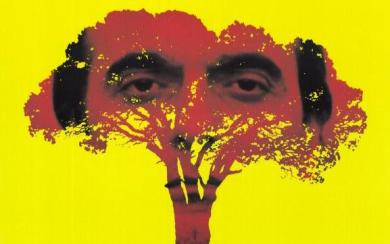 Watching the great modern Iranian film by the great modern Iranian director, it’s a slippery path for any reviewer to bog oneself down in the essence of the film’s commentary on Iranian society (indeed, it is a crutch, if not a fallacy, to turn any review of a film into an expression of nation’s cinema, as thought cinema is exclusively about the nation it derives from or as though a national cinema is a monolith). One can be sure that Taste of Cherry has notable comments on modern-day Iran and the intersection of religion and governance unique to that nation, but this Beckettian existential drama can be contained by no nation, no person, and no theme.
  Carnival of Souls should have befallen a watery grave decades ago, and yet, like its inveterate crash zooms, or the nagging figments of a nightmare or a half-imagined shard of memory, it lodges itself somewhere in the dankest, most indecipherable thickets of the mind. Who knows where it is stored precisely. Probably in the muddy, constantly-slipping-away but always-haunting-you halls next to Eraserhead and you parent’s wedding videos, a duality that very much encompasses the film’s bemusing, off-off-Broadway existence.
  The historical prestige genre, entombed in its ever-lasting leisure, ain’t got nothing on Ken Russell’s The Devils. A power-mad concoction of scorching lecherousness and sacrilegious, anti-social visual brio, it’s a torrid affair, but love is nonetheless the only applicable word for anyone smitten with Russell’s peculiar brand of rattled-with-fever historical spasms. Few directors have ever barreled so gleefully into the dankest regions of their own inner mental faculties with such a cavorting brand of heretical dissidence, a defiance to not only social propriety but filmmaking rule of thumb. Fitting for a work about witches, Russell’s inimitable work feels like cackling witchcraft conjured out of nowhere but his own devilishness.
  The vaguely taxidermied trailers for Jon Favreau’s The Jungle Book promised nothing more, and nothing less, than the latest in the continued death throes of Disney’s deranged vision quest to reclaim the surprise box-office domination of Pirates of the Caribbean. Having cascaded through animated properties both obvious and ill-timed over the past five years, the studio seems patently unwilling to give in to the critical and commercial failures of their many live-action properties in recent years. Yet the chiefest surprise with The Jungle Book is that it’s actually trying to pump some fresh blood into the corpse of Walt Disney’s final supervised feature-length animation release, rather than merely desecrating the corpse by propping it up on strings and performing a demented CG pantomime with it. And this is for a film whose idea of clever is to recast King Louis as a jungle mafia don voiced by an only semi-conscious Christopher Walken. But this is live-action Disney, now; grading on a curve is acceptable, like it or not.
 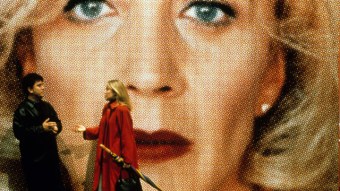 A spellbinding evolution of Pedro Almodovar’s all-women-on-board feminism and his dynamite-cased challenge to the realms of normality, All About My Mother deftly explores tensions in human identity as it transmutes cinema into a portal for escape, community, and aesthetic rebellion against the reality principle. A fantasy worthy of Chaplin or Tati, Almodovar’s hypnotic, incandescent fantasia of pop-art styles and unchecked melodrama encircles true cinematic bravado while visualizing the stylistic wanderlust of a woman searching for a new identity after her normative gendered status as “mother” is prematurely ended in a swift burst of tragedy. Although it redresses the failure of its medium to adequately entangle itself in the complications of female relationships, Almodovar’s style can’t be mistaken for anything but a fantastical ode to a century of cinema that, sometimes inadvertently, managed to provide respite for the very women it so often neglected.
