
 With all the slashing and piercing found within, it isn’t really a surprise that John McTiernan’s disastrously over-budget The 13th Warrior is so disemboweled. This tonally promiscuous production vacillates between effectively brazen horror viciousness and petty, watery cartoon-viking bombast, the two tones functioning like combative enemies rather than fascinatingly differentiated tonal inversions. Devious wrongdoings behind the camera and disastrous reshoots ensure a production that runs the gamut from pastoral myth to Manowar album cover, a grungy, dirge-like epic of alternately jaundiced and flowery discombobulation.
The reason’s for the film’s failures aren’t intangible either; with John McTiernan’s down-and-dirty update of Michael Crichton’s ‘70s book Eaters of the Dead subject to disastrous test screenings, the production company basically hired Crichton – an experienced but negligible director of his own source material – to re-film scenes, drastically altering the film’s tone and warping an exploitation-style thriller into a pseudo-epic monster mash. Delaying the release a year in the process, the reshoots also doubled the film’s budget to a massively overinflated 160 million (at the time, third only to the phallic Titanic and the misbegotten Waterworld for cost, and unlike in those productions, very little of it is showcased on the screen here). Continue reading
 An elephantiasis-afflicted, dismal anti-epic of undying malfeasance, Kevin Costner’s The Postman is positively drunk on its own grotesque patriotism and egotistical self-interest. From the man who directed Dances with Wolves and starred in (and may have directed) Waterworld, The Postman is just plain engorged, a foolishly endearing attempt to flare-up every operatic cue and hyperbolic shot in those films, fling well past the point of common logic, and invade the realm of Rococo drama. Fittingly, it is a missed target of a distinctly and unambiguously Costner-esque caliber. While Dances was a questionable but undeniably poetic epic that suggested something of America’s own mythic grandeur, The Postman finds the bottom falling out as Western pastiche becomes accidental Western parody.
  The early ’90s was a phoenix-like ascent for animation, a time to rise from the grave of the ‘70s and ‘80s and flaunt the medium’s wares anew. Taking little time to clear its throat, a renewed Disney Animation huffed and puffed The Little Mermaid, Beauty and the Beast, Aladdin, and the epochal The Lion King out into the world in a manner of years. In doing so, they blew down the house of their reputation as a failed, past-its-prime studio of has-beens. Meanwhile, Don Bluth, the rising star of the studio and its potential savior throughout the ‘70s, had jumped ship – firmly believing his clout was wasted on the irrelevant Disney old fogeys of the ‘70s – and by the late ‘80s, his own star was shining with works like An American Tale and The Land Before Time. Although both pillars of animation would struggle before the decade was out (Bluth faltering almost immediately upon the turn of the ‘90s), the landscape was hot for the moment, so hot that even animation’s famous bad boy (long dormant and lost in the fray) couldn’t miss out.
  The newest in a long trickle of good-to-great DC Animated Universe films, Batman: The Killing Joke, is to be released this week, and in theaters no less (the realms of kiddie animation really have grown up). Since the film is based on the most famous Batman vs. Joker comic, one that partially inspired the gothic milieu of one of the most important blockbusters of all time, and because the DCAU itself was so heavily influenced by that blockbuster’s noir-baroque vision, it seems appropriate to take a trip back to the past with a review of the progenitor of this whole 25 year Batman love-affair-cum-epidemic that nerd culture has been afflicted with.
  I meant to review this a while ago, but the year of its twentieth anniversary seems as good a time as any. Noah Hawley’s television show is every bit the film’s equal, but there’s nothing wrong with the primordial ooze of the original.
 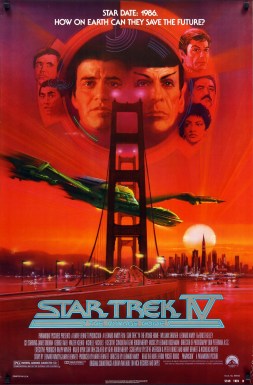 Two of the even ones. You know what that means.
 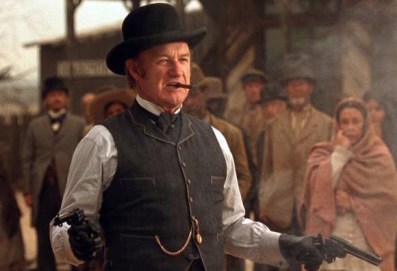 With Cutthroat Island as the never-off-the-ground bottom leg and Waterworld as the high-flying upright obelisk standing up on 175 million, the right triangle of box office halitosis spewing out from weird genre adventures in 1995 was completed with the dismal performance of Sam Raimi’s Sharon Stone-vehicle The Quick and the Dead. Which, in this metaphor, is the gnarly hypotenuse, the connective leg between Waterworld’s hyper-production-designed, outré weirdness and Cutthroat’s illogical idiocy.
 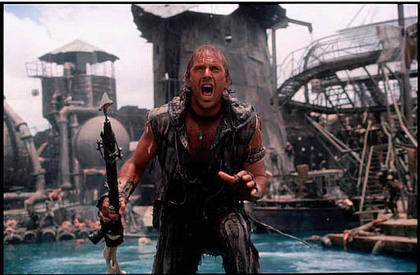 Waterworld
 Between roughly 1993 and 1998, the post-Tarantino brio that was at one point the most scorching lightning-bolt in cinema shifted to a self-immolating fire, a pox on the cinematic landscape, almost overnight. The beacon of the Weinstein-fronted American independent success story, Tarantino was a shining light on the cinematic landscape until a deluge of golden-child followers (see Boondock Saints) cast their mettle in Tarantino’s gilded name and overindulged in his post-coital cool and sometimes smug pearly whites without actually backing their versions of the tale up with the wit, elan, or the cinematic rattle and hum of Tarantino’s style. Posing had suddenly become an art form.

