
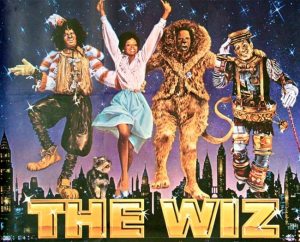
 Call it whatever you’d like, but this all-black modernization and loosening-up of The Wizard of Oz sure ain’t business as usual. Following the script but rereading the lines, altering the inflections, and considerably jazzing up the razzamatazz, the all-black The Wiz is ironically a loaf of white bread behind the screen (black stars became popular during this time, but black directors and writers, and thus control of movie sets and structure, and potentially control of white underlings, was still verboten by the Hollywood elite). Headed up by the hippest cat in town, Sidney Lumet, fresh off of simmering New York to a boil in Dog Day Afternoon and blowing his top in Network, this film is Lumet’s first old-fashioned NYC acid-trip. Continue reading
Flopping in the Wind: The Wiz
Leave a reply
 Francis Ford Coppola’s great folly One from the Heart splintered the American New Wave/New Hollywood into shards of half-remembered former glory, casting the great American directors of the ‘70s across the land and possibly abetting the groundwork for the most corporate decade of all American cinema next to come. The famously impossible shoot of Apocalypse Now nearly killed him, of course, and for his next film, he wanted to gift himself a present, much as Michael Cimino did when his The Deer Hunter garnered award after award and he granted himself passage to direct his own pocket passion project Heaven’s Gate. Now, the New Hollywood barely survived Heaven’s Gate, the baroque masterpiece masquerading as a misfire, a grand accident of a film about the grand accident of America. But One from the Heart? The already rickety New Hollywood, a house on stilts with the whirlwind of Star Wars and other new-fangled pop cinema just waiting to topple it, couldn’t survive another go around.
  If only Nicolas Cage could find a home. Werner Herzog was one once (in a much more harrowing caricature of New Orleans than Zandalee). Charlie Kaufman was another. Cage’s uncle Francis (yes Coppola) could have been one had Coppola still been granted passage to his inner delirium by the time nephew Cage was already acting. As a baroque, unhinged stylist, Cage is the ideal interpreter for a subset of directors who can channel him – or unleash him with a purpose – but too often, he’s left wandering the land, ambling around like a grotesque freakshow disfigured of rhyme or reason, and not in a good way. Despite what you might think, the problem isn’t new either; it’s an age old conundrum, one that Cage has less solved than exacerbated, but rare glimmers of beauty always secrete out of his frothing mouth when it’s in full-on walking abomination mode.
  It is immeasurably difficult, even impossible, not to crack the glossy lens of “keep it on the screen” in Under the Volcano, peering behind the frame to explore the harsh climate of personal disfigurement and torment in director John Huston’s life. The comparison isn’t unwarranted; it may even be begged for. Huston wanted the film, much as he actively pursued all of his late life projects (perhaps livid with his work-for-hire reputation). And the protagonist, an aging British diplomat in the perpetual downfall of alcoholism wasting away his time in the oppressive Mexican heat, bears an unmistakable imaginative resemblance (if not a physical one) to Huston himself, deeply sick at the time of production and nearing his last bow after decades of severe alcoholism and smoking had withered away his features and left what might be considered a husk of a man in their wake. The comparison catalyzes a reservoir of brutally tormented emotions and hand-crafted, personalized filmmaking on Huston’s part, no doubt, but it also elides the fact that, in Under the Volcano, the primed, pared-down potency of the screen most assuredly speaks for itself.
  John Huston’s career caught the literary bug, an inspiration that quickly, sometimes detrimentally, opened a Pandora’s box he couldn’t close. I mean, the dude erected his career in one fell, volcanic swoop with his debut feature, The Maltese Falcon, an adaptation of a famously convoluted and uncinematic Dashiell Hammett novel. Not to be outdone by his debut, Huston, perhaps in a fit of near-death delirium, concluded his career directing his daughter in an adaptation of that most holy of unfilmable authors: James Joyce (admittedly, Huston went for the big gun of the small gun short stories with “The Dead” from Dubliners, but reaching for something like Ulysses would have been sheer Icarus-inspired lunacy). Ironically, Huston himself was often compared to Hemingway for his no-nonsense virility and the tensile strength of his dead-on filmmaking, putting him at a stark remove from the likes of the infamously spindly, present-tense, tonally fluxional Joyce who was perhaps Hemingway’s polar opposite.
  Deeply, unremittingly accepting John Huston’s blithely woozy, boozed-out vibe in full flourish, the strung-out, rampaging The Night of the Iguana is probably a little farcical in its over-heatedness. But then, this is Tennessee Williams. At least we’re in the presence of a full-throated, deviant, near-hallucinogenic dive into haughty, drunken melodrama, much more synonymous with the post-Faulkner Southern-modernist Williams spirit than most other Williams adaptations, usually quasi-heated chamber pieces vaguely tied to false-naturalism. In comparison, Iguana is unapologetic and viciously lacking in timidity, rejecting the half-hearted naturalistic ticks of most Williams adaptations for a merry expression of demented, licentious, sinful goodwill. Unlike, say, the good but overrated A Streetcar Named Desire, where the Method acting bug (as it often did) turned performance into a calculated private experiment rather than a vocally external art, The Night of the Iguana isn’t afraid to be to-the-rafters cinema. Baldly, even oppressively cinematic, it treats the brambles of melodrama as a wellspring of possibility to wrap itself in rather than as a shopworn, past-its-prime memory of Old Hollywood to skirt around.
 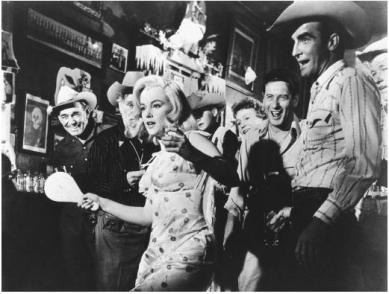 A little upstart four-part series of reviews on less-remembered John Huston films.
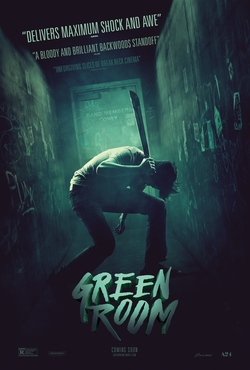 Belting out the Dead Kennedys’ “Nazi Punks F Off” in a neo-Nazi club without missing a beat, Jeremy Saulnier’s Green Room cuts through backwoods molasses malevolence with anarchic glee. Following in the spirit of Saulnier’s similarly titled 2014 thriller Blue Ruin, the definitive ethos of Green Room is low-hanging menace interrupting a scruffy, scrappy semi-comedy with violence that is even shaggier. Genre interrupted by genre is perhaps a Saulnier trope now, but it’s not as contorted and overburdening as that might suggest. Instead, the tone of the film is one of doodling in the margins, adopting the underwire of a nasty-minded rural grotto and sketching circles of wonderfully quotidian detail and character within the mode.
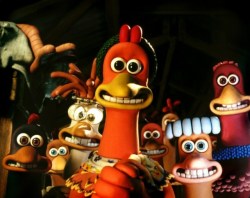 With The Little Prince on Netflix these days and Kubo and the Two Strings out soon enough, stop motion is making a comeback. You know what that means.
 With The Little Prince on Netflix these days and Kubo and the Two Strings out soon enough, stop motion is making a comeback. You know what that means.
