
 Limned with atomic-age zest and riddled with nervous rays of icy energy, Night and the City is singular in director Jules Dassin’s oeuvre, not to mention a kind of apotheosis of the noir form, in its unmitigated diagnosis of human society as a rogues’ gallery and a murderers’ row. Scouring the self-mutilated streets of London with a spectral sense of allusion and spare poetry that stimulates a positively magnetic charge, it doesn’t take any mental gymnastics to discover how Dassin’s personal turmoil around the time of filming Night and the City inscribes itself in the singed chiaroscuro and the barbed, irregular editing mechanics of Night and City, shaking the frame into submission. This English wild cat of a film is the platonic ideal of its genre’s unremitting reconnaissance of urban scrawl, a vision of a world useful primarily, even exclusively, for nighttime, even night-terror, skulking and nothing more. Continue reading
Midnight Screenings: Night and the City
Leave a reply
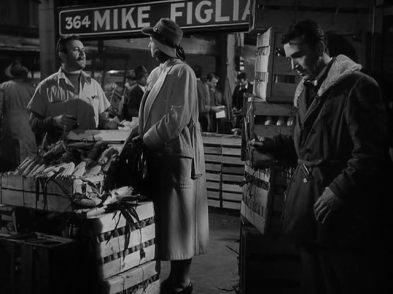 More or less, “film noir” doesn’t immediately conjure images of the fruit markets and roadside truckers adorning Thieves’ Highway, but any cognitive dissonance about the disconnect is allayed almost immediately in Jules Dassin’s wonderfully rotted-out picture, his final American film before an intercontinental exodus prompted by the dastardly House Un-American Activities Committee. Dassin’s communist sympathies inscribe themselves elegantly in the noir world where capitalist rot reigns supreme and disillusionment is the only, albeit temporary, salve against the Western lie of individual morality and pulling oneself up by one’s bootstraps. In the noir world, one person’s success is exclusively an agitated avenue for unsettling the possibilities of other humans for whom hope is an albatross and the American Dream is little more than a poisoned apple.
 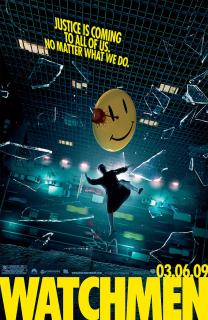 Bad guys equal bad time in a DC comics team-up. This Progenitors practically writes itself.
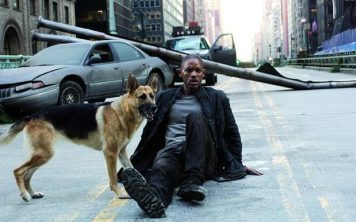 Remember when Will Smith’s name in the center/top/left/whatever of your poster was enough to guarantee a hit? 2007 sure does.
 Perhaps inevitably, The Conjuring 2 can’t exert the primal, pared potency of its immediate predecessor, although it certainly tries to: James Wan’s sequel to his original film is blissfully insular, wonderfully happy to simply exist without the burden of a franchise on its back. In practice, this eases the transition to the pulpy genre material, the bread and butter of director Wan’s craft, with the film resisting the urge to force itself through the fire-trial of self-legitimization through psychoanalytic babble or metaphoric shenanigans. It’s another “from the files of” ghostly haunted house yarn, plain and simple, one that doesn’t unpack box after box of added meaning as most films do when they are overconfident in their skills and try to take on the world. Although it doesn’t quite justify Wan’s A-list status and meteoric rise to artistic credibility after striking out last decade with Saw and Dead Silence, The Conjuring 2 is primarily pleased to serve its principal interests of satisfyingly lean, mean flair and virtuosity.
  The Shallows
 The name “acid western” doesn’t quite do justice to Monte Hellman’s duo of sadly fatalistic fugues released in 1966, soon to become cult icons when their casts went on to fame and infamy, in some order. These two films have the bracing mystique of unidentified film-like objects without precedent or successor; even the most famous film in the acid sub-genre, Alejandro Jodorowsky’s four-years-later release El Topo, suggests the toxicity of these 1966 progenitors but not their distressed, cloudy desolation. If El Topo was a disobedient, hallucinatory nonsense-poem that eroded society’s expectations for the Western, The Shooting and Ride in the Whirlwind are already themselves eroded.
 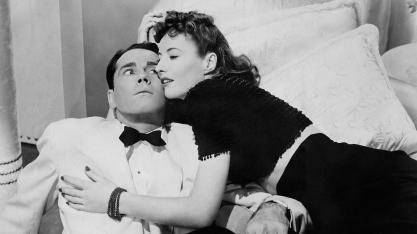 The early 1940s were the last gasp of the first wave of the classical Hollywood romantic screwball comedy, but why the genre sputtered out remains a conundrum. Perhaps the world was modifying itself too quickly for a genre where chaos was a principle to feel like casual entertainment rather than skewered reflection of the status quo. Or perhaps moods were more ambivalent about fancy free fun with the onset of global geopolitical turmoil. But then again, the arrival of the screwball in the ‘30s was massaged partially out of the national turmoil of the Depression to begin with, so the obvious answers only retype the question mark in boldface.
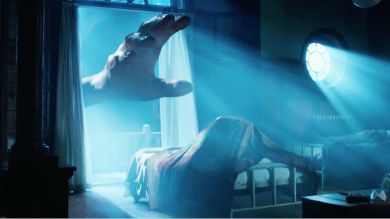 Steven Spielberg’s The BFG is a production remarkably lacking in ego or bombast, functioning primarily as a genuinely heartfelt palate cleanser for one of Hollywood’s specialists at masquerading grandness with a simulacrum of heart. Chronicling a burgeoning friendship between the titular Big Friendly Giant, played by Mark Rylance, and a young child Sophie (Ruby Barnhill), an orphan (because of course she is), Melissa Mathison’s screenplay dispels the necessity of grandeur and instead tucks us in with an intimate dream of pleasantly aimless friendship and camaraderie to keep the nightmares at bay. This is a reverie of a film, so lost in its own daydreams that it casually avoids demarcating a narrative for us, and although the title may suggest otherwise, the central appeal of Spielberg’s brew is that it is morsel-sized, in every respect.
 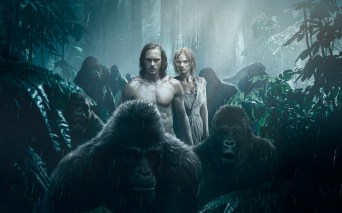 David Yates’ listless The Legend of Tarzan has the look, but not the spunk of a great pulp novel the likes of which Edgar Rice Burroughs, creator of the character one hundred years ago, might have written. Biting off well more than it can possibly chew, the faux-artisanal nature of the design suggests a more thoughtful, or fun, production than this ultimately pretentious slog can handle. Thickly breaded in a historical revisionism that the film absolutely cannot withstand or rein in at all, the screenplay by Adam Cozard and Craig Brewer (Brewer’s previous films have embraced a pulpy flavor totally lacking in this film) is a misfire of egotistical proportions.
