
This week’s pair of Midnight Screenings will return us to the far-flung past of 2006 and 2007, a more innocent time in film history …
It is quite possible that Richard Linklater is the only currently functioning director who really could have directed A Scanner Darkly in the fidgety, twitching tone it so desperately begged for, and thus it is a little bit of magic that he managed to acquire the film at all. Firstly, this is because Linklater, the homegrown Texan with an eye for slacker culture and the distance imparted by time and memory, strips away the science fiction trappings from Phillip K. Dick’s story and renders it all the more pressingly intimate in doing so, without ever sacrificing the essence of the novel about drug abuse and melancholic social anomie. Which is itself important; so many science fiction films rationalize themselves by claiming they are necessarily informing us about the weight of a current world crisis, but as many other Dick adaptations show us, they frequently devolve into glorified techie action flicks. The science becomes a diaphanous masquerade, a meager attempt by a film to convince its audience of its intelligence when it offers nothing but pyrotechnics and quasi-futurism. Linklater doesn’t need a trip to the future; he creates a piercingly grounded tale about trips of a different variety. Continue reading
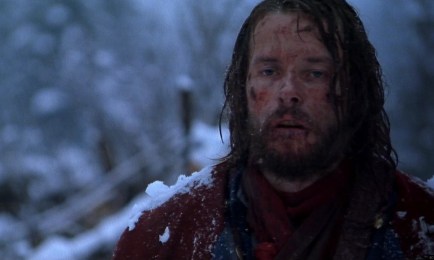 1999 was a year of new beginnings for a great many directors of the cinema, filmmakers who used their 1999 offerings to launch their careers to greater artistic, as well as commercial, heights. Although we often forget, it was also the year of Antonia Bird’s Ravenous, a film that ought to have launched her to new heights but somehow left her scrambling for an audience. In a year of openly defiant, exploratory films from many talented artists, Ravenous remains one of the most defiant and exploratory. Yet it never found an audience for itself or its director, likely because its defiance, experimentation, and exploration are all hidden. Even more-so, they are secret, and the film goes to great lengths to pretend it is nothing more than an everyday comedy-horror exploitation-film of the distinctly late ’90s post-Scream variety. It is a film where the experimentation is wholly submersed into subfuscous genre mechanics, a great devious trick of a film, and I can think of no more perfect nature for such a deliciously sinister exercise in cutthroat filmmaking.
  It is said that the best horror films traffic in the slithering, slimy replacement of the mundane by the uncanny. True, to some extent, but the best of the best posit something more. Take 1974’s The Texas Chainsaw Massacre by Tobe Hooper, a work that posits the mundane as the uncanny, locating a world where the mundane regions of American society were the most uncanny. A world where mundane and innocent society never really existed except in the romantic dreams of the American imagination. A world where everyday life is actually an uncanny abyss of demonic activity just waiting to swallow goodness and human life up whole.
 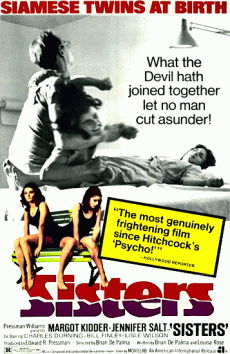 A Brian De Palma double-feature this week on Midnight Screenings.
 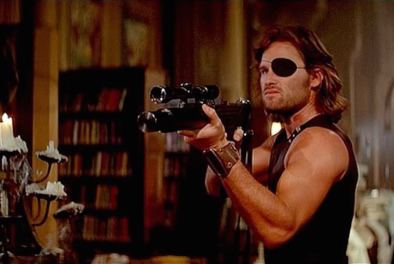 Update June 2019: After a rewatch, I’m struck by how much Escape from New York’s essentially anti-authoritarian stance also feels like a quintessentially early ’80s response to the failures of the liberal project of the ’60s and the New Hollywood project of radicalizing cinematic form in the ’70s. Carpenter’s film undeniably paints a picture of the powers that be as deluded autocrats and maniacal functionaries, but its post-hippie validation of anarchy defines itself individually and skeptically rather than communally and with a utopian accent. On balance, I don’t know how I feel about this any more than I do Carpenter’s deliberately fearful Assault on Precinct 13, where a black cop and an old-school white criminal learn to get along only while under siege from an interracial army of cinematographically-zombified gang members putting aside their racial differences to assault the status quo. That said, while Assault merely updates and urbanizes Western conventions, Escape ironizes its, offering up cinema’s greatest ode to and takedown of the John Wayne archetype, one who refuses to coopt societally-accepted norms of the “good” (even if it means doing “bad”). Plus, it’s pretty great filmmaking nearly forty years later, a phenomenal exploration of Carpenter’s singularly elastic ability to massage visual absence into a vision of apocalypse, be it at the level of the individual (Halloween, faceless evil), the local (The Thing, evil in our own image), or the world, as in this film.
  So, “comedy sequels” right?
 With the culmination of the month-long Worst or “Worst” feature on some of the alleged worst films ever made, what a better way to return to the weekly Midnight Screening series than a great film about the guy who made some of the alleged worst movies ever made…
 To recap: the Universal Horror individual monster franchises varied wildly and inconstantly, and often in directions and to magnitudes any sane person would never imagine. Sometimes, however, Universal Horror just created something that can not compare to anything on this earth, in their canon or otherwise. Sometimes they made Murders in the Rue Morgue, just about the perfect encapsulation of messy early sound cinema trying to cope with the increased narrative bent of sound and having no idea what to do with narrative at all. The end result is Universal Horror at their most indebted to quilt-work, patching together the expressionist dread and crawling, impulsive weirdness of silent cinema – itself having very little to do with narrative or realism – and trying desperately to mold all of this prismatic and arcane visual strangeness into something that can approximate “narrative”. It fails as a narrative proper, but what hypnotic failure it is.
  Rene Clair didn’t have it easy. Soundly trounced by the French New Wave and never really forgiven in the public consciousness, Clair was a hot button go-to guy in the early days of sound cinema, a born-and-bred scientist with tools in sound and space who saw cinema – like all the great early masters – as an expressive, flexible plaything more than a get-the-job-done tool. Play he did, although his somewhat overly-formed style admittedly hit a limit when it traded in the dangerous waters of experimentation for something a touch more gentle and composed. Clair enjoyed a good composition as much as the next director, but there was his compositions always ran the risk of boxing him in to a settled path, rather than letting him loose to ravenously tear down the walls and traverse new, unsettled regions of cinema. He had his limits, in other words, but the 2010s hardly even acknowledge him. Clair was a class act, and whatever his American films did to keep him away from true adventure and challenge, he never gave a film less than his full attention. The no man’s land that is his reputation today seldom takes into account his very real, if somewhat overly-rigid, talents as a filmmaker.
  When Ana Lily Amirpour recently released her lushly sensualist horror film A Girl Walks Home Alone at Night, her cinematic passion was matched in its cathartic potency only by its free-wheeling desire to devour all influences. Obviously, Jim Jarmusch was the cipher through which her film’s identity was largely cracked, but in her sun-deprived cinematic wasteland, another female filmmaker was a key stepping stone: Kathryn Bigelow, a women who has since made a pit-stop in can’t-be-this-good action cinema before taking a well-deserved break to produce two of the finest naturalist war thrillers ever made. She went on to make more composed films, in other words, and probably better ones too, but her underdog outlaw passion in the world of film never burned as brightly as it did in her first big break: the 1987 film Near Dark, nothing less than a full-on vampire-western-romance-horror (a mouthful, but it should sound familiar to fans of Amirpour’s debut). It takes a lot for a film to invent a genre. That it comes within an inch of perfecting it on its first try is not only testament to Bigelow’s fully-formed craft, but of her restless, travelling spirit.
  The Long Take