
 A pair of surrealistic modern animations this week on Midnight Screenings.
A Town Called Panic
Gifting galvanic motion to the Art Brut movement – literally “raw art”, or “rough art” – the Belgian film A Town Called Panic is nearly outsider art, or at least, it bears the casual fibers of a work that dismisses rationality with an outsider spirit. The film is gifted a name that lovingly reintroduces old Western tropes (who couldn’t imagine Clint Eastwood sauntering into A Town Called Panic, eyes frazzled and mouth as closed and parsimonious as ever) but also suggests the ethos of the film: panic, pandemonium, bedlam, and beauty all rolled up into one terrifyingly tactile witch’s brew that applies not only logic but physical objects in the most fascinatingly tenuous of ways imaginable. A lose flash-bang grenade of a story about two minimalist plastic-base action figures – “Cowboy” and “Indian” – who react in a flurry of rushed stream-of-consciousness thought when a birthday present for their friend “Horse” goes horribly awry, A Town Called Panic is stop-motion with an emphasis on stop – stopping to renounce the rationalist norms of cinema – and motion – gallantly flying past any such notions, or any breaks at all, on the back of its own demented whimsy. Continue reading
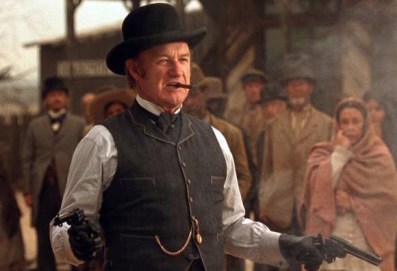 With Cutthroat Island as the never-off-the-ground bottom leg and Waterworld as the high-flying upright obelisk standing up on 175 million, the right triangle of box office halitosis spewing out from weird genre adventures in 1995 was completed with the dismal performance of Sam Raimi’s Sharon Stone-vehicle The Quick and the Dead. Which, in this metaphor, is the gnarly hypotenuse, the connective leg between Waterworld’s hyper-production-designed, outré weirdness and Cutthroat’s illogical idiocy.
  So Rod Serling, Charles Dickens, and Alfred Hitchcock walked into a bar…
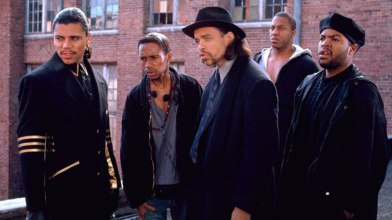 Trespass
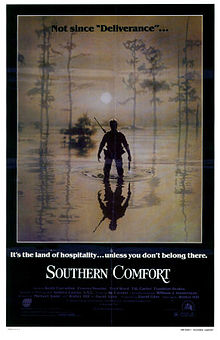 Southern Comfort
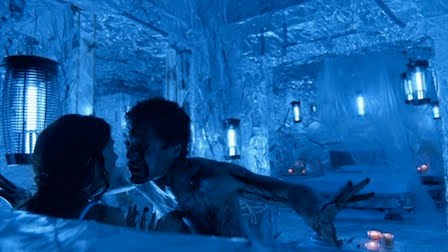 Bug
Bug Fritz Lang’s infatuation with obsession, subterfuge, and the gossamer veil of social order are not precisely fascinating food for critical thought in 2016, but the progression of his fears might be. His customary debut to the big leagues of artistic cinema, 1922’s Dr. Mabuse: Der Spieler, is stupendous cinema, but it is sometimes assumed as the sarcophagus of his career, a film he more or less copied and only advanced a handful of times. Formally, the assumption is obviously incorrect; the advent of sound and Lang’s almost unstoppably innate understanding of how to inlay sound into his medium as a complement and commentator on the visual realm ensures that Lang was never formally stable or complete in the silent era. But what is often undervalued is how Lang began investigating his own image of a petrified world right from the get-go, transforming the horror of a man controlling the world in Mabuse into a vision of a world-as-thieves-den so robbed of humanity that any one human exerting dominance over it seemed almost passé and innocent in comparison.
 If we were being prickly, we could say that David Lynch’s debut feature Eraserhead has set the director down a 40 year path of trying, and failing, to recapture the cinematic mayhem and malfeasance of his coming out party. That’s not entirely true – Dune, The Elephant Man, and The Straight Story don’t bother as much with explicit disruption, but they are failures of ambition all the more so for that very reason, effective films though some of them may be anyway. But Lynch’s greatest works – Blue Velvet, Twin Peaks, Mulholland Drive– have all been formalist fever dreams that, if expressively advancing the terror of Eraserhead’s self-censuring dreamscape, also rein the Lynchian-id beast in ever so slightly so that they are perhaps less fully capable of exploring the broken-edges of experience. Their relative – and I emphasize relative, for this is Lynch we are speaking of – formal sanity in envisioning a world bent out of shape makes them feel less honestly afflicted with the terror of the world they depict. To some extent, all of these films are commentaries (fantastic commentaries), but only Eraserhead achieves genuine embodiment. While other films strive to “mean” something about discombobulated terror, the formally spasmodic Eraserhead is discombobulated terror.
  A deep-water jambalaya of reptilian-brain sexuality, harebrained violence, delinquent cinematic disdain for social propriety, racial conflagration, and sensual tension overflowing in spurts of human combat, it is entirely fitting, and entirely Buñuelean, that one of the Spanish directors two meager English-language films manages to explode with traumatic awareness of American cultural disjunction better than arguably any other American film. A three-character barbecue of sun-scorched, humidity-flaring raw flesh left out to burn, the director’s foray into American racial and sexual politics is a political study only insofar as it slithers into the political found in the everyday terror of fighting for your life. This is no lecture, no dissertation on this director’s part; this is fetid, pungent, even foolishly carnal backwoods trauma of a corporeal, violently direct nature. It’s racial politics as out-of-the-frying-pan-into-the-fire nightmare.
 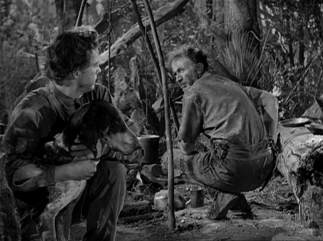 A bit of a pocket interest this week on Midnight Screenings, with two instances of foreign masters exploring the thick, sickly world of the American Southern Gothic.
  The Long Take