
 Update 2018: Touch of Evil’s introduction is still genius, a blurring of perspectives and races as the camera recklessly unfurls itself across porous national and moral boundaries, ambivalently flaunting its ability to contest America’s certainty about racial and national borders even as it questions its own ability as cinema to escape those borders. When the bomb blows up, prematurely concluding and interrupting an interracial kiss, the film confronts the moral, legal, and visual limits of its time-period and quite literally explodes in attempting to find a way out. What a way for Welles to return to the nation that abandoned him, and that he abandoned.
Original Review:
Released in 1958 on the eve of the barren no man’s land that was Hollywood cinema during the first half of the ’60s (before the ’70s would give it the caustic, cynical kick it needed to revitalize itself), it’s fitting that Touch of Evil is usually considered the final classic-period film noir. As if sensing the decay of the Hollywood system and its inevitable decline for its conservative rigidity, Orson Welles must have sought to bring the house down by making the ultimate film in one of its premier genres (Welles, to be fair, had not only seen this coming but had initiated its eventual arrival twenty years before when he gave the studio system its definitive film and by definition made every passing year for Hollywood an unsuccessful attempt to surpass this benchmark). And “ultimate” film noir here doesn’t so much mean the greatest or best film noir, although it comes close. It implies instead that this film is the ultimate example of noir, or the most film noirish noir ever – it plays like Welles read the genre past itself, distilled it to its core, and expanded those elements to their extreme. Everything – from the caustic characters to the cavernous nightmarish despair to the eternal worthlessness of human nature to the implicit racial subtext to the concern over obsession, control, and power – that constructed the noir as a genre is on display here and rendered more nihilistic than perhaps ever before. Continue reading
 Edited
 Edited and Updated 2016
 Edited June 2016
 Edited
 Arguably the finest example of the Italian neo-realist cinema movement during the mid-1940s, Bicycle Thieves is a fascinating and moving examination of faith, desperation, love, and society, all under the guise of a film about a man searching for his bicycle. It also re-wrote the textbook on the notion of story, emphasizing narrative feeling over plot event and exploring character and emotion in the mundane rendered dramatic through filmmaking prowess. It’s a remarkably simplistic, primal, elemental basic premise; essentially, the movie unfolds as a man and his son look for a bike that was stolen from them. It sounds like relatively light viewing initially, but Bicycle Thieves is among the most powerful explorations of the human experience essayed on film. Its seemingly simplistic nature exposes a powerful statement about post-war Italy and the heartbreaking portrayal of what desperation and fear can do to a person; it is both uniquely and earthily of its own time and location and a broadly human experience applicable to any situation. It emerges as a film of great desperation and fear, but also one of the cinema’s most profoundly humanist and even uplifting statements, all captured under Vittorio De Sica’s plaintive, mournfully poetic camera.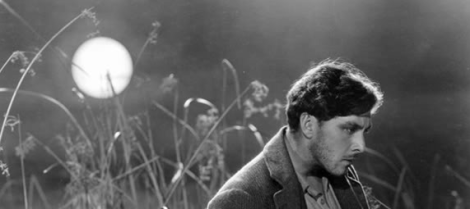
 The Long Take