
Tag Archives: animated films

Lists (AKA Time to Get All Nice and Halloweeny for you in this our Darkest Hour)

Hello all,

I’ve been meaning to get to this for a little while, and now that I have a nice little corpus of short reviews in the form of film lists, I’m sharing links to four lengthy, substantive, hearty lists I’ve written over the past month for an online website, Taste of Cinema, that specializes in cinema classics, art-house productions, and foreign cinema.  Even if you don’t pay attention to the list order (some of the lists aren’t ordered in terms of film quality any way), the text provides quick-and-dirty bite-sized analysis of films, and for the sake of seasonal cheer, mostly horror films at that. Obviously, most of these films are works I either like or love, several of which are transcendent masterpieces of the form, and  some of which you’ll note have much longer reviews already on the site. Nevertheless, here they are for your pleasure. Enjoy!


20 Best Horror Films Made by Non-Horror Directors 

15 Best Silent Horror Films

20 Best Black-and-White Horror Films of the Sound Era

And the outlier for the month, but a personal favorite, the 25 Best Disney Animated Feature Length Films

Have fun,

Jake

Review: Fantastic Mr. Fox


Despite Wes Anderson’s near-murderous commitment to the merriment of exchanging trifling fables for narratives, it’s no secret he was in dire-straits as the back-half of the first decade of the 21
stcentury rounded its way toward conclusion. One of the indie darlings of the mid-’90s, Anderson’s films had been on the path to antiseptic stagnancy even when he reached his early career peak with 2001’s The Royal Tenenbaums. While that film perfected his particular brand of formalism, it also glimpsed the shift from childlike wonderment and a freeing love of reigned-in chaos to a more rationalized, and thus less free-flowing, rigid arch-detachment, a cloying style which would for a few films become the bane of Anderson’s existence. Throughout the mid-2000s, Anderson’s art-house meets doll-house sensibility threatened to strangle itself with its stifling, dictatorial commitment to precision and professionalism over feeling and energy. Something had to happen.
Continue reading

Wild Wild Jest: Rango

When Rango was first announced, it seemed like a dream come true. An animated film starring a lizard that embraces and likely parodies the Western genre? Now there’s something for you. Unfortunately, there was that whole trailer thing … well, let’s just say the trailers were downright tepid and filled with jokes that seemed more clever than funny, products of a writer hopped up on his or her own ego. Continue reading

National Cinemas: Yellow Submarine

After uploading two of the most depressing British films I can imagine, I decided a nice counter-balance would be in order: a couple of bonus reviews of just about two of the damn cheeriest films in existence. It’s been my pleasure.


Edited mid-2015

Yellow Submarine is a Beatles film, and this carries certain baggage. Above all, we must have the Beatles – this is the Beatles psychedelia express vaguely hiding as a children’s film after all, and insofar as they are the star of the show, they must be in the film. We must ask of any Beatles film then: what does it reflect about the Beatles as an entity? What is most surprising about 1969’s candy-coated art film, then, is how little a presence they have in the film, and how little import they play even as the narrative (insofar as it can be called one) is wholly about them. I don’t mean this as a negative – their aloof, detached standoffishness, their inability to take any problem seriously, and their seeming lack of interest in really doing much of anything seems wholly intentional. And it is subversive as all hell.
Continue reading

Review: How to Train your Dragon 2

Dreamworks Animation, long lambasted as a second-tier Pixar Studios, kind of came out of nowhere with How to Train your Dragon in 2010. They’d made plenty of good films before, but their bread-and-butter was slapstick comedy and verbal punnery and didn’t hold a candle to the subtle artfulness and nuanced emotion of their competitor’s finest. Perhaps luckily for them, HtTyD came out at the dawn of Pixar’s currently, and sadly, still continuing descent into competence. Although it’s faced competition from Disney’s assumed new second-silver age , these Disney films haven’t yet touched the elegant grandeur and beauty of How to Train your Dragon, the second best mainstream animated film of the decade after Pixar’s decade-beginning (or decade-capping) masterpiece Toy Story 3. As a result of its success, it was almost impossible not to believe in the likelihood of future sequels, and, although the company took longer than expected for it to be released, a sequel is here as expected. The rule of thumb would suggest inferiority, but let’s not jump to conclusions. Continue reading
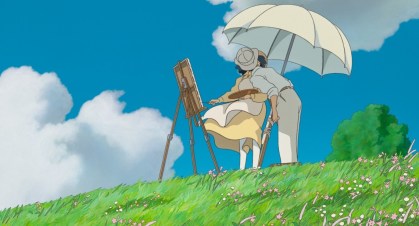
Review: The Wind Rises


wind-rises-9-1140x617

Update late 2019:

(as another quintessentially modern, 21st century technology)

Original (Edited) Review: 

The Wind Rises carries a lot of baggage. It is director Hayao Myazaki’s retirement film, if he is to be trusted, and thus will inevitably be compared to every film he’s ever made and hampered with the impression of future films left unmade. My usual rule of thumb would indicate to divorce the film from Miyazaki’s history and view it on its own terms. While there’s ample reason to take this path, such a take would also do this film a disservice. Not only is this a strong film in its own right, but it’s a telling and touching commentary on Miyazaki’s career as a whole, and thus it invites the comparison.

Although a biography of Jiro Horikoshi, a Japanese inventor famed for his prototype Mitsubishi A5M, it’s easy to see the film as a confessional of sorts for Miyazaki as he comes to terms with his own career in filmmaking and the dangers of the medium for the world. While the director’s films usually approximate dreams and desire, this is a surprisingly straight-forward piece, and the surprising pre-release comparisons to the classic epics of David Lean reveal themselves not only worthy but perfectly fit to this grand but personal film about art and consequences that uses the director’s flair for visual storytelling as much as conventional dialogue to tell its story. It isn’t perfect, and it is difficult not to wish for something a touch more ebullient and deconstructive for his final film. But conventional quality is quality nonetheless, especially in a film which so quietly, so sedately, and so rigorously meditates on and appreciates the necessity of sturdy, incremental improvement and diligence within a chosen field, all while eyeing – in its periphery, admittedly – the tragedy such a (potentially) blinkered focus may emit into the world.  Continue reading