
 White Material
A white woman and a black nation are the subjects of Claire Denis’ exotic, lush White Material, a sort of harrowing The Tree of Life with meditation on the nature of god replaced with a careful deliberation on colonial identity. Denis has spent the better part of two decades dissecting the aftereffects of colonial rule with a careful mixture of composed authenticity and poetically floating clarity, rejecting the lo-fi approach of many modern indie filmmakers for a more confrontational form of bile-spewing visual splendor. White Material may be her most harrowing film ever, and its cryptic meditation on the nature of identity in a continent where identity is defined primarily by ownership reminds that the after-effects of colonialism still loom large over African conflict, and they may not only effect native Africans anymore. Even though the whites who still live in Africa may deny it, the chickens are finally coming home to roost. Continue reading
 In Lee Daniels’ The Butler, there’s a shot of a man walking across a bog, depicted from the perspective of a silent observer looking down into the water and seeing naught but a reflection of a shadow barely present in the water, threatening to disappear at any moment. Beautiful and expressionist-tinged, it potently captures, better than any word ever could, the reality of race in America – African-Americans torn down to whispers of human flesh almost unobservant to the white eye, seen only through the prism of mirrors and reflections when you’re really looking at something else, glimpsed only in fleeting, peripheral moments by powerful forces who don’t want to acknowledge the presence of race.
  Jean-Marc Vallee’s Dallas Buyer’s Club is a relentlessly traditional film. Craig Borten and Melisa Wallack’s screenplay is one of the oldest stories in the book, and they subscribe to the most limited, well-worn version of it. A hard-living, hard-smoking, hard-drinking Texan man, Ron Woodruff (Matthew McConaughey) is a relentless Type-A Alpha Male of the classical American persuasion who discovers in 1985 that he is HIV positive. Surrounded by an external culture of unmitigated masculinity and an internal predilection for homophobia, he struggles mightily to come to terms with the diagnosis, weighed on most heavily by his belief that only homosexual men can have HIV (the de facto opinion among the general population in 1985).
 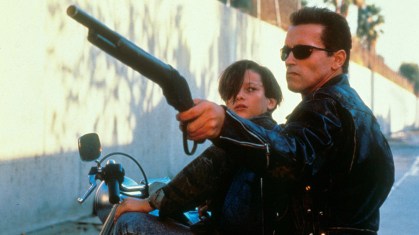 Because of that other Terminator film recently released, trying its best to soil the name of a once-mighty franchise.
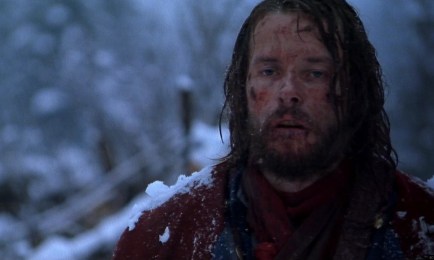 1999 was a year of new beginnings for a great many directors of the cinema, filmmakers who used their 1999 offerings to launch their careers to greater artistic, as well as commercial, heights. Although we often forget, it was also the year of Antonia Bird’s Ravenous, a film that ought to have launched her to new heights but somehow left her scrambling for an audience. In a year of openly defiant, exploratory films from many talented artists, Ravenous remains one of the most defiant and exploratory. Yet it never found an audience for itself or its director, likely because its defiance, experimentation, and exploration are all hidden. Even more-so, they are secret, and the film goes to great lengths to pretend it is nothing more than an everyday comedy-horror exploitation-film of the distinctly late ’90s post-Scream variety. It is a film where the experimentation is wholly submersed into subfuscous genre mechanics, a great devious trick of a film, and I can think of no more perfect nature for such a deliciously sinister exercise in cutthroat filmmaking.
  There is probably no more critically acclaimed American filmmaker to emerge since the heyday of the ’90s independent scene than Paul Thomas Anderson, one of the few relatively mainstream artists in recent years to genuinely acquire the clout of an auteur. Contrasted with, say, David O. Russell, who also survived the cinematic battleground of 1999, Anderson never once seems to have ceded ground to popular concern, and he remains one of the few “big-name” filmmakers whose wandering mind hasn’t been boxed-off by Hollywood money. All these years later, even when they don’t fully succeed, his films seem like the collective external manifestation of the nether regions of his own mind. His films are infused with the lifeblood of classic cinema but prone to the sort of exuberant misconduct all great directors need to engage with to break new bounds. He’s an out-there sort of dude, but he’s cordoned off his own niche as a pop-art experimentalist, a perfect combination of old school composure and new school anger.
  In Victoria, Australia, on Valentine’s Day, in 1900, three female boarding school students and their teacher disappeared. Or so Peter Weir’s 1975 anti-genre classic Picnic at Hanging Rock, adapted from Joan Lindsay’s novel of the same title, shows us. It didn’t actually happen, but that doesn’t matter. It could have happened, and the literal truth of the tale is a red herring contrasted with the emotional truth of the tale. Plus, on the subject of “Western society making play with the world”, few films have spoken more emotional truth than Picnic at Hanging Rock. You might imagine the story on your own: a hard-hitting, grisly dissection of a mystery. A dissection that is very much not what Weir himself had in mind. But then, that’s why we are mere mortals, and Peter Weir is one of the great, underappreciated directors of the modern age.
  There are precious few directors that know how to wield a single scene quite like Michael Mann. His single greatest moment behind the camera belongs in Heat, a mid-film bank heist that overflows into a stuttery shootout that mashes together the rhythms of an urban jungle, the pageantry of an urban carnival, and a geometric fascination for odd, cutting edits and fascinatingly counter-intuitive visual storytelling. The shootout is one of the most perfect action scenes ever filmed, one of the most perfect scenes of 1990s cinema, and a startling showcase for a director who defines life as a collection of people (usually men) wallowing in their own danger until those men overflow onto each other and bubble till they erupt.
 The Long Take