 Ben-Hur
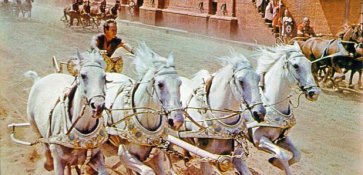
The icy death grip of the classical Hollywood era was not unapparent to the producers of the late 1950s, when worldly art cinema and the more pulpy, vigorous American independents were all the rage and rising like a tide of acid-water ready to wash away the nostalgia and romance of the classical Hollywood way. Much like the inflection point of the late ’70s, when the New Hollywood breathed its last gasps and curdled into the more audience-friendly realms of ’80s entertainment, the producers of the late ’50s and early ’60s reacted the only way they knew how: doubling down on the moment, creating films of sensual pleasures that could bowel over any formal concerns about filmmaking. Continue reading
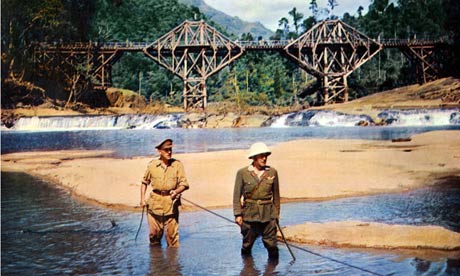 If The Bridge on the River Kwai is an inflection point in the bifurcated career of the most quintessentially British of all directors, David Lean, it is no victim of a split-decision. Emblazoned with both the staunchly intimate character focus of Lean’s earlier inspections of British life and the bellowing grandeur of his boldface later pictures, The Bridge on the River Kwai is a meeting of minds with a sweep that not only contrasts but amalgamates the luxuriant and the domestic. It lacks the fiercely enigmatic streak of Lean’s later Lawrence of Arabia – where delusions of self-immolating grandeur, imperialist mystique, and hot-headed rebellion conspire to denounce the essential vision of prodigious orientalism that sticks to Western cinema like a fly to excrement. But such concerns are valueless amidst Bridge’s vigorous cinematic workout and its scorching exegesis of the essential social codebook of Twentieth Century British life.
 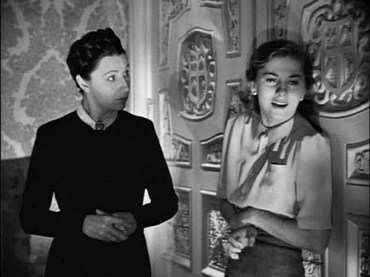 Of all the Alfred Hitchcock films in existence, one shouldn’t feign surprise that it was Rebecca that was lovingly overcast with the radiant glow of the amber Oscar. Frankly, and as is often the case, the reality is that the singular Oscar glory was afforded to one of the more stolid, “respectable” pictures in the canon of a director that thrived when he was barreling away from respect at a hundred miles an hour. By the standards of sub-expressionist horror, mind you, Rebecca is plenty disturbed, with Hitch’s direction sterling and suffocating even if it’s less maverick and personal than it would be later in his career. But watching Rebecca, a ghoulishly charming little bedeviled jewel in bewilderingly trumped-up costume drama airs, it’s painfully obvious that he was playing mega-producer David O. Selznick’s mercenary at this point, and that the film’s Oscar glory is less a statement to any truly revolutionary or thought-provoking aims than to the sheer size of the film’s majesty. While Vertigo, Rear Window, Strangers on a Train, and a dozen other Hitch films animate wonderfully contradictory impulses to truly destabilizing ends, the only thing Rebecca animates is Selznick’s production budget. And the only thing it tests is the size of Selznick’s ego, his inimitable capacity to gild and ornament a competent husk of a film with all the production decorum his bottomless pockets could buy.
  It’s easy to reduce Frank Capra to a series of benighted adjectives of excessive sentimentality, markers of his supposedly clueless optimism in the face of pressing danger. But it’s wilder still to witness the willful disobedience of his early films, to evoke their blithe defiance of the dejected spirit of their times. While other directors were content to apply the “sound” eruption as a buttress to the burgeoning demand for cinematic “realism”, Capra’s spirit was to laugh in the face of crushing reality, to play within the confines of poverty and, in doing so, to trace the contours of not only national desperation but the everyday performers and players who resist it. In 1934, on the eve of his rise to gargantuan fame overnight, this meant upending the laissez-faire classism and degradation of opportunity in society, expelling a spitfire, screw-loose comedy that made mincemeat out of America’s aristocracy and paid homage to the zealous can-do Americana he fell in love with.
  I meant to get around to these a month ago, but you know. I guess time stands still for a now not-so-timely tour of historical Best Picture winners, with two reviews per full decade (meaning I’ve omitted the handful of years in the late ’20s because, I mean, I’ve already reviewed Sunrise). Generally, although not exclusively, they’ll be presented in pairs so as to keep the length down at a reasonable level. For the first decade, to salvage the horrors of one of the most useless superlative awards in the film world, I’ve decided to begin with the two instances that got it right.
  Despite nominally tenanting the early days of the New Hollywood, Hal Ashby’s Harold and Maude achieves a frisky, mischievous barrel-house piano playfulness more at home with the mid-’60s works of Richard Lester, who made films masquerading as larks that nonetheless disobediently dissected society’s fascination with identity with a manic frivolity that both epitomized and upended the giddy image of the 1960s . Prefiguring and serving as an advance riposte to the grisly grottos of Scorsese and friends that embodied the dejected, askew stench of the 1970s, Harold and Maude reflects the unbridled romanticism of the hippie movement, a time before carefree mania was played in the frenzied register of abject pandemonium.
  Andrei Tarkovsky’s final film is not his greatest work, but with the weight of his passing hanging over the piece, it emerges as something even more notable, even more trenchant. The Sacrifice remains a foremost reminder that the cinema’s most pressing, most exploratory wanderer left the world the way he would want to: without an answer, still wandering and exploring. For, unlike most of Tarkovsky’s contemporaries (excepting maybe Terrence Malick in America), the Russian poet’s films defy answers, riddles, destinations, or arrivals. They laugh in the face of finalitude, they eschew completeness, they stage a coup against the idea of conclusion because their very caliber as cinema is inextricably tied not to the arrival at knowledge, as every other film stresses, but to mechanisms of knowing and to the experience of feeling. For Tarkovsky, how we sense the world is the divining rod to what we sense.
  Although the tone of Zootopia is more buddy-cop than genuine neo-noir, the most startling, bracing moments of Disney’s newest blissful concoction are when the busy animation suffuses into sly dances of negative space and subfuscous, shady imagery. A nimble midnight fright dalliance to the rainforest district of the mega-city of Zootopia evokes memories of Val Lewton as it plays with impressionistic fog to visualize the hidden darkness and barely-subsumed discontent lingering in the hearts and minds of the vague, surface-level utopia the film is set in. The sequence, where the overbearing, cotton-candy lightness of the city is set adrift to reveal the brimming darkness lurking undertow, encapsulates the concealed friction and fissure underlying the post-racial visage of Zootopia.
  Filmed in Atlanta and set in a New Englander’s nightmare vision of a Southern city contaminated with centuries of race and class disparity, Triple 9 at least deserves some credit for marinating its city with the grime and grotto typically reserved for world cities like New York. With images of the Big Peach still fraught by the oppressive genteel paternalism and antebellum haze of Gone with the Wind and the cringe-inducing respectability politics of Driving Miss Daisy, Triple 9 at least relies on the now cosmopolitan city to construct an identity out of more modern visions of race and class consternation. Triple 9 is not trapped in the streamlined racism of old, but fraught with the combative, confrontational contortions of a city that pummeled its way into the future while still remaining trapped in the past.
  Now that the release of Terrence Malick’s Knight of Cups upon us, a review of his second film is in order.
  The Long Take