tThis alphabetical list will be regularly updated whenever I listen to a new album.
Baroness, Purple: A-
A near-fatal bus attack and the loss of half your band isn’t an easy thing to overcome, but John Baizley’s merry band of troubadours trucks on with Purple, an album that coils their serpentine Southern sludge sound even as it proves this band, as if encased in a caterwauling moan as thick as Savannah molasses, can survive anything. Loss lingers in the frayed ends of Baizley’s guitar sound, but Purple is an oddly unkempt, upbeat album from a genre that is notoriously caked in doom-and-gloom. Desperation burns and slithers throughout the album, but Baroness is the sound of a band acknowledging their specters without being defined by them, turning up the amps on life after a tentative meeting with the reaper.
Beastwars, The Death of All Things: A
Stitching bent odds and ends together to amalgamate tortured riffs and cackling solos from beyond, this is metal music in the Sabbath tradition: an unhurried, earth-burrowing, glacial holocaust that understands that the race to the top of the metal world doesn’t have to play out like a thousand-miles-per-hour speedway. The ever-nebulous “heavy” isn’t measured in the righteousness of your licks or the number of fire extinguishers necessary to douse the output of your shredding, but in the bruising, pummeling shake you feel in the darkest caverns of your gut whilst threatening the metal gods by standing atop them at ground level. Real metal doesn’t always reach for the sky; it locates more subterranean ghouls and draws them out of the crust of the Earth like a necromancer. So outside the norm they can’t just be from down under, but from down under’s underbelly of New Zealand, the mostly unknown Beastwars grab Peter Jackson’s lustrous, gawking vision of that region of the world and curdle it down to its primordial bones. An ice-cold killer of an album.
Beyonce, Lemonade: A –
A phenomenal work of insinuation over elaboration, Beyonce’s surreptitiously-released Lemonade is an animalistic bludgeon of sweat-soaked vocal pangs simultaneously lacerating and celebrating infidelity to a soundtrack of shirtless, throbbing sexual urges intonated as thoroughly as an instrument could possibly muster. An album of pants rather than lyrics, Lemonade casually but demonstratively vanquishes thoughts that Beyonce is irrelevant in the modern world, or that her inveterate charisma can’t be channeled into something this coarse and deliciously impolite. With shimmering pop melodies trampled underfoot the sheer vitriol of Beyonce’ s pelvis-stomping vocal performance and, more importantly, the cataclysm of slithering Trap-influence insidiousness she kicks up musically, it’s a veritable anarchist’s cookbook, a study guide in how to build a musical bomb. Continue reading →

 Extraordinary Tales
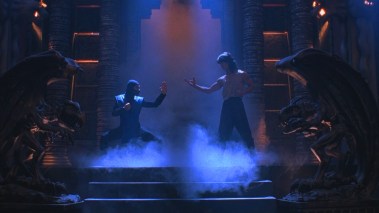 Warcraft is out in theaters this Friday generally doing nothing to save the video game adaptation from the cinematic crypt. In eulogy, here are reviews of four that have come and gone before.
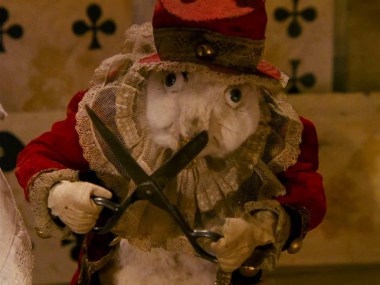 Another year, another ho-hum Lewis Carroll adaptation. Cutting to the chase, here’s a review of the best one.
 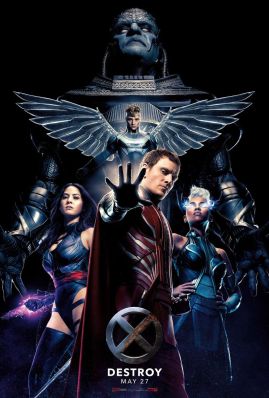 Would that the rambunctious punk attitude halfheartedly flaunted by X-Men: Apocalypse in a few of its extremities (hair, costumes) had descended into its major organs as well. A structural makeover, with a rebellious narrative more fascinatingly fractured than the milquetoast clash-of-kings promised here, could have made Apocalypse more than the competent, if bog-standard, throat-clearing exercise it ultimately is. On some level, the film retreats from the structural excess of previous film X-Men: Days of Future Past , where an overlapping, byzantine time labyrinth sometimes got the best of the humans trapped in its machinations. The longer but ultimately leaner (read: simpler) Apocalypse is a little more punk and less Rush this time out, despite the de rigueur world-ending climax that’s more or less accepted by this point in superhero cinema history. But it never attains the snotty, vituperative snarl of the Sex Pistols, the discombobulated comic brio of the Ramones, or the stylistic omnivorous brashness of the Clash; instead, it expends quite a lot of energy wallowing around in a state of blissful neutrality, not accomplishing much but doing an acceptable workaday job arriving at its mostly trivial end-goal.
  Edited for Clarity
 Jonah Hex
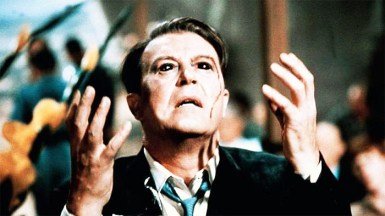 Roger Corman’s films and their narratives were typically barely masqueraded Cinema of Attractions spectacles, experiential flights of fancy rooted in an insatiable thirst to expand the human eye itself. What Corman understood, something many a better filmmaker has conveniently sidestepped, is that cinema lives first and foremost on the surface and with the eyes. The brain, the mind, the heart; they all draw oxygen from the senses, not the other way around. So many filmmakers ladle their cinema in a bath of surreptitious symbolism or overly-curated suggestion that they exist only, exclusively, in the abstract nebula of the intellect; the beauty of the art itself is often the aesthetics of appearance that prefigure and often elude the capacities of our mind define them. In attempting to explain everything, to append meaning and content to the deliciously provocative uncontainbility of nature and the senses, these filmmakers fail to grasp what is right in front of them for the taking. As Susan Sontag so eloquently wrote, in searching for the truth beneath the surface, they fail to see the thing at all.
  Aesthetically-minded avant-garde director Nicolas Roeg, daringly immature puppetcraft impresario Jim Henson, and nasty-whimsy peace-negotiator Roald Dahl is one of those divine, demonic accidents of circumstance you didn’t really know you needed. Easily Roeg’s most commercial film, but not a cash-grab judging from his delectably devious direction and satisfyingly cryptic editing, The Witches was still a commercial misfire. Which isn’t a surprise; even by the standards of the late-‘80s run of vaguely dark and dreary children’s horror pictures either adapted directly from Dahl or owing kinship to his spirit, The Witches is an insidious little devil of a picture, vastly more warped and spidery than even the Grand Guignol likes of Return to Oz earlier in the decade. It settles more for naughty than nasty, but the effects are heinously satisfying nonetheless.
  Superstar ‘80s film producers and delirium-slingers Yoram Globus and Menahem Golan took as their mission statement to make a buck at any all costs, assembling casts and crews that, incompetence or not, were uniquely qualified and gamely willing to pretend that their bare-bones make-money cash-ins were, in fact, real movies. Products they were, not only first and foremost but nearly exclusively, and 1987’s Masters of the Universe is also uniquely special for how unmitigated by common sense it is in its desire to synergistically appeal to every single facet of its audience’s cultural iconography in order to draw them to theaters and steal their money. More than anything, this is cinema-as-pop-culture-platonic-ideal, perhaps more than any single cinematic product I have ever laid eyes on. They don’t deserve credit for anything else, but Golan and Globus were intimately, almost defiantly, aware of the world that bred their films.
  The Long Take