
d The newest in a long trickle of good-to-great DC Animated Universe films, Batman: The Killing Joke, is to be released this week, and in theaters no less (the realms of kiddie animation really have grown up). Since the film is based on the most famous Batman vs. Joker comic, one that partially inspired the gothic milieu of one of the most important blockbusters of all time, and because the DCAU itself was so heavily influenced by that blockbuster’s noir-baroque vision, it seems appropriate to take a trip back to the past with a review of the progenitor of this whole 25 year Batman love-affair-cum-epidemic that nerd culture has been afflicted with.
Watching Tim Burton’s 1989 Batman and its disfigured, plastered-on darkness today is largely a quaint experience. What was once a disquietingly serious blockbuster in its day now struggles to escape from underneath its giddy elan. But in 2016, an era of mangled, over-indulged, force-fed blockbusters with a realist, solemn streak a mile wide, it is Batman’s very cartoon zeal that becomes the well from which it draws life. Famously gruesome and gloomy in its day, Burton’s vision of gothic decay is decidedly less rapt with the reality principle than most blockbusters. Without heeding the realm of logic, Burton’s film is able to indulge its less timid, less mediated personal fetishes and massage something decidedly more expressive and visually crazed out of the fibers of the Batman comic than most blockbusters in the ‘10s, so concerned with narrative pretensions, would even know what to do with. Tim Burton’s brand of serious is silly, to say the least, but the mixture has an alchemic chemical allure in 2016 with most blockbusters so stone-faced in their sobriety and most Tim Burton films so manic and spasmodic they lose any sense of their center. Maybe it wasn’t in 1989, but in 2016, Batman feels like the sweet spot. Continue reading
 I meant to review this a while ago, but the year of its twentieth anniversary seems as good a time as any. Noah Hawley’s television show is every bit the film’s equal, but there’s nothing wrong with the primordial ooze of the original.
 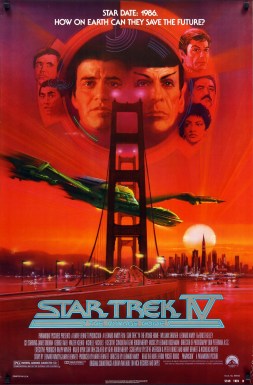 Two of the even ones. You know what that means.
  You know Star Trek. This isn’t it.
 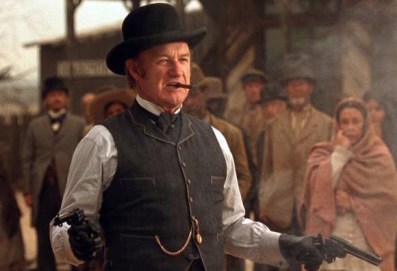 With Cutthroat Island as the never-off-the-ground bottom leg and Waterworld as the high-flying upright obelisk standing up on 175 million, the right triangle of box office halitosis spewing out from weird genre adventures in 1995 was completed with the dismal performance of Sam Raimi’s Sharon Stone-vehicle The Quick and the Dead. Which, in this metaphor, is the gnarly hypotenuse, the connective leg between Waterworld’s hyper-production-designed, outré weirdness and Cutthroat’s illogical idiocy.
 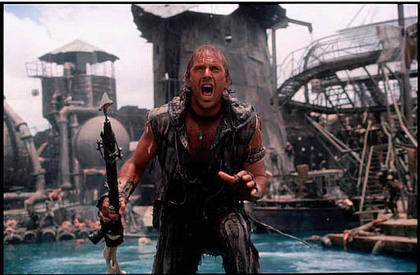 Waterworld
 Between roughly 1993 and 1998, the post-Tarantino brio that was at one point the most scorching lightning-bolt in cinema shifted to a self-immolating fire, a pox on the cinematic landscape, almost overnight. The beacon of the Weinstein-fronted American independent success story, Tarantino was a shining light on the cinematic landscape until a deluge of golden-child followers (see Boondock Saints) cast their mettle in Tarantino’s gilded name and overindulged in his post-coital cool and sometimes smug pearly whites without actually backing their versions of the tale up with the wit, elan, or the cinematic rattle and hum of Tarantino’s style. Posing had suddenly become an art form.
 I meant to get to this a couple weeks ago when The BFG was failing to tear up the box office, but with the Spielberg-loving Stranger Things tearing up Netflix, now is as good a time as any.
 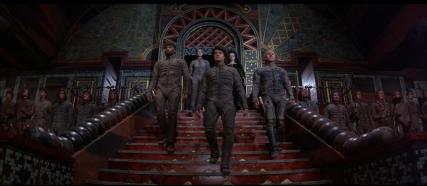 David Lynch’s Dune opens with a blissfully presentational monologue, a female face plastered onto the screen as she intones about spices like some intergalactic trade princess as her head glints in and out in a tease of a disappearing magic act that implicitly asks us whether we really care about anything she’s saying. It’s a dose of post-Star Wars and anti-Star Wars nonsense, a mocking of a genre by a director who had in 1977, the same year as that genre’s entrance into the mainstream, blasted a cavern out of the crevice in cinema left in the wake of Luis Buñuel’s quasi-retirement. Actually offered Return of the Jedi, Lynch accepted mega-producer and mega-trend-jumper Dino De Laurentiis’ offer to throw down with Frank Herbert’s story of space drugs and sand worms instead, and what came out of that unholy matrimony was one of the most famous misfires in cinema history.
  The Long Take