
 Spielberg and Dahl sounds like the right cocktail, but Dahl has been manhandled at the cinema before to differing results. Let’s take a look at the original, and by a wide margin still the most famous.
Avoiding equivocation, Willy Wonka and the Chocolate Factory is the child of a world that had not yet discovered how to adapt Roald Dahl to a visual medium. At minimum, the negligently forgotten The Witches by Nicolas Roeg (I mean, he’s only the finest British visualist of the last fifty years, so a natural fit for Dahl’s quintessentially British stories) and a cavalcade of other ‘90s films both understand Dahl and, more importantly, understand cinema, more naturally and with more charisma. In comparison, Mel Stuart’s deeply mitigated and mollified film is not ineffective, but Willy Wonka is about as cut-and-dry a case-study in mistaking a wonderful performance for a wonderful film as you’ll find in the annals of Western cinema. But more on that performance later. Unlike many of the film’s trumpeters, we have an actual movie to consider first. Continue reading
 The internet’s favorite bete noire, the new Ghostbusters, is out this week, and having reviewed the original and not much caring to revisit the sequel, I decided to review the most successful copycat of a formula that largely died out around the turn of the century.
 So Rod Serling, Charles Dickens, and Alfred Hitchcock walked into a bar…
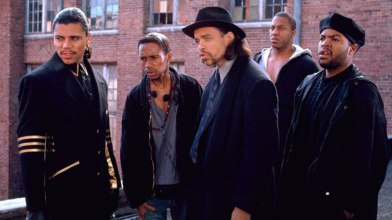 Trespass
 The Man From UNCLE
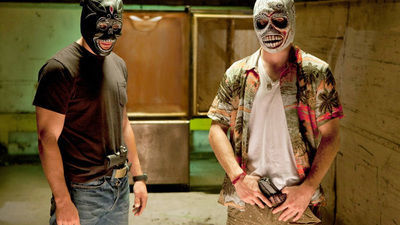 Oliver Stone’s twenty-years-late return to his barn-burning, muck-racking, mutinous youth as a hit-the-fan molester of respectable cinema, Savages is both undeniably admirable and definitely worn and torn by the years of middlebrow cinema Stone exerted onto himself over the years. After expending the ‘00s on pointless, anemically respectable productions like W and World Trade Center, two of-the-moment “take me seriously” political films with none of the director’ momentous, ribald energy, Savages is a return to form of sorts. But the lethargy of lost time has set in a little bit, and the film’s ricocheting-but-not-undulating formal hassle sometimes feels like Stone overcorrecting for the staid, empty crucibles of his turgid ‘00s work by inducing their polar opposite: an undomesticated, totally neurotic rollercoaster. Less Stone at his best than a phoenix raised from the ashes of Stone’s aimless 21st century films, Savages is an intermittently great filmmaking blast of alacrity and elan, but it feels more like Stone-knew-a-guy than Stone himself.
 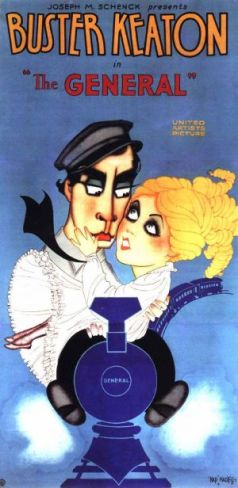 Edited
 In Frank Borzage’s 7th Heaven, much like F.W. Murnau’s Sunrise from the same year, and same production company, the mettle of duality and human romance is energized with cinematic luminescence, ultimately transforming togetherness into a prism for enlivening the world and lighting the way to an otherworld that, not heaven or hell, is more akin to the resplendence of worldly beauty itself. Producer William Fox was a sky-high romanticist with peaceful, radiant aspirations for humankind both exhibited within his films and enshrined in their making-of stories. Unlike many Hollywood producers quite this early on, he chose to jump the Hollywood ship of home-grown talent by acquiring some of the most rapturously received European auteurs for his productions with the quixotic belief that his production company’s cinema should be unrestrained and untrammeled on by national borders.
  Agitprop as festivity more than hoosegow, Sergei Eisenstein’s first film is also his most disarmingly pure and innocent in its desire to agitate not only society but cinema, a film thoroughly unmitigated by its own weight and purpose. The perpetual penitentiary many modern viewers discover when viewing Eisenstein’s unmistakably political films is replaced with a kindled carousel of motion and action, reaction and consequence, that feels not only undated but more progressive and alive with possibility than any film released in the 2010s. A freedom-fighting film that, in a fit of art imitating the dreams of a life that never came to exist, feels palpably liberated from the cinematic status quo. Rather than merely political critique, Strike is a filmmaking polemic, a hustle-and-bustle strike of inventive cinematic mechanisms enlivening the passé “historical cinema” genre that was often as inept and anonymous then as it is now.
 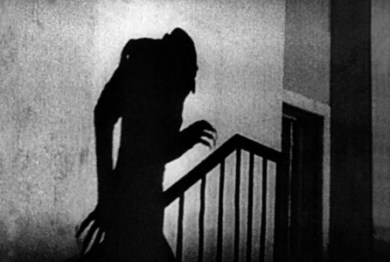 As the ur-horror film and the first masterpiece from the second visual master of the cinema (tied with Eisenstein; Griffith was the first) Nosferatu could crumble under the surfeit of weight on its back. And, like a steadfast Atlas, it holds up the earth with the gravid, implacable charisma of an obelisk absorbing a totem pole. F.W. Murnau’s incandescent grasp of cinema as a mythical creation capable of inscribing dreams and nightmares in the sky had not yet been matched by anyone in the medium (rather than achingly poetic dreams on alternate planes of reality, Griffith’s and Eisenstein’s films were more monumental architecture, or theater and dance respectively to crib from Godard). And, without much squinting, it’s almost as easy to claim that no one has actually dreamt Murnau’s dreams as well as Murnau in the 85 years since his untimely death.
