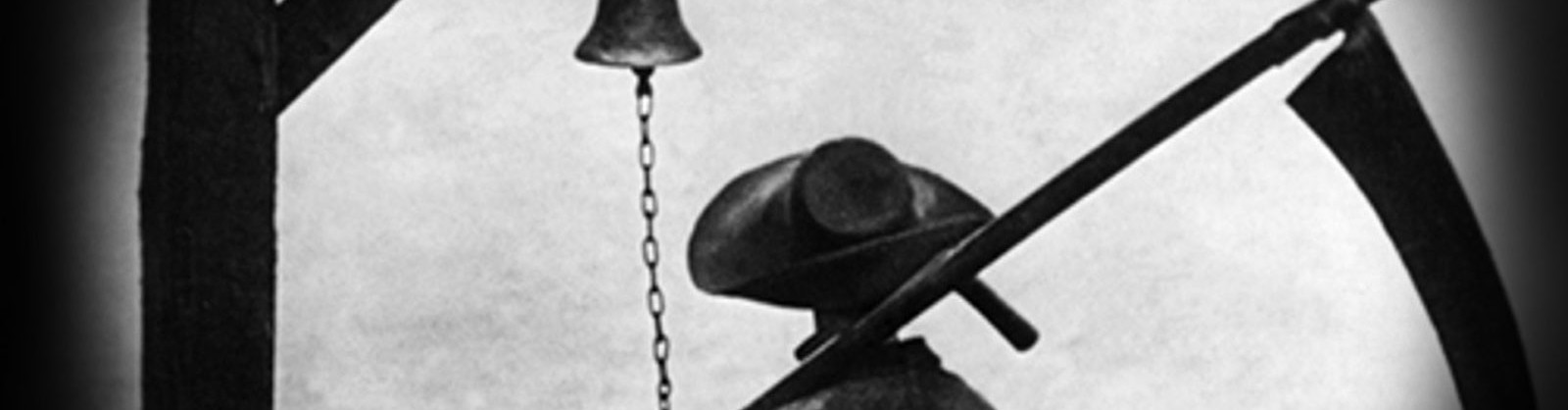
 It is ever easy to infringe on Michelangelo Antonioni’s reputation with the benighted “pretentious” signifier, avoiding and flattening the mysteries of his oeuvre in the process. The real work, and the effort Antonioni deserves, arrives when one actually looks into the film, engages with the materiality of its existence, and discovers that the act of watching this unquantifiable, unstable film is itself a reflection of the film’s gaze onto the tentative spaces of the world. Antonioni’s cinema isn’t a fixed state, but a thought-process, or a process of gazing and puzzling out a world that is not prefigured or assumed but a project ever in a state of transition. The concept of “the gaze” was waiting in the wings, soon to be all the rage, at around the time of L’Eclisse’s release, but few films transcend the subjective gaze of the character to a higher state of awareness of the subjective gaze of the film quite like Antonioni’s. L’Eclisse doesn’t confound expectation to trick us with a twist but to trap us in a state of affairs where the world must be interrogated. And in trapping us within the world and not allowing us to gallantly stride across it (as most movie characters do), Antonioni’s films are, paradoxically, primarily liberating experiences, works that unshackle us from narrative as well as easy expectations of what the world ought to be. Continue reading
Films for Class: L’Eclisse
Leave a reply
 A barn-burning blockbuster mixed with a post-psychedelic phase-out, The Fury was released (or unleashed) at a point in time when freakishness was something to contain and compartmentalize rather than flamboyantly unhinge. Yet director Brian De Palma, his corporate cred already in good hand after kick-starting the wave of Stephen King adaptations with Carrie, lets the crazy all hang out. An evolution and perversion of Carrie, The Fury won’t be to everyone’s tastes, although it certainly was to critic Pauline Kael’s. In one of her most infamous typeset orgasms, the famous moralist critic let loose, felt the film’s pulse, and ran with it.
 With Tommy, certified mad scientist Ken Russell retools that Old English warhorse of an album from the Who into a whirling dervish of flamboyant disco-fever proto-prog nonsense. Initially kindling the memory of Richard Lester’s A Hard Day’s Night, Russell’s film derails whatever facsimile of sense or grubby intimacy remained in the semi-verite aesthetic found in that exultant spasm of a 1964 masterpiece. Which is fitting; the Who’s Tommy, the 1969 album, was essentially the turning point where British rock music mutated (sometimes to its detriment) from a cabal of psychedelically-charged, lacerating nuggets (more like aural secrets than full-throated arias) into bombastic, headlong plunges into super-textured, baroque madness, the bastard child of which became progressive rock. With the film A Hard Day’s Night, rock ‘n’ roll cinema was cheeky, provocative, untroubled, gallantly foolhardy, a burst of energy. By the film Tommy , rock ‘n’ roll cinema could be sinister and campy but was always distinctly troubled, a dialectic of cynicism and silliness coiled up in confusion, the once-burst now a full-on fever for good and ill. The decade in between the films speaks not only to shifts in musical impulses but a decade-long cultural-temperature slide from a birth wail to a death rattle. And when the coloration is this clamorous, it’s got shake and roll covered as well.
  Midway through Sausage Party, the film’s lone stylistic experiment clarifies the purpose of the foul, if perceptive, demon that writers Seth Rogen and Evan Goldberg have wrought. The animators call on the memory of the charitably sketch-like 2D animation style practiced by rabble-rousers like Ralph Bakshi to insinuate the chaos of an earlier animation world (the ’70s and ’80s) where Disney was dead, Pixar never existed, and animation was an honest-to-god experimental underworld cast adrift without a purpose except to mess up the joint. With the end of the ‘80s, Disney resurfaced as a guiding light from the heavens, and Pixar followed soon in their wake, two entities (well, Pixar especially) that more or less retooled adult-themed animation as a sacrificial lamb in the West (in comparison to Japan, for instance). Animation now exonerated of its crimes of being dangerous, the world was a better place once again.
  Everyone else is making the comparison to Don’t Breathe; I might as well state the obvious and throw my lot in.
  Released after a decade of directorial experiments toward wider, more all-encompassing expanses, Michael Mann’s Collateral is a satisfyingly blunt reduction: a spry, athletic, all-muscle take on stringy two-character cinema that feels like an indie move coiled up in constricting digital fiber optics. It’s a freezer burn of a film. Glancing the punctured historical adventure The Last of the Mohicans, the punctured crime thriller Heat, the punctured social treatise The Insider, and the (well you get it) sports biopic Ali, Collateral might be called a punctured action film. But bequeathing it with a genre (even a slantwise one) feels like sacrilege, a way to explain, and thus uncoil the mystique of, such a venomously wound-up, unique beast of a picture. Collateral is etched out of a B-movie spirit that does something more important than defy expectations or wrinkle the narrative (although it does both of those things): it throbs. Real good.
 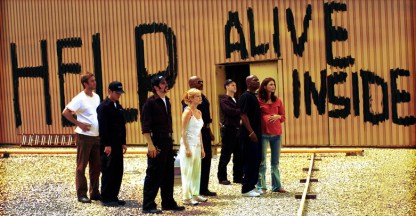 Zack Snyder has been spending way too long in the sun with the wrong king of edibles. Over a decade later, his brand of fast food cinema has woefully miscalculated its essential inessential-ness, replacing gleeful cinematic pit-stops of full-bore energy with lugubrious dogged trudges, buckets of lard pretending to be hearty, social-expose steaks. All these years later, he retains but one meaningfully good film to his name, and one that was more or less written off as trivial in its time period. But 2004’s Dawn of the Dead is only guilty by association to a superior film bearing its name, a stone-cold masterpiece that Snyder nonetheless fricassees in his hot-fire skillet of improbably sure-handed, slithering filmmaking.
  Justice League Dark sounds kind of cool, I don’t know. Unlike any of those other DC movies, it has a for-real talented director with things like a track-record scheduled to direct it all of the sudden. Let’s look at the somewhat sketchy cinematic history of characters in that particular DC Comics franchise.
 Justice League Dark sounds kind of cool, I don’t know. Unlike any of those other DC movies, it has a for-real talented director with things like a track-record scheduled to direct it all of the sudden. Let’s look at the somewhat sketchy cinematic history of characters in that particular DC Comics franchise.
  Two horror masterclasses from 1963 on Midnight Screenings.
