 With Triple Nine looking all vaguely neo-noirish and me having already reviewed director John Hillcoat’s notable films, I’ve decided to look at a handful of films from the last heyday of the neo-noir: the 1990s. Of course, because it is the 1990s, we must begin with two Nicolas Cage vehicles, as you do.
Red Rock West
John Dahl’s minimalist Norman Rockwell fetish is nourished with a gleefully off-hand, almost accidental energy in the duplicitous Red Rock West, a film that stars Nicolas Cage, Lara Flynn Boyle, and Dennis Hopper and fittingly recalls by turn the giddy Americana of Raising Arizona, the scathing post-modernism of Twin Peaks, and the anti-social inside-out small-town throat-grab of Blue Velvet.
When Cage’s character saunters into a Wyoming town in search of a job that just won’t coalesce, fortune turns against him and the decrepit rot and turpitude of rural American bite back. After all, in the type of town where everyone knows everyone, you can’t really hide. In this perverted Western landscape, the very idea of “heading out West” is upended and downtuned, besieged by more than a modicum of deceit and turmoil chiffonading the American Dream into enough mincemeat to fill Monument Valley itself. For a sepulcher to forgotten dreams, it’s a hoot, and the cemetery of a forest that engulfs the town of Red Rock at night ain’t half bad either.
Admittedly, Dahl doesn’t strike a chord as a natural born genius, but he’s a sharp enough tack and a journeyman of palpable suspense and playful subtext, most notably when he undoes the largesse-laden Texas drawl of Cage’s character at the seams. This laconic, pulpy film coils like a writhing king snake but it manages to accrue nervous energy without the accompanying nosebleed of solemnity or self-imposed meaning. In fact, Dahl’s wry comedic edge delights in letting us know how precipitous the film is, how rough-around-the-edges its denim-clad drifter of a yarn may be; it’s as if it’s being constructed before our very noses. Rather archly, it contorts the noir tradition of chance begetting bad habits by finding the light for Cage’s character in chance itself. Luck enjoins the story into motion, and luck concludes it. Cage is just wandering through, writing notes that no one believes and sliding into easy lies that everyone does.
Score: 8/10
 Kiss of Death
One of the strangest films to ever appear at the Cannes film festival, Kiss of Death is a neo-noir that isn’t quite dressed to kill, but it at least has one pant-leg on, even when it’s tripping over it. Lead man David Caruso is a wet blanket, Helen Hunt is waddling around in neutral, and the screenplay is less a movie than a murderer’s row of fascinating scenes loosely tethered together in the same room. But, accident or not, Kiss of Death stumbles into its fair share of oddball menace and mendacity.
Barbet Schroeder is a capable stylist but no auteur, and viewed through the lens of 1995 with heavy-hitters like Seven, Devil in a Blue Dress, and Fargo rattling or skulking into theaters on either side of it, Kiss of Death definitely feels outclassed amidst the competition. But with vociferous neo-noirs less thick-on-the-ground these days, one can appreciate Kiss of Death’s more modest pleasures, some of which relate to Schroeder’s agreeably strangulating tone and acrid arctic blue chills. The film doesn’t really coagulate the neo-noir atmosphere it so clearly pines for; the bizarrely over-lit hues accrue a pop-fried thriller sensibility instead, which is somewhere between a lateral trade and a slight step-down. Puckering up the piece with zest and zing are molotov cocktails hurled by a motor-mouthed Michael Rapaport, a slithering Stanley Tucci, and a weathered but hectoring Samuel Jackson. There’s a whole menagerie of incandescent, peppery energy twirling around the edges here.
Plus, Kiss of Death boasts an injection by an inspiringly cocaine-addled Nicolas Cage on the eve of winning an Oscar and diving headfirst into leading man status that would quickly turn his entire career into a toxic cloud of vacillating insufferable and endearing inanity of the first order. Excise Cage’s scenes for your own film a you can see a twinkle in Werner Herzog’s eye, fulfilled a decade and a half later with the vastly underrated Bad Lieutenant sequel.
Score: 6/10

 A review apropos of nothing in particular…
 With Triple Nine looking all vaguely neo-noirish and me having already reviewed director John Hillcoat’s notable films, I’ve decided to look at a handful of films from the last heyday of the neo-noir: the 1990s. And of course David Lynch …
  With Triple Nine looking all vaguely neo-noirish and me having already reviewed director John Hillcoat’s notable films, I’ve decided to look at a handful of films from the last heyday of the neo-noir: the 1990s. I wish I hadn’t already reviewed Seven, because then I could really pull a “seven, eight, nine” joke right about now. Oh well.
 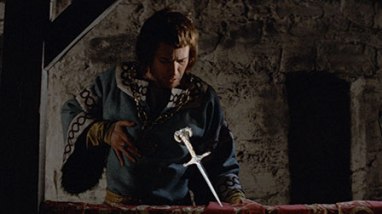 Having finally caught up with Justin Kurzel’s Macbeth, I decided to take a look at the cinematic version it owes itself most readily to.
  With the release of The Witch imminent, let us look back at another famous horror film to rely on witches, however indirectly, to go bump in the night.
 With the imminent release of The Witch upon us, let us look back at another famous movie with a villainous witch.
 With the release of Hail, Caesar!, a look back on some of the Coens’ previous comedies is in order.
  With the release of Hail, Caesar!, a look back on some of the Coens’ previous comedies is in order.
 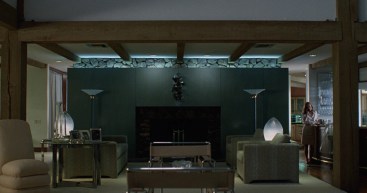 With Carol regalvanizing Todd Haynes’ career in a layer of cinematic majesty, let us take a look back upon his initial breakthrough into the mainstream.
 The Long Take