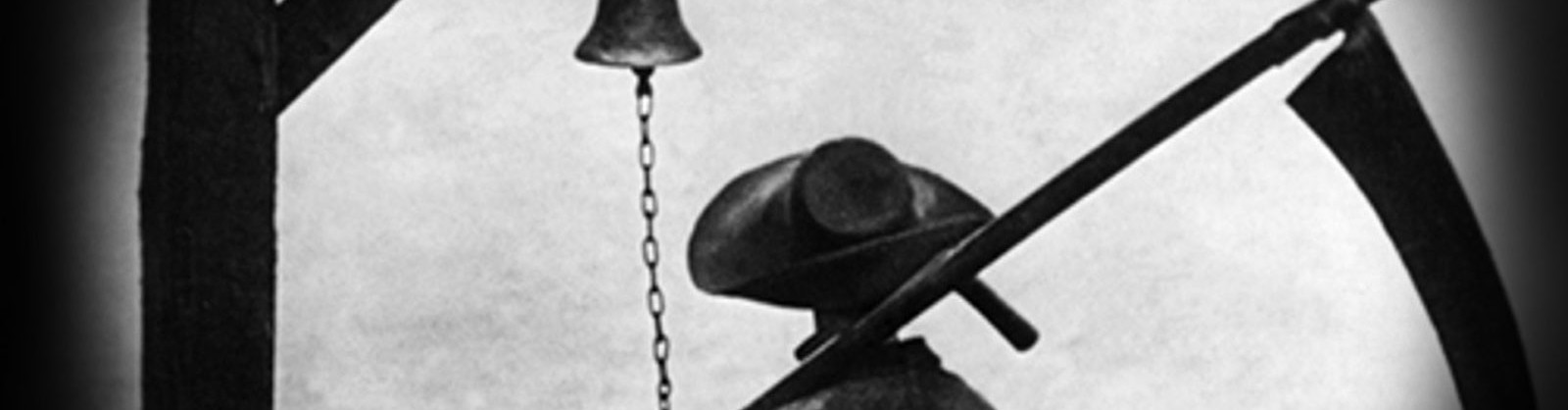
 Meant to review this in memoriam for Bill Paxton earlier this year, but with Powers Boothe passing as well, I had no choice but to get around to it. Both are great in this underrated horror film from arguably the worst period for the genre in film history.
I read that Frailty’s narrative represents “an abuse of cinematic power” and, putting aside the puritanical aftertaste of that statement, how is this a criticism exactly? The American horror film landscape circa 2001 was infested with irony from head to toe, a casualty of the Scream generation that has since then only lacquered itself in respectability with the advent of hipster irony. But Bill Paxton’s directorial debut Frailty is deadly serious. Making a film about a father telling his kids – with both the slithering charisma of a snake-oil salesman and the slippery morality of a totem to middle-Americana – that God has commanded them to murder demons disguised as honest citizens, Paxton and screenwriter Brent Hanley were practically paving themselves a path to easy, self-congratulatory criticism of middle America. But they never thumb their noses at their audience in Frailty, a gravely humble rumination on the sins of the father dressed up as a low-slung Southern campfire tale that evokes the haunting vacancies of life and the sometimes-clawing need to believe in moral purpose with zealous conviction (pardon the pun). At any cost. Continue reading
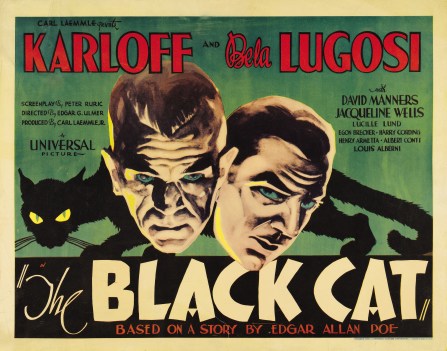 With The Mummy generally serving no one’s interests and possibly nailing down the coffin on Universal’s Dark Universe project, let us look back at one of the best – and most underrated, non-canonical – Universal Horror films, and the first to feature their two biggest stars.
 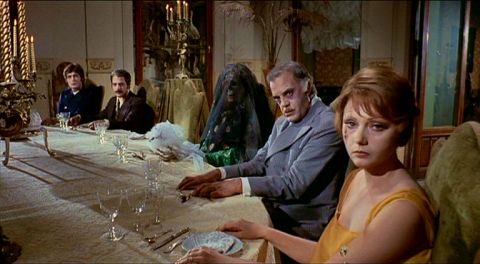 Dreamlike – and as lush as Mario Bava’s visual resplendence ever got – Lisa and the Devil is the half-crazed tipping point between the director’s earlier, Hitchcock-indebted slashers and the artistically emancipated deranged pop-art flourishes of his ward Dario Argento. Released in 1973 – and heavily recut two years later for American audiences to cash in on the Exorcist craze – Lisa is evidence not to paint Bava with the wide brush of obligatory pastiche, as though he was always performing his own idea of what a Bava film was supposed to be. Never stagnant, his films all reveal their personal eccentricities and oddities, the markers of a restless consciousness at work. A tragically comic fun-house reflection of existential panic, Lisa and the Devil recollects Alain Resnais’ Last Year at Marienbad to bridge the high and low art divide as Lisa (Elke Sommers) finds herself lost not only amidst Spanish corridors but time and space themselves.
  The title of this quintessentially ‘60s-product-of-hot-headed-Italy suggests a sex kitten romp, but the name is a much more literal in this deliciously macabre take on the spirit of Daphne de Maurier. As is seemingly the first commandment of all Giallos – to be obeyed with holy penitence – the narrative is paradoxically simple yet horrifyingly obtuse, but it boils down to the ghostly menace of young Melissa Graps terrorizing a European village around the turn of the 20th century, a village newly visited by a doctor (Giacomo Rossi Stuart) there to autopsy one of the bodies. Kill Baby, Kill also further develops Mario Bava’s formal fixation with the architectural impossibility of the mind. With one foot in the psycho-sexual and the other in the undulating tension between the supernatural and modern medicine, Kill Baby, Kill frolics with many of the thematic devils twisting the throat of mid-century life.
 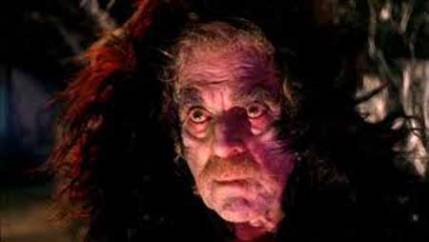 After a long way away, I’ll start posting pretty furiously for a while again. First up is a trio of Mario Bava films to celebrate the return of Midnight Screenings!
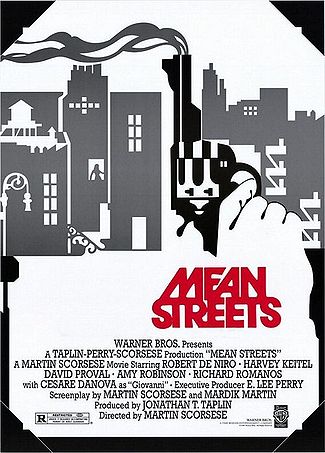 A dive-bar livid with unvarnished restlessness, Martin Scorsese’s first “big picture” breakthrough is no mere chopping block for his later, more famous regurgitations of his pet themes: Catholic guilt, boys being boys, male angst, un-placeable inner-city maladies. Instead, Mean Streets is all the more probing for its out-of-focus, improvisational gusto. It lacks the “perfect” formalist backbone of The Brow’s later Taxi Driver, Scorsese’s perverted poison-pen letter to classical Hollywood noirs as well as a codified conduit for writer Paul Schrader’s meditations of transcendence and Robert Bresson. But while more noncommittal and less precise on the surface, Mean Streets’ libertine energy and scruffy, scrappy, unfocused workaday energy actually bests its more confident younger sibling for sheer restlessness.
 I meant to get to this a bit ago, obviously, but this review is in memorium to the dearly departed demon of cinema Seijun Suzuki.
 Exsanguinating Hammer Horror at their own game, Thirst’s stupendous opening teases arguably the greatest classical Gothic pastiche of the ‘70s. Set in a faded castle, the film immediately injects fresh blood (OK, I’ll stop) into the corpse of the once-young hooligans in Britain. Hammer, of course, was not immortal, unlike its money-maker Dracula (and seemingly their star Christopher Lee, who acted until the ripe old age of 95). By the out-of-control coaster that was the 1970s, the company had ironically aged into the very old fogey, Universal Horror, that Hammer had once upstaged. By the mid-70s, the heads of the company were desperately clawing at the ground around them to keep up pace with young upstarts like the American slashers, the Italian giallos, and a slew of murderous little Aussie numbers from down under. Horror’s claws (see, I didn’t say fangs) had sharpened in the intervening years, and it would require new blood (drum, drum, cymbal) like Thirst to re-ignite the fire.
  Adam Wingard and Simon Barrett’s sweaty cold splash of a film, The Guest, is a remarkable improvement on their previous collaboration, You’re Next, which was more of a conceited, self-hating concept in disguise as a sincere slasher. In comparison, The Guest is one or two fewer “explain the fear away” scenes away from a genuinely great, greasy slow-burn thriller that ignites for a climactic convulsion that is all rascally convulsive energy and Joy-Division-concert gloom. Whereas You’re Next was mostly just ugly and nihilistically neutral in its critical perspective (anti-everything), the pair of filmmakers has also ginned up an honest-to-god sense of tonal specificity this time around. In this case, The Guest is not only awash in reverie for that wonderful anxious-laconic tone of John Carpenter’s films (call it “strenuously relaxed”). But The Guest also secretes a variant of sensual sadness and even downcast sexuality straight out of Near Dark.
  We Are Still Here
 The Long Take