
 I do not know that I can meaningfully defend The Protector 2, which is why it is for the better that no one involved particularly seems to respect my opinion at all. Less a feature film than the Tony Jaa variety hour, The Protector 2 is disarmingly free of stakes, coherency, and even tension. It is, as drama, almost disturbingly inept, entirely daffy in the way it tortures a narrative out of scenes of mayhem and malarkey. There’s a focus on wholly inadequate compositing shots that is endearing in its disregard for common courtesy and the social propriety of visual logic. At times, the shenanigans on display approximates an anti-narrative hostility that is nearly inspired in its casually self-effacing “plot”. The RZA took Tony Jaa’s elephant, and you don’t take Tony Jaa’s elephant. Continue reading
The Tony Jaa Revue Hour: The Protector 2
Leave a reply
 Disney clearly has a fetish for manning the bellows to raise old properties teetering on the edge of irrelevance, especially to the tune of spending several hundred million dollars on them. Often (John Carter, The Lone Ranger), this resurrection quickly mutates into a séance: the properties remain dead, and the best we can do is ask the characters why Disney is affronting them by not allowing them to rest in peace. Yet Disney’s most recent such semi-forgotten property carries the Marvel brand, which means commercial success for once. At least this skeleton back-from-the-dead has a little visual meat on its bones and a couple of fascinatingly splintered compositions, but that isn’t enough to truly salvage the nefarious acolyte of science and nerd-cred bolster Dr. Steven Strange. If the prospect of one of the world’s most monolithic and voluminous corporations resurrecting a wiry little swashbuckling B-comic from the ‘70s raises any false alarms in your head, well, consider yourself intelligent. Lest you think that the title is a harbinger of things to come, Marvel’s one-size-fits-all aesthetic is as plastic and only superficially strange as ever in this new film. In breathing life into a product from the Bronze Age of comic-dom, Marvel continues to package and primp their creation in service of creating something masquerading as malignant, dangerous, and different. And something ultimately too benign to last past the 90-minute mark.
  Just when it seemed that the premier ‘00s national cinema for delivering international audiences into darkness was ready to find the light, Na Hong-jin’s The Wailing is here to raise some cain. With its bounty of sensory delights and cavernous, existential troughs, it warps its style so far past the safety regulation that South Korean cinema feels just about covered in full for a good decade or more. Swaggering and shaggy, The Wailing is a vibrant devil-in-a-new-dress tale of great lateral expanse and gothic grandeur, a wonderfully devilish repository of human foibles and elemental disturbances. It also offers a deep descent into humanity’s awkwardly slovenly attempts to fumble through traumatic and unexplainable events as grandiloquent gloom meets its mortal enemy: human imperfection.
 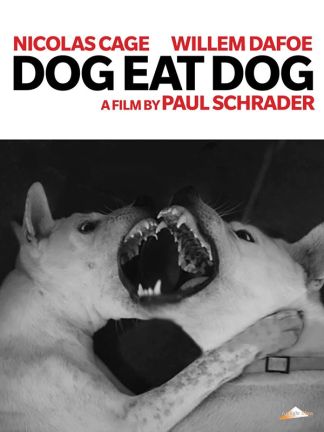 Paul Schrader is definitely hell-bent on something, but I’m not sure he knows what it is. Say the least for the famous screenwriter, journeyman director, and racist-anti-racist: he’s using the theoretically democratic “direct” medium of video-on-demand releases for unhinged stylistic, aesthetic purposes rather than simply a way to achieve distribution when the theaters have abandoned him for his maddened ways. The addled, feverish style of Dog Eat Dog feels like Schrader’s attempt to unleash the agitation he feels at being mostly dumped from the A (or even B) list as a writer-director. Rather than simply releasing an A-picture, the kind that would pass in one theater and out the other in a week or so, Dog Eat Dog is so disobedient, even dysfunctional, that it would feel like a raving mad dog in the hallowed space of a film theater. With the screen always lashing out in some new stylistic or thematic direction (almost by the second), the public audience of a collective theater-going experience probably wouldn’t have known what to do with it.
 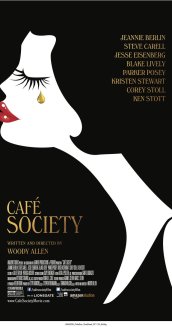 Decades into Woody Allen’s mirror maze career of inward-looking, self-reflecting gazes and upper-class first-world problems, a “new” thesis from this particular director whose only theater is his own mind is not exactly a prospect anyone is likely to expect any time soon. That Allen only ever repeats himself is, at this point, of less concern than whether his variations on old themes are inspired on their own terms. Without exactly spoiling anything, Café Society is the platonic ideal of Allen hovering around in his middle-brow, middle-tier. Café Society is more or less how you contextualize it, a prism for refracting one’s personal tolerance for the octogenarian who has canonized himself almost as many times as years he’s lived. A slight, pleasurable uptick in his continued slide into irrelevance? Another totem to his conceited brand of self-loathing self-aggrandizement that long ago lost its luster or rabid-dog intelligence? Café Society is all of the above and not much else. Which is to say: your mileage may vary.
  Tipping the addled, agitated, and affronting aesthetics of the Bourne films over the edge into quasi-parody, American Ultra furnishes its very filmic form with the spasmodic, alternately jittery and slackened emotional register of its panic-stricken main character Mike (Jesse Eisenberg). A deactivated hitman for the CIA who brings new meaning to the word sleeper agent, Mike’s daily life upgrades ephemera to a principle of being. Once he is targeted for elimination, the style of the film, noticing flickers of comic minutiae amidst the murder, effectively sells the overlooked mayhem of everyday life. Obviously, the most overt such gesture in the film is its ribbing at the potential weaponization of any domesticated object, finding hidden, albeit brutal, purpose for objects through acts of mental reconsideration. Although favoring the path of most-violent resistance when it comes to reanimating everyday bric-a-brac with alternative imaginative potential, there’s an endearingly ambling sense of cribbing outlines from other (action) films and then scribbling them in haphazardly, spicing them up with unkempt anti-grace in the process.
  Exsanguinating Hammer Horror at their own game, Thirst’s stupendous opening teases arguably the greatest classical Gothic pastiche of the ‘70s. Set in a faded castle, the film immediately injects fresh blood (OK, I’ll stop) into the corpse of the once-young hooligans in Britain. Hammer, of course, was not immortal, unlike its money-maker Dracula (and seemingly their star Christopher Lee, who acted until the ripe old age of 95). By the out-of-control coaster that was the 1970s, the company had ironically aged into the very old fogey, Universal Horror, that Hammer had once upstaged. By the mid-70s, the heads of the company were desperately clawing at the ground around them to keep up pace with young upstarts like the American slashers, the Italian giallos, and a slew of murderous little Aussie numbers from down under. Horror’s claws (see, I didn’t say fangs) had sharpened in the intervening years, and it would require new blood (drum, drum, cymbal) like Thirst to re-ignite the fire.
  I’m hardly infatuated with this series, and as with any anthology, it misses as often as it hits. But that also means Charlie Booker’s witch’s brew of dyspeptic stomach-acid churn and quasi-futuristic chic does hit. More than once or twice, it even marshals something truly bracing, beyond the mere satirical sucker-punches most of its kindred television brethren manage. It’s uncanny glass-eye vision of society rapidly running out of sand in the hour glass often feels so pretentious and conceited as to be glimpsed through a monocle. But the episodes that do hit definitely nail the view-askew camera-obscura pleasures of classic Rod Serling, updated with the fangs of 21st century cynicism. Let us have a look-see.
  Adam Wingard and Simon Barrett’s sweaty cold splash of a film, The Guest, is a remarkable improvement on their previous collaboration, You’re Next, which was more of a conceited, self-hating concept in disguise as a sincere slasher. In comparison, The Guest is one or two fewer “explain the fear away” scenes away from a genuinely great, greasy slow-burn thriller that ignites for a climactic convulsion that is all rascally convulsive energy and Joy-Division-concert gloom. Whereas You’re Next was mostly just ugly and nihilistically neutral in its critical perspective (anti-everything), the pair of filmmakers has also ginned up an honest-to-god sense of tonal specificity this time around. In this case, The Guest is not only awash in reverie for that wonderful anxious-laconic tone of John Carpenter’s films (call it “strenuously relaxed”). But The Guest also secretes a variant of sensual sadness and even downcast sexuality straight out of Near Dark.
  He Never Died
 The Long Take