
 Ain’t Them Bodies Saints is little more than a New Hollywood pastiche, a loving and careful waxworks recreation of a style and type of cinema that was at one time, a great many years and Hollywood eras ago, the most lively and startling thing to ever happen to American cinema. As a film, David Lowery’s recreation of that style has not one new idea to bring to the table the New Hollywood built out of rustic, unpolished wood and then abandoned long ago. All Lowery is doing is digging through scrap heap, separating out the noble rust from the ignoble variety, and refashioning it into a garage sculpture where the very nature of the metal – falling apart, worn to the point of triteness – is a badge of honor, a reminder of how old this sort of tale really is, and how lively it can still feel when it is carted out after it hasn’t seen the light of day in too long. It doesn’t offer a new idea, but it offers a more humble reminder: in the New Hollywood of the 1970s, we now see not only a scorching fresh breath into the room of Hollywood’s musty old classicism, but a peculiar, well-worn form of old-timey comfort. Those New Hollywood films are now part of the classic American cinematic tradition, and Lowery is merely playing a requiem for them. Continue reading
Review: Ain’t Them Bodies Saints
Leave a reply
 The American
 White Material
 In Lee Daniels’ The Butler, there’s a shot of a man walking across a bog, depicted from the perspective of a silent observer looking down into the water and seeing naught but a reflection of a shadow barely present in the water, threatening to disappear at any moment. Beautiful and expressionist-tinged, it potently captures, better than any word ever could, the reality of race in America – African-Americans torn down to whispers of human flesh almost unobservant to the white eye, seen only through the prism of mirrors and reflections when you’re really looking at something else, glimpsed only in fleeting, peripheral moments by powerful forces who don’t want to acknowledge the presence of race.
  Jean-Marc Vallee’s Dallas Buyer’s Club is a relentlessly traditional film. Craig Borten and Melisa Wallack’s screenplay is one of the oldest stories in the book, and they subscribe to the most limited, well-worn version of it. A hard-living, hard-smoking, hard-drinking Texan man, Ron Woodruff (Matthew McConaughey) is a relentless Type-A Alpha Male of the classical American persuasion who discovers in 1985 that he is HIV positive. Surrounded by an external culture of unmitigated masculinity and an internal predilection for homophobia, he struggles mightily to come to terms with the diagnosis, weighed on most heavily by his belief that only homosexual men can have HIV (the de facto opinion among the general population in 1985).
 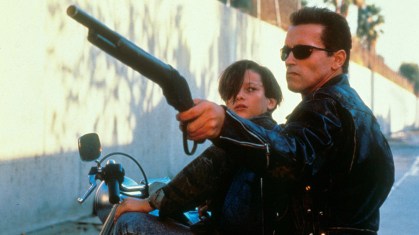 Because of that other Terminator film recently released, trying its best to soil the name of a once-mighty franchise.
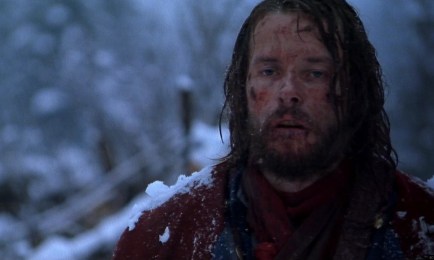 1999 was a year of new beginnings for a great many directors of the cinema, filmmakers who used their 1999 offerings to launch their careers to greater artistic, as well as commercial, heights. Although we often forget, it was also the year of Antonia Bird’s Ravenous, a film that ought to have launched her to new heights but somehow left her scrambling for an audience. In a year of openly defiant, exploratory films from many talented artists, Ravenous remains one of the most defiant and exploratory. Yet it never found an audience for itself or its director, likely because its defiance, experimentation, and exploration are all hidden. Even more-so, they are secret, and the film goes to great lengths to pretend it is nothing more than an everyday comedy-horror exploitation-film of the distinctly late ’90s post-Scream variety. It is a film where the experimentation is wholly submersed into subfuscous genre mechanics, a great devious trick of a film, and I can think of no more perfect nature for such a deliciously sinister exercise in cutthroat filmmaking.
  There is probably no more critically acclaimed American filmmaker to emerge since the heyday of the ’90s independent scene than Paul Thomas Anderson, one of the few relatively mainstream artists in recent years to genuinely acquire the clout of an auteur. Contrasted with, say, David O. Russell, who also survived the cinematic battleground of 1999, Anderson never once seems to have ceded ground to popular concern, and he remains one of the few “big-name” filmmakers whose wandering mind hasn’t been boxed-off by Hollywood money. All these years later, even when they don’t fully succeed, his films seem like the collective external manifestation of the nether regions of his own mind. His films are infused with the lifeblood of classic cinema but prone to the sort of exuberant misconduct all great directors need to engage with to break new bounds. He’s an out-there sort of dude, but he’s cordoned off his own niche as a pop-art experimentalist, a perfect combination of old school composure and new school anger.
  The Long Take